






TAMA Foundation organizes a paralegal training workshop for 50 participants from selected mining communities in the north
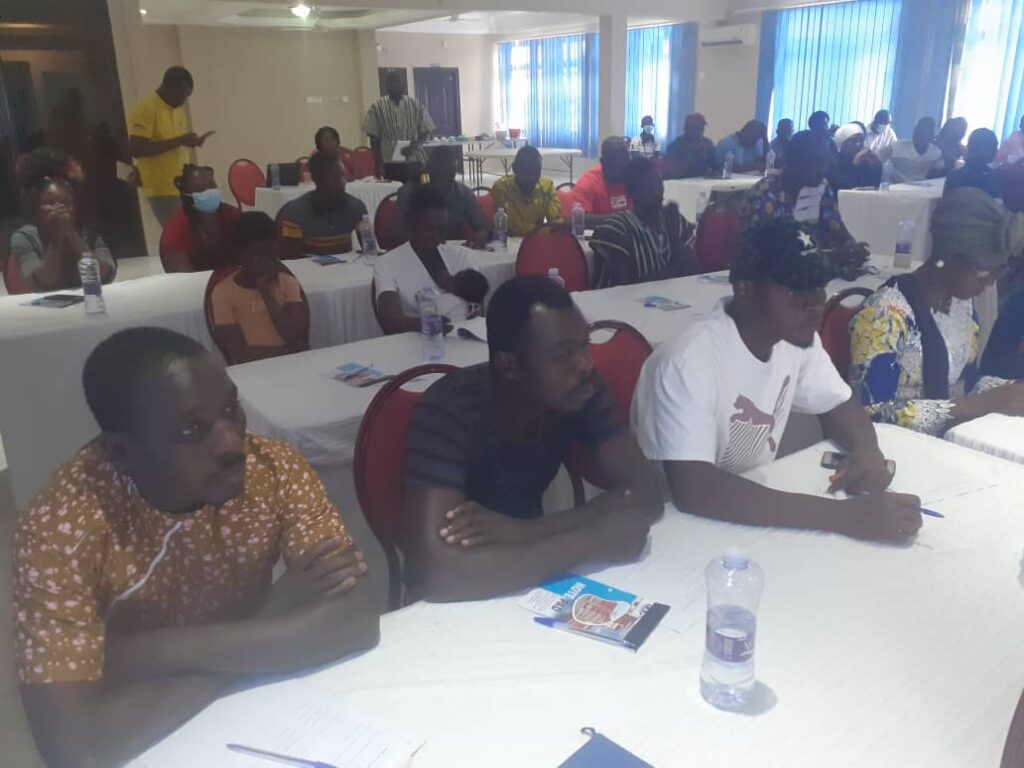
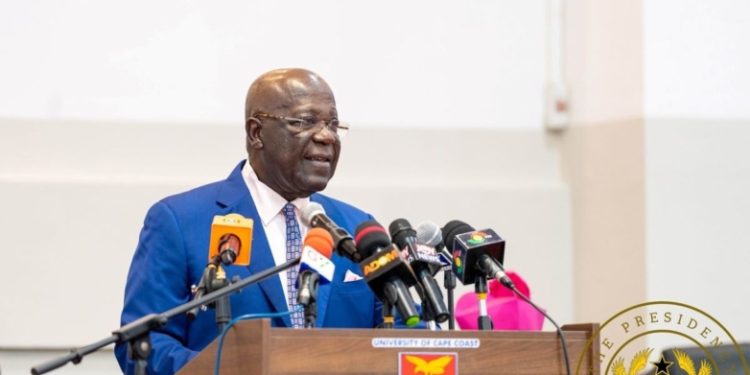
Executive Director Center for Public Interest Law (CEPIL) Lawyer. Augustine Niber has taken a group of Civil Society and Community based Organizations and individuals from the 5 regions of the north through extensive legal training on mining laws, regulations, and policies. Engaging with the media, during a 2 days Paralegal training workshop organized by TAMA Foundation Universal for Members of Community Action Groups in Northern Ghana under NaRAING phase 2 project, Lawyer Niber expressed that the programme is to provide participants with a basic overview of the law that governs the mining sector. “It was geared towards looking at how Gold, particularly as a resource in the country, the legal laws governing this resource, and how mineral applications are made. Particularly, we tried to reiterate that gold or any form of Natural resource or mineral that is found is vested in the President on behalf of the people of Ghana and that harnessing these resources is to be geared towards the overall development and benefits of these communities”. Explaining further he said, the communities were taken through the Mineral and mining act particularly Act 703 and the provisions related to the Act, and also, “we looked more specifically at the issue of the revenue stream as provided under the Mineral and Mining Act, how those resources are generated and the fact that a legal regime is the one that governs the amount of physical resources we get from the operations of the mining sector”. “We also looked to a larger extent the benefits that accrue for the mining companies and the benefits that accrue to the government at large and we zero it down specifically to issue of compensation as a basic requirement under the law, that before a company goes unto a land that belongs to a community, individual or a family that the entry of into the land is subject to the payment of compensation. Then, we had the opportunity to closely look at issues of compensation, the principles that guide the determination of compensation”. According to Lawyer Niber, what was important, is to let participants know that in times of determination of compensation, it is through negotiations between the owner or lawful occupier and that of the mineral lands holder and this is to be done and where there is any disagreement, a reference should be made to the Minister for the first attempt to be solved before any attempt to seek another judicial process in resolving the level of compensation that is due the people. “So generally, the programme is intended to equip them basically with the aspect of the laws and regulations that govern the minerals and the mining sector and to better equip them within their communities to look out to many of the issues that arise in these mining-related communities”. And very importantly, an attempt is to try to prevent the issues of mining-related conflict that occur in other areas from happening in the communities and usually, it is at the inception stages of mining that creates most of the legacy issues and issues that bring about conflict. And once a community or group of people are knowledgeable about the law, at least they are able to ensure that the entry requirements and any other related mining issues are addressed at the early stage. Participants who spoke to Apexnewsgh.com, could not hide their joy, they extended their gratitude to TAMA Foundation Universal, CEPIL, and Ford Foundation, especially for the education they received during the training workshop. One of the participants from Bongo District of the Upper East Region Hon. Philemond Ataba, Assembly member for Soe Tamolga Electoral Area said, he enjoyed the training because his community Bongo Soe is one of the community’s things are going on wrongly and community members are not happy about it. “We have learned a lot of things that will guide us as a community to work with these small-scale miners. There are some laws Lawyer Niber mentioned when he was presenting especially with compensation and now, we understood some of the activities”. He said Osman Kanton Luriwe, Executive Director, ASUDEV, said the workshop has been very significant, he expressed satisfaction for being part of the paralegal training on mining which will their communities. “Where I come from, the Sisaala Area there is no particular mining company operating there but we have a few illegal mining activities going on in some communities. But once we have minerals there, it means there is a possibility that in the near future, some mining licenses may be issued and the training we have undergone today has given me enough information about mining laws in this country, about the rights of communities in term of their engagement with government for the release of area for mining”. The acting President of the Upper East Youth Association Adingo Francis described the paralegal training workshop as an eye-opener. “With what we have learned today, is a great eye-opener for us and I just pray that we implement it in our communities. Because we realized that companies are coming into our various communities and all we see, is that opinion leaders like the chiefs, the DCE, and the Assemblyman are the beneficiaries but, if you go into the community the people that the activities of these mining companies affect there is nothing for them. “Per the laws we have seen, in this 21st century, we shouldn’t have those laws again in our books. Because, per what is currently in the book, it was made to give more incentives to foreign companies because of their technical know-how. But yet, the resources are with us. You can imagine depending on a portion of land where your house is, where you farm and all of a sudden they say the lands and the minerals are all vested in the hands of the President in trust for the people. I think the people that draft the constitution did that thinking we will have good leaders who think about the
CEPIL concludes training of 50 paralegals for 2 regions in the Upper East
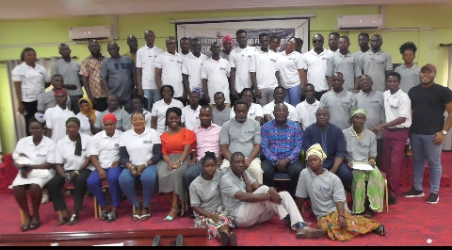
A Rights-based law firm that provides free legal representation and service to communities and other indigenes who cannot afford legal services that is a non-profitable organization headed by the Executive Director Center for Public Interest Law (CEPIL) Lawyer. Augustine Niber has concluded training for 50 paralegals in the Upper East Region. Engaging the media during the training workshop, Lawyer Niber said, they have been providing training on Human Rights and para-legalism to communities. According to him, the present program that they undertake here in the region is a paralegal training program that started 2 years ago with support from the FORD Foundation in building the capacity of community groups, opinion leaders, and community representatives from Upper East and Upper West on mining-related issues for person and district where mining is currently taking place. He stated that, “The basic requirement for the program is to train these paralegals to serve as vocal persons in communities and they are to play a kind of liaison role between their communities and other Civil Society Organizations and try as much as they can to serve as the voice of a community in bringing up mining-related issues and generally equip them with some basic legal knowledge that will support them as vocal persons in their communities and also provide them with some level of cost-effective to basic legal services to their communities”. The 50 paralegals comprise two regions and 5 districts Talensi, Nabdam, and Zebilla in the Upper East Region, and participants from the Nadowli and Wa East districts in the Upper West Region. Meanwhile, throwing more light on the training workshop, Laywer Niber explained, that one must complete the three modules before he or she is certified, “There are three modules for the training before one can be certified as a paralegal. The first module took place in Tamale in 2022, and the second module took place in the Upper West Region and what is happening in Bolga is the Third and last module and after which will certify them. The director explained He added, that the response they have gotten from those they have trained is already positive, because they have indicated the knowledge they have acquired from issues of mining including the right they were educated on. He believes, they now approach issues based on informed position and based on the advancement of what they have learned. “They are expected to create the awareness in their communities from the training they have had and also to enable demand respect for their rights and protect their rights within the context of mining activities in their communities”. However, asking what the next step will be for CEPIL, the Executive Director said, they will be doing a follow-up to ascertain the extent to which the trained paralegals are using the knowledge in their communities and also add that, when necessary, they may be organizing refresher programs for new things might come up. Chairman Savannah Research and Advocacy Network (SRAN) Mr. Nyeya Yen expressed satisfaction with the education provided so far by the Center for Public Interest Law (CEPIL) to persons from mining communities in the northern parts of the country. Mr. Nyeya, is optimistic that the training will produce good results, especially in tackling and managing issues that could result in conflict and as well as help community member understand their rights “Sometimes, the mining companies enter a community without following due process. Sometimes, some of these mining companies walk in and start mining and sometimes they walk into the community and give just a fowl to the landowners for them to do their sacrifices to enable start mining. Sometimes, what they called community entry, they may just meet with the District Chief Executive (DCE) and probably talk to the chiefs and start mining without talking to the community but as an activist in the community you should be able to let them do the right thing”. He stressed “So, we expect these categories of people who are trained as paralegals to help engage the community, engage the chiefs, and engage the Tindanas to guarantee a better deal”. Chief Operating Officer of TAMA Foundation Jonathan Adabre Akatue said, all the 50 activists have been trained on, issues of compensation, resettlement, environmental safety, and more. According to him, the importance of this training is that, it will guide communities, citizens in mining communities on what they need to do when mining is taking place, the responsibility of the mining company, the responsibility of the state regulator which is the Mineral Commission, the responsibility of the Assembly, the responsibility of the Environmental Protection Agency and the responsibility of many other actors who play a role in mining. He was satisfied that so far, the results from the field are encouraging and the majority of them have taken steps to deal with resettlement discussions, to deal with compensation matters and it is for the good of all of us as citizens of this nation. However, before awarding certificates to the trainees, the Executive Director of CEPIL cautioned all qualified candidates not to misuse their opportunity by using the certificate acquired from the training to engage in any form of illegality. If I hear anything, I will be the first to report you to the police and I will be the first to testify on the case. As I said, you are to use this knowledge to benefit your community. Don’t go and use it to solicit funds. If I hear that you have collected money to take or provide any kind of advice, I will be the first to report you to the police and am serious about it. He warned “I have not trained you to use your knowledge to cheat your community”. On behalf of the 50 trained paralegals, Mr. Sapak of SRAN extended their gratitude to the staff and the Executive Director Center for Public Interest Law (CEPIL) Lawyer. Augustine Niber for taking through mining law that will help guide them in their various