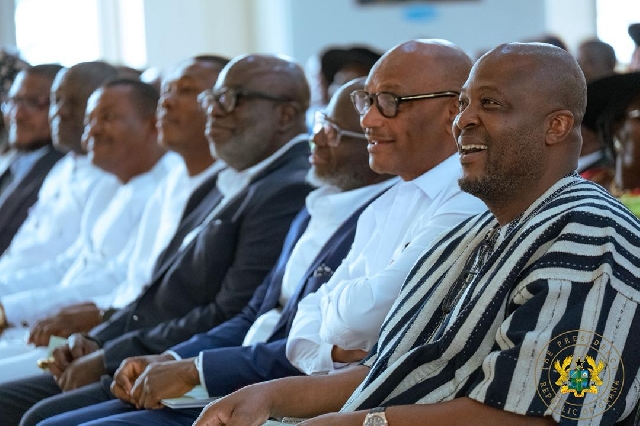
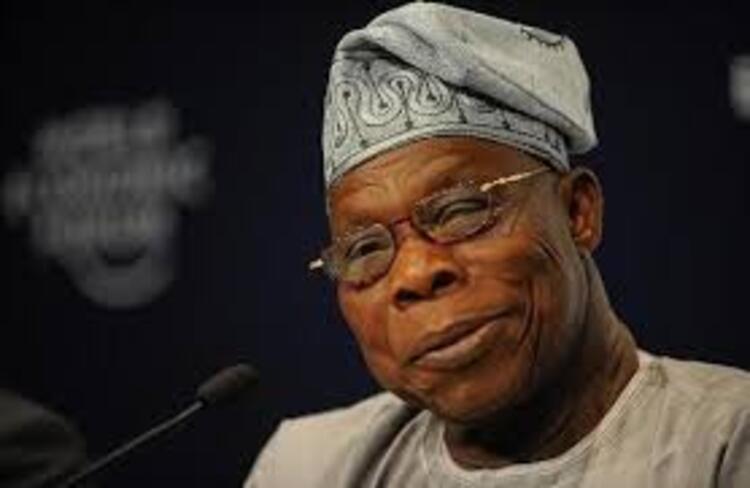
Former Nigerian President Olusegun Obasanjo delivered a landmark address at the G20 Leaders’ Summit in Johannesburg, announcing the launch of the Accra Reset’s interim Secretariat in Ghana and spotlighting President John Dramani Mahama’s transformative leadership in global development cooperation. Speaking on behalf of President Mahama, the driving force behind the Accra Reset, Obasanjo informed world leaders that the Global South-anchored platform has grown its Circle of Leaders to encompass over two dozen former Heads of State and international organisation leaders spanning Africa, Asia, Latin America, Europe, and the Caribbean. “President Mahama extends his deep appreciation to H.E. President Cyril Ramaphosa, whose leadership has guided this G20 cycle with clarity, courage, and a profound commitment to justice,” Obasanjo said, conveying greetings from the Ghanaian President and African Union Champion for Reparations. Obasanjo described the Accra Reset as a paradigm shift in development, moving away from “an economy of dependency” fostered by traditional aid and loans. “To move forward, we must re-architect our economies based on trade and investment,” he asserted. He stressed that the initiative seeks to transform development cooperation into a system that is “country-led, regionally empowered, and globally coherent,” breaking with decades of top-down North-South dynamics. The establishment of the Secretariat in Accra marks a new era for the initiative, which President Mahama envisions as a means to ensure that global governance reforms are “co-created, not imposed; negotiated with fairness, not inherited from history.” A High-Level Panel will soon prepare a landmark report on restructuring global governance, to be delivered to a commissioning authority of Heads of State representing both the Global North and Global South. Obasanjo also lauded South Africa’s G20 Presidency under President Ramaphosa for championing priorities that resonate with the Accra Reset’s mission—including a fairer global financial system, enhanced global health resilience, equitable technology partnerships, and broader Global South involvement in multilateral decision-making. “The Accra Reset stands ready to work closely with the G20,” Obasanjo affirmed, positioning the platform as “connective tissue interlinking the public, private, and civil factions of Global South societies.” The initiative aims to move international development from “endless aspirational targets to workable business models that drive real and durable change,” embodying President Mahama’s pragmatic vision for economic transformation across the Global South. Source: Apexnewsgh.com
The Ministry of Works and Housing Pushes Forward on Saglemi Affordable Housing Project
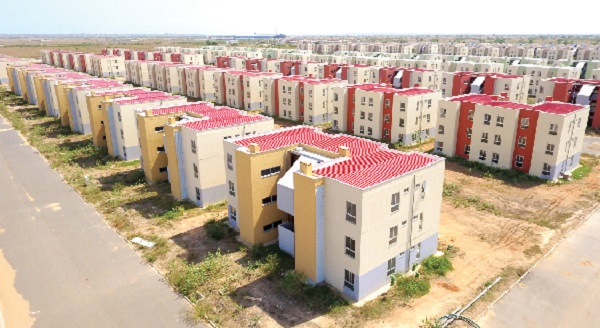
The Ministry of Works and Housing has reaffirmed its commitment to delivering the first phase of the Saglemi Affordable Housing Project, aiming for 8,000 completed units by the end of 2026. This ambitious goal comes on the heels of parliamentary approval of a GHS1.4 billion budget for the initiative. Despite this progress, the Ministry voiced serious concerns about the slow pace of funds released for 2025. As of October 2025, only GHS360 million of the GHS918 million earmarked for capital expenditure had been disbursed by the Ministry of Finance. This significant shortfall, officials explained, has hampered the execution of critical infrastructure projects essential to the housing agenda. During the presentation of the Works and Housing Committee’s report on the 2026 budget estimates, Chairman Vincent Oppong Asamoah outlined major programmes for the coming year. These include accelerating affordable housing construction, expanding drainage systems, and upgrading coastal protection structures. Chairman Asamoah stressed that the timely release of funds will be crucial if the Ministry is to meet its targets, particularly for the flagship Saglemi project. He underscored that the project remains a central pillar of the government’s national housing agenda, making the efficient flow of resources all the more vital for success. Source: Apexnewsgh.com
U.S. Commits $150 Million to Zipline for Expanding Medical Drone Deliveries Across Africa
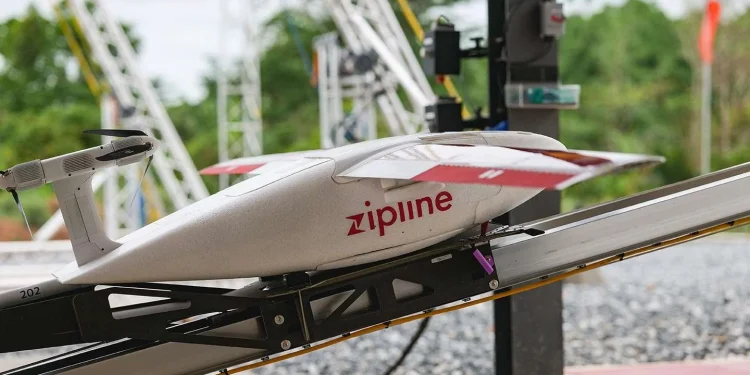
The United States Government has announced a commitment of up to $150 million to Zipline International Inc., aiming to expand access to life-saving medical supplies, including blood, vaccines, and essential medicines, to as many as 15,000 health facilities across Côte d’Ivoire, Ghana, Kenya, Nigeria, and Rwanda. The announcement was made during a U.S. Embassy digital press briefing on Tuesday, December 2. This initiative is part of the U.S. Department of State’s America First Global Health Strategy, which seeks to maximize value for U.S. taxpayers by reducing waste, eliminating dependency, and ensuring development assistance aligns with U.S. foreign policy objectives. According to Jeff Graham of the U.S. Department of State, the strategy places a strong focus on delivering critical medical products to populations in remote and underserved areas. Partnering with Zipline, an American robotics and drone technology firm, is central to modernizing the U.S. approach to global health aid. Under the agreement, the U.S. will support Zipline’s expansion of advanced, American-made robotics to overcome the slow and unreliable logistics that often hinder timely medical deliveries in rural communities. Graham described the initiative as a significant step towards strengthening health systems, enabling rapid responses to disease outbreaks and emergencies, while also supporting U.S. manufacturing and job creation in partner nations. Although the U.S. contribution is described as modest, beneficiary governments will eventually take over operational responsibilities for their national health delivery networks. Zipline is set to open new distribution centers in the five participating countries, with Rwanda expected to double its daily delivery capacity, ultimately enabling the network to reach up to 130 million people across Africa. Caitlin Burton, CEO of Zipline Africa, explained that Zipline operates autonomous, all-weather drones day and night, delivering a centralized, on-demand medical supply chain that is far more efficient than traditional logistics systems. Supported by organizations like the Elton John AIDS Foundation, Zipline has demonstrated that its delivery model is both cost-effective and highly impactful. The new U.S. partnership is projected to allow Zipline to expand its reach to national scale in all five countries, creating an estimated 1,000 jobs and generating over $1 billion in annual economic gains across the partner nations. Burton emphasized Zipline’s mission to build health systems capable of ending preventable deaths from HIV, maternal mortality, and severe malnutrition by leveraging a single high-performing logistics network. Burton noted that government investments will be tailored to each country’s priorities and health needs, and that Zipline works closely with governments to identify access gaps in remote and underserved communities. “This system is meant to operate nationwide and at the scale required to deliver volumes of medical products that can actually change health outcomes. We now know how to solve challenges like maternal mortality and malnutrition, and the network is built to meet those goals,” she stated. While the U.S. provides initial capital, governments are expected to cover the predictable, long-term operating costs. The model is designed to replace multiple expensive, disease-specific programs with one unified delivery network that addresses a range of health challenges. “With this system, you’re not funding a single program or a one-off intervention. You’re ensuring that essential medical products reach patients wherever they are, including communities where distance or stigma might prevent people from seeking care,” Burton added. Source: Apexnewsgh.com
TUSAAG Declares Indefinite Strike Over Unpaid Research Allowance
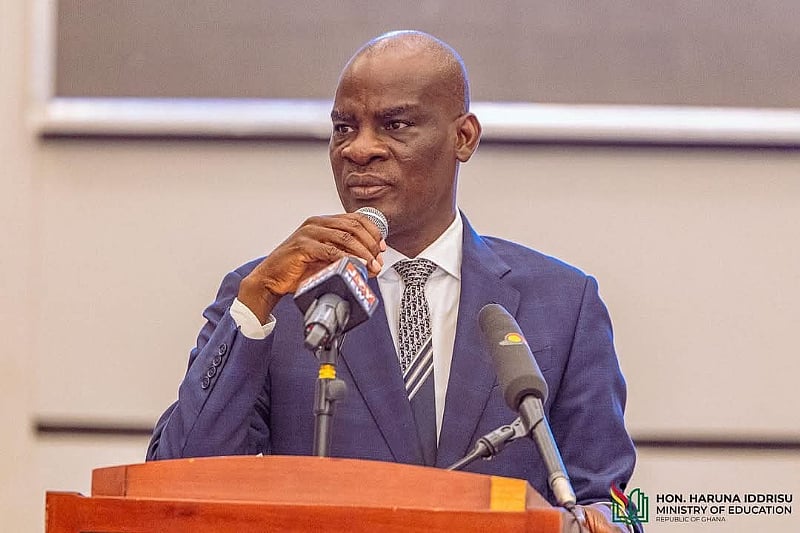
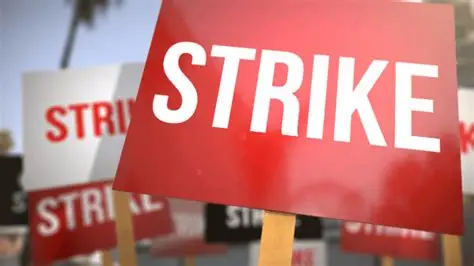
The National Executive Council (NEC) of the Technical Universities Senior Administrators Association of Ghana (TUSAAG) has announced an indefinite nationwide strike, set to begin on Wednesday, December 3, 2025. The decision comes in response to what TUSAAG describes as the government’s persistent delay in paying the One-Time Research Allowance, an entitlement agreed upon on July 10, 2024. According to the association, the allowance was established to compensate senior administrators for research and publication work required for their promotion. TUSAAG insists that the payment is not a privilege but a negotiated right, and that the government’s continued non-payment represents a “blatant breach of agreement” and a lack of respect for administrators’ critical role in Ghana’s tertiary education sector. Months of engagement with government agencies, including the Ghana Tertiary Education Commission (GTEC) and the Fair Wages and Salaries Commission (FWSC), have reportedly failed to resolve the matter. TUSAAG claims that their letters, requests for dialogue, and attempts to meet with the Minister of Education, Haruna Iddrisu, have either been ignored or postponed. As a result of the strike, all administrative services at Ghana’s 10 Technical Universities—including finance, admissions, examinations, human resources, registry, and general administration, are expected to grind to a halt until the outstanding allowances are paid. Despite the action, TUSAAG says it remains open to immediate and sincere dialogue with the government to reach a lasting solution. The association stresses that the strike is a last resort, aimed at drawing the attention and action that previous appeals have failed to secure. Source: Apexnewsgh.com
Accra’s Mayor Launches GH¢100-a-Day Sanitation Drive for Festive Season
Accra’s Mayor, Michael Kpakpo Allotey, has announced a new initiative that will see the Accra Metropolitan Assembly (AMA) pay individuals GH¢100 daily to help spruce up the city in preparation for the festive season. The opportunity, which specifically targets unemployed young people, was revealed by the mayor as he led a citywide exercise to paint kerbs along major roads—a move aimed at beautifying the capital and enhancing nighttime safety ahead of Christmas. Mayor Allotey encouraged interested individuals to visit the Accra Metropolitan Assembly and join the cleaning and beautification teams. Participants will receive GH¢100 a day for a period of 30 days for their work. The sanitation and beautification exercise commenced on Saturday, November 29, 2025, and involves painting kerbs along medians and road shoulders stretching from John Evans Atta Mills High Street to Independence Avenue. The effort is expected to improve visibility, eliminate dark spots, and give Accra a brighter, more welcoming appearance at night. Speaking to journalists during the operation, Mayor Allotey said the kerb painting is being combined with an intensive citywide sweeping campaign. Already, 190 personnel have been deployed across the metropolis, with plans to employ an additional 400 young people to scale up the operation and create more job opportunities. He explained that the freshly painted kerbs will significantly improve road safety by making medians and road edges easier for drivers to spot, reducing the risk of accidents on major routes. The mayor stressed that the initiative is part of the assembly’s broader commitment to ensuring Accra is clean, vibrant, and welcoming during the festive period. Mayor Allotey called on residents and business operators to support the ongoing sanitation drive by keeping their surroundings clean. During the exercise, he also cautioned a man for sweeping waste from a pharmacy frontage onto the pavement, warning that such actions are punishable by the Sanitation Court. Source: Apexnewsgh.com
Parliament Approves GH¢5.3 Billion for Roads Ministry, but Funding Gaps Remain
Parliament has approved GH¢5.3 billion for the Ministry of Roads and Highways for the 2026 financial year, a significant move in the government’s ambitious plan to expand and modernise Ghana’s road network. This allocation is part of a wider infrastructure initiative aimed at strengthening connectivity across the country. Alongside the approved budget, the government has earmarked GH¢30 billion in oil revenue under the Big Push Programme, dedicated to supporting major road development projects nationwide. The goal of this initiative is to finance substantial upgrades, ease transportation bottlenecks, and improve regional access. During the presentation of the Roads and Transport Committee’s report to Parliament, sector minister Governs Agbodza welcomed the allocation but cautioned that it was insufficient to meet the ministry’s actual needs. He revealed that the ministry is currently supervising road contracts valued at over GH¢110 billion, a figure that dwarfs the newly approved budget. Describing the allocation as inadequate, Minister Agbodza stressed that the ministry’s commitments extend far beyond what the 2026 budget provides. “I agree with my colleagues on the GH¢5 billion, but the GH¢5 billion allocated is not enough. Though it may sound like one of the biggest allocations, it is not enough at all,” he emphasized. Despite the funding shortfall, the Ministry of Roads and Highways has reaffirmed its commitment to advancing key road projects. The ministry will continue to work with the government to secure additional resources, aiming to close the funding gap and deliver on its infrastructure promises for the benefit of all Ghanaians. Source: Apexnewsgh.com
Dr. Nawaane cut-sod for transformative projects in Nabdam
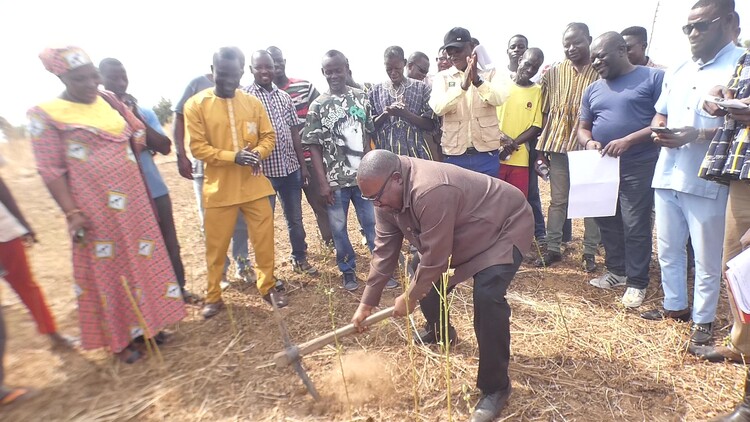
On a bright Monday morning, the Nabdam Constituency in Ghana’s Upper East Region buzzed with unusual excitement. The air was thick with anticipation and hope as community members from far and near gathered in several towns to witness an event that would mark a turning point in their lives. Chiefs in regal attire, elders with wisdom etched on their faces, women carrying children on their backs, and youth eager to see change, all converged for a historic occasion: the sod-cutting ceremonies led by their Member of Parliament, Dr. Mark Kurt Nawaane. The sod-cutting started at Soliga, a community that, for years, had grappled with limited access to basic amenities. As the sun climbed higher, the crowd swelled, filling the open grounds where the ceremony would take place. The chiefs, resplendent in traditional robes, sat at the center, flanked by elders and surrounded by an enthusiastic assembly of townsfolk. Dr. Nawaane arrived to a spirited welcome. There was singing, drumming, and dancing, a celebration that was both a show of gratitude and a rallying call for unity. As he took the stage, the noise faded, replaced by the eager silence of expectation. With humility, Dr. Nawaane began his address. He called it “a great day,” not just for himself, but for the entire district. He explained that this moment was a direct result of a visionary promise made by the President of the Republic, John Dramani Mahama. The President, Dr. Nawaane recalled, had pledged that 80 percent of the District Assembly Common Fund would be allocated to the Assembly, with 10 percent dedicated specifically to health infrastructure and health activities. This policy, he emphasized, was not mere rhetoric; it was bearing fruit in the form of tangible projects that would uplift lives. The crowd listened intently as Dr. Nawaane spoke of the longstanding needs of Soliga. For years, the community had yearned for a health post, a place where mothers could deliver their children safely, where the sick could receive care without traveling miles, and where the elderly would have a measure of comfort in their twilight years. The people had even taken matters into their own hands, constructing a modest building with limited resources, a testament to their determination and resilience. “But today,” Dr. Nawaane declared, “we are here to begin the construction of an official Community-based Health Planning and Services (CHPS) Compound, a health facility worthy of Soliga’s aspirations.” Applause erupted as he spoke, the relief and joy on the faces of the assembled evident for all to see. He paid tribute to the community’s spirit, to the elders who had kept hope alive, to the chief who had advocated tirelessly, and to the women who had borne the brunt of inadequate healthcare. “When this facility is completed, healthcare will be at your doorstep,” he promised. “No longer will you need to journey two or three miles for primary health services.” Among those in attendance was Madam Sadia Salifu, the Nabdam District Health Director. Her excitement was unmistakable. She spoke candidly to the media about the struggles the people of Soliga had endured. The existing community-built structure, she explained, was barely adequate, offering little in the way of comfort or medical safety. “This new facility is good news for more than a thousand people in Soliga,” she said. “It will change lives.” The chief, too, gave his blessings, expressing gratitude not only to the MP and the President but also to the people for their perseverance. There was a palpable sense that something momentous was unfolding, a shift from frustration to fulfillment, from hope deferred to hope realized. The day’s significance did not end in Soliga. Dr. Nawaane’s itinerary included several other communities, each with its unique needs and aspirations. In Damolga, the focus was on education. The community, like Soliga, had struggled with inadequate school infrastructure. The sod-cutting here marked the start of the construction of a modern three-unit classroom block. But this was no ordinary school building. The plans included a headteacher’s office, a storeroom, an ICT lab, a library, a staff common room, an eight-seater KVIP toilet, and two gender-friendly urinals. The design reflected a commitment to holistic education, providing not just classrooms, but the resources and facilities needed for contemporary learning. In Nangodi, two separate projects were underway. The first was the expansion of the Health Directorate Offices. The new building would feature three modern offices, a mini-conference hall, and three water closet toilets. This expansion was vital for improving healthcare administration and ensuring that health workers had a conducive environment in which to serve the people. The second project in Nangodi addressed a different, yet equally pressing need: animal husbandry. The MP cut the sod for a new pen to house stray animals. The facility would include feeding and storage areas, a mechanized borehole for water, and even a bedroom and W/C for the caretaker. This project recognized the importance of agriculture in the local economy and sought to provide humane, organized solutions for managing livestock. In Kongo, Dr. Nawaane turned his attention to food safety and sanitation. The existing slaughterhouse, crucial for the community’s butchers and meat traders, was incomplete and ill-equipped. The new project aimed to finish the construction of the slaughterhouse and fit it with a modern biodigester sanitation system. This innovation would ensure that meat processing was both safe and environmentally friendly, protecting public health and supporting local businesses. The final stop was Pelungu, where the focus was once again on sanitation—a perennial challenge in many rural communities. The planned construction included a ten-seater, four-flat water closet toilet, a five-unit bathhouse, and a mechanized borehole. These facilities would serve hundreds, providing dignity, hygiene, and a better quality of life. Through each speech, handshake, and shovel of earth, Dr. Nawaane’s message was clear: these projects were not isolated acts of charity, but part of a cohesive vision for Nabdam’s future. They were the product of thoughtful policy, community engagement, and a determination to see real, lasting change. The day’s events

Ayariga Blames NPP for Energy Sector Woes, Cites Setbacks to 24-Hour Economy Ambition
Majority Leader Mahama Ayariga has delivered a scathing critique of the previous New Patriotic Party (NPP) government, accusing it of mismanaging Ghana’s energy sector and warning that the country’s much-anticipated 24-hour economy cannot take off until the Electricity Company of Ghana (ECG) is stabilized. Speaking before Parliament on Thursday, November 27, Ayariga specifically cited failures in the Millennium Challenge Account Energy Compact 2, claiming that mismanagement resulted in a US$190 million loss for the nation. He said, “They mismanaged the Millennium Challenge Account Energy Compact 2 and in the process we lost $190 million. By giving the distribution to a certain PDS, which went and forged records in providing a payment guarantee, they caused this country dearly.” Ayariga also referenced a recent investigation into the holdup of ECG containers at the port, revealing that demurrage charges had ballooned to over GH¢909 million due to negligence. He drew attention to irregularities in contract awards, highlighting that contracts worth GH¢159 million were cleared improperly, including a GH¢127.6 million contract awarded to a company without customs house agent registration. The Majority Leader further noted significant deviations between budgeted and actual procurement costs. “This is the record of the NPP in the management of the Energy sector…The situation at ECG is in the budget. The recent container holdup investigations report of the ECG reveals the mess at the ECG. Due to your negligence, demurrage of over GHS909 million was incurred at the port. Corruption was at its height,” Ayariga told the House. He concluded by emphasizing that the NPP’s legacy of mismanagement and procurement irregularities must be addressed if Ghana is to realize the vision of a 24-hour economy. “You stand here, and you ask when is 24-hour economy is starting. 24-Hour economy will start when we have cleared the mess at ECG, and we have created a 24-hour energy system,” Ayariga asserted. Source: Apexnewsgh.com
Education Minister Raises Alarm Over Misuse of Student Tablets
The Minister of Education, Haruna Iddrisu, has voiced grave concerns in Parliament following reports that some students are using government-distributed tablets for non-academic activities, including accessing pornographic content. Addressing Parliament on Thursday, November 27, Minister Iddrisu revealed that while the government had signed a $337 million contract to provide digital learning tools to all free Senior High Schools nationwide, only about 980,000 out of the 1.3 million tablets distributed have been fully deployed and remain to be properly customised and restricted for educational use. “I inherited a contract with about 337 million US dollars, where some 1.3 million tablets were to be distributed across the country to all free senior high schools in the country so that learners can have access to digital tools. I’m told that the deployment of that is around 980,000,” he explained. The Minister admitted that his attention had been drawn to the misuse of the devices. “Mr Speaker, my attention was drawn to the fact that many of the devices are not customised and the students are using them for other purposes, including pornography, which is not acceptable.” Haruna Iddrisu assured Parliament that the government is treating the matter with the utmost seriousness. “Mr Speaker, the government is taking a high view of it, and there must be restrictions as to what the tablets can be used for, and they should be used strictly for the purpose of study,” he stated, underscoring the need for tighter controls and monitoring to ensure the tablets fulfill their intended academic purpose. Source: Apexnewsgh.com
Afenyo-Markin Accuses NDC Government of Enabling Illegal Mining Through Gold Board Policy
Minority Leader Alexander Afenyo-Markin has leveled sharp accusations against the NDC government, alleging that its new policy allowing the Gold Board (Goldbod) to purchase gold from small-scale miners is effectively financing illegal mining activities, popularly known as galamsey. Speaking during a parliamentary debate on the 2026 Budget on Thursday, November 27, Afenyo-Markin minced no words in his critique. “This government has surrendered to the galamsey activities. This government has become its enabler,” he declared, arguing that the budget’s provisions contradict the administration’s stated commitment to eradicating illegal mining. Afenyo-Markin pointed to the budget announcement empowering the Gold Board to buy gold from small-scale miners as evidence of state endorsement for unregulated mining. “The NDC government, through the Gold Board, is rather financing it. This is giving it state endorsement,” he said. He further highlighted the dangers faced by those on the front lines of the fight against galamsey. Citing the National Anti-Illegal Mining Operations Squad (NAIMOS), Afenyo-Markin expressed concern for their safety, recalling the tragedy in which eight members lost their lives en route to launch an anti-galamsey programme. “Today, members of NAIMOS are getting hurt, dead, shot at in a fight their own government has abandoned,” he lamented. The Minority Leader also criticized the government for setting up a Gold Board that, in his view, lacks the mechanisms to trace the origin of gold or verify miners. He warned that such a system invites complicity and undermines enforcement efforts. “If this government cannot trace the gold, it must not buy the gold,” Afenyo-Markin asserted, concluding that the government has failed to show the seriousness or commitment necessary to defeat illegal mining. Source: Apexnewsgh.com