









Engage the Military to Build Pavilions: Prof. David Millar’s Solution to Eradicate Schools Under Trees
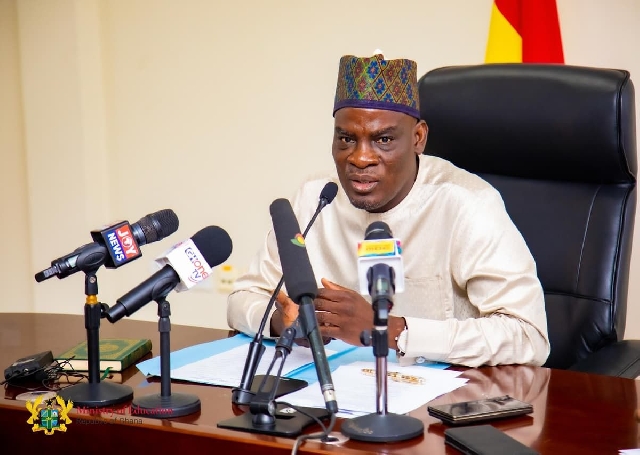
At the last session of the recent launch of the PEARL (Prosperity through Enterprise, Agriculture, Resilience and Livelihoods) Framework, a bold 10-year plan set to transform Ghana’s regions through agriculture, enterprise, and responsible mining, an urgent and innovative proposal stirred the room. Professor David Millar, President of the Millar Institute for Transdisciplinary and Development Studies, who also doubles as the Chairman of the launch, presented an important suggestion to the President’s Representative, Mr. Augustus Obuadum Tanoh (Presidential Adviser on the 24-Hour Economy and Accelerated Export Development), and the Deputy Education Minister, Hon. Clement Apaak, with a message both practical and visionary. With a voice marked by concern, and hope, Prof. Millar painted a troubling picture: nearly 5,000 basic schools across Ghana are still operating under trees or in crumbling structures. This crisis, he explained, strikes hardest in rural and underserved communities, where children are forced to learn in punishing conditions with no protection from the elements, scant furniture, and constant disruptions. But Prof. Millar brought more than a lament, he brought a solution. “If we engage the military, specifically the engineering regiments who have already proven their capability building highways, to construct simple but durable pavilions, we could remove all schools from under trees in record time,” he declared. The military, he argued, can rapidly build thousands of such structures, far faster and more cost-effectively than traditional contractors. “Furniture and other amenities can come later. The priority must be getting children into proper shelters.” Prof. Millar reminded his audience of historical precedent: “Years ago, under Rawlings and the NDC, pavilions were built for junior secondary schools, simple one-block structures that are now used as classrooms. Originally designed as open carpentry workshops, these pavilions have stood the test of time.” His vision is methodical and inclusive: “We should start from the north, where the need is greatest, and gradually eliminate all schools under trees as we move southwards. The military’s field engineers regiment is both cheaper and faster. There are about eight field units, these could be deployed across Upper East, Upper West, and beyond. Since we already know where these schools are, soldiers could build pavilions one after another, moving steadily toward the coast.” Prof. Millar’s proposal is clear: only by harnessing the speed and efficiency of the military can Ghana end the era of schools under trees, a solution that would be a landmark achievement for government, the military, and, above all, for Ghana’s children. Source: Apexnewsgh.com
Prof. David Millar Challenges Planners to Rethink the Meaning of Markets at PEARL Launch
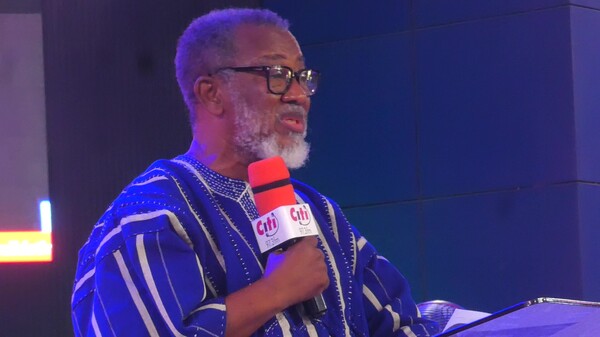
At the grand launch of Prosperity through Enterprise, Agriculture, Resilience and Livelihoods (PEARL) framework, a visionary 10-year framework plan for the Upper East Region, Professor David Millar, serving as Chairman, took center stage to address the congregation. The initiative, spearheaded by the Regional Coordinating Council, drew stakeholders from across the region, eager to hear from one of its most respected academics. As he spoke, Prof. Millar offered a thought-provoking perspective on the heart of economic development. “A market economy,” he began, “is just a space and a place.” He paused, glancing around the room before continuing, “I’ve heard comments like, ‘Oh, they are just building markets.’ But marketing, as many great economists will affirm, is a transaction arena. You don’t even need a physical structure for a market to exist, it’s all about transactions.” To illustrate, he pointed to the example of gold. “If there were no market for gold, we wouldn’t even be talking about it. No one would be struggling to sell it. That is the essence of a market.” Prof. Millar then turned to the concept of a 24-hour economy, a term buzzing in policy circles. “For us, at my university, the 24-hour economy is not just about a structural m arket. It’s about a transactional space, and we are positioning ourselves to contribute to this broader discourse.” He emphasized that the real value lies in the transactional spaces created for the benefit of the entire economy. “Physical structures can be labeled NDC or NPP,” he cautioned, referencing the leading political parties, “but the economy itself is more generic, more nationalist. I hope the planners capture this in their designs.” With a gentle challenge, Prof. Millar urged the planners not to fall into the trap of viewing markets as mere buildings equipped with electricity and cell towers. “The true price of the challenge,” he concluded, “is to look beyond the visible structures and focus on the vibrant transactions that drive our economy.” His words set a thoughtful tone for the event, reminding everyone present that the future of the Upper East Region depends not just on what is built, but on how people connect, trade, and innovate within those spaces. Source: Apexnewsgh.com
Prof. David Millar Calls for a Complete Slave Route Narrative and Links Tourism to Reparations at PEARL Launch
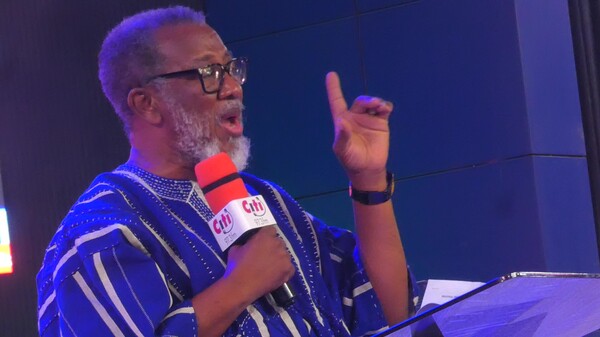
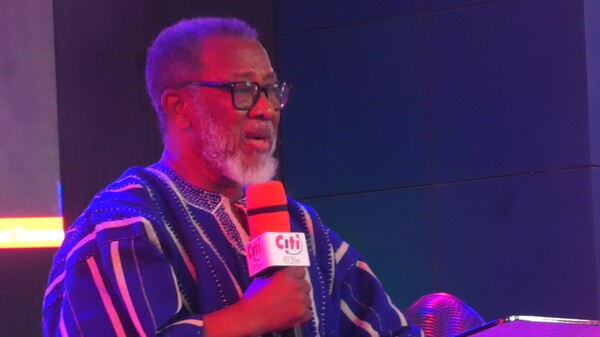
At the launch of PEARL, a transformative 10-year framework plan for the Upper East Region, Professor David Millar, serving as Chairman, addressed the gathered congregation with a message that blended history, identity, and the promise of economic renewal. The event, organized by the Regional Coordinating Council, saw Prof. Millar share his forward-thinking views about the role of tourism in regional development, particularly through the lens of historical truth and reparative justice. “The tourism sector needs to be looked at,” Prof. Millar began, his voice resonating with conviction. “In my university, we are redefining the slave routes. If you go into the archives, you will find that these routes are usually traced from Salaga and run to the coast, the exit points. But that’s an incomplete or checkered history.” He described a new approach his university is pioneering: a ‘ground-through’ methodology. “We walk the actual distance of the slave route and redesign the slave maps to show clearly that the coast was just an exit point. If I were to put it simply, it was like a lorry park, the people came from somewhere to board those lorries.” Prof. Millar called on local chiefs and community members to champion this fuller story. “We will map the route and the languages spoken along it. This will provide proof, so when we reach the end, if the last set of slaves weren’t speaking Twi or Fante, it means they didn’t make those trips. If they spoke Guruni, Frafra, Dagare, or Sisala, then that is their route.” He noted that this important project was made possible by support from the Kingdom of the Netherlands, who wished for the story to be completed. “Right now, the map of the slave route only starts from Salaga, Kintampo, and down to the coast.” Highlighting the significance of this initiative, Prof. Millar stressed its place in the region’s development plan. “This positions us for the reparation efforts of the president. Many communities may be waiting for financial support for reparations, but we want to position ourselves and make clear, legally, that we are the source of the slavery, while the south is the sink. We need both the source and the sink for a genuine claim.” He urged that the region link its reparation claims to tourism. “When those in the diaspora visit, it is good to see the sink, but it is excellent to visit the source as well. That makes sense for tourism and its potential.” Source: Apexnewsgh.com
The Broken Chalkboards: Prof. David Millar Reveals 7 Root Causes of Student Riots and Pathways to Reform
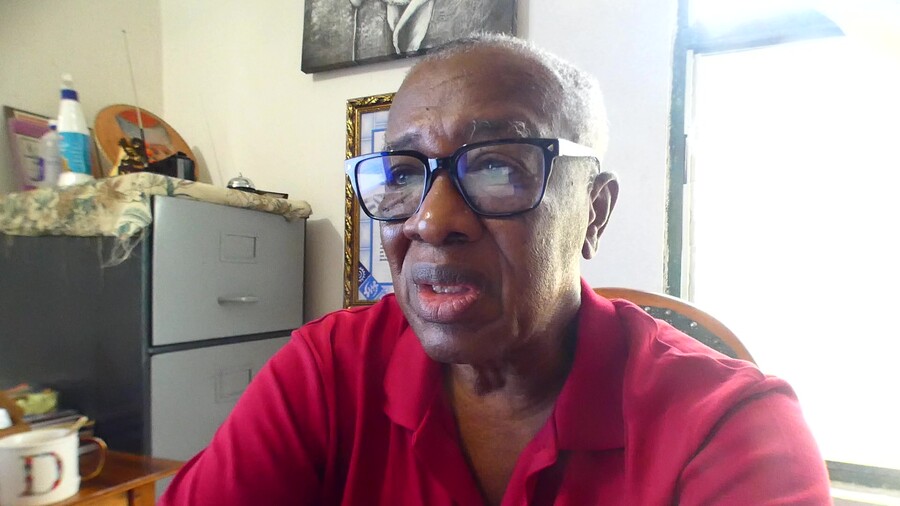
The air, once filled with the hopeful banter of students, now trembles with the aftershocks of unrest. In the corridors of academia, concern ripples among parents and educators alike. Professor David Millar, President of the Millar Institute for Transdisciplinary and Development Studies, has added his voice in the documentary “The Broken Chalkboards,” produced by Ngamegbulam Chidozie Stephen of Apexnewsgh, as he warns: if the current wave of student riots is not checked, it threatens to engulf the entire nation. Kindly watch the full video here: https://youtu.be/GSQR3-T6EaE. Professor Millar’s observations are not mere conjecture. He describes, with painstaking clarity, how riots in secondary schools, once sporadic and exceptional, are becoming alarmingly routine. “It’s becoming very common and noticeable that rioting in schools, especially second-cycle institutions, is on the ascendancy. It’s beginning to increase nationwide,” he asserts. With each passing term, the risk grows that isolated incidents will ignite a conflagration, one that could destabilize the nation’s educational system and erode the social fabric. To understand the roots of this unrest, Professor Millar embarks on a thorough diagnosis of the contemporary school environment. His analysis yields seven interlocking factors, four major and cross-cutting, and three institution-specific, that fuel the flames of student discontent. The Shadow of Drug Abuse Foremost among the major factors is the specter of drug abuse and misuse. According to Prof. Millar, this problem is no longer confined to the school compound. It follows students home, forms habits, and then returns to infiltrate the school environment anew. The result is a culture where substance abuse becomes normalized, blurring the boundaries between personal recreation and institutional disruption. “We have to do something with drug abuse and drug misuse,” Prof. Millar insists, underscoring its centrality to the crisis. The Pressure Cooker of Peer Influence The second factor is the relentless pressure exerted by peer groups. Within the closed ecosystem of a school, peer validation becomes a form of currency. Membership in social circles is governed by overt and covert rules, and the need to belong can drive students to conform to destructive behaviors. For girls as well as boys, these peer groups can be both a refuge and a crucible—incubating actions that undermine the school’s integrity. The Rise of Cults and Weaponization Peer pressure, left unchecked, can metastasize into something even more insidious: the rise of cults within schools. These groups, often shrouded in secrecy and governed by their own codes, demand allegiance through symbolic acts, sometimes even the bearing of weapons. Inter-cult rivalries and competitions for dominance further stoke the fires of unrest. The existence of such groups, Prof. Millar warns, “weaponizes” peer relationships and transforms schools into battlegrounds. The Double-Edged Sword of Technology Modern information and communication technology (ICT) is another factor reshaping the school environment. Smartphones, social media, and even artificial intelligence platforms expose students to a world far beyond the classroom. While this can be a force for good, it also creates new avenues for comparison, competition, and subversion. Students return from holidays eager to display their new digital prowess, sometimes in ways that challenge or undermine school authority. The result is a generation increasingly at odds with the structures meant to guide them. Beyond these core issues, Prof. Millar identifies three more factors that vary from school to school. School Management Systems and Institutional Culture The management style of a school can either mitigate or exacerbate unrest. Institutions with strong religious affiliations or private ownership tend to be more responsive to misconduct, swiftly meting out discipline. Public schools, by contrast, often suffer from bureaucratic inertia—disciplinary procedures are drawn out, diluted by committees, and susceptible to outside interference. This laxity, combined with unclear institutional cultures, leaves a vacuum that disruptive elements are quick to fill. The Disruption Subculture A subtler, but no less significant, factor is what Prof. Millar calls the “subculture of disruption.” Weak students, fearful of looming examinations or unprepared for academic challenges, may seek to derail the school calendar altogether. By fomenting unrest, they hope to avoid failure and mask their own deficiencies. This phenomenon is often most acute as exams approach, with mass participation by those who feel threatened by strict enforcement of academic standards. The Parental Paradox Finally, the role of parents is both pivotal and paradoxical. While parental engagement is essential for effective discipline, unchecked indulgence can have the opposite effect. Some parents provide their children with cars, excessive pocket money, and privileges that enable misbehavior. At home, such actions may go unchecked; at school, they find eager collaborators among peer groups. The result is a feedback loop where home and school reinforce rather than correct negative behavior. While the destruction of property during riots is costly, Prof. Millar is more disturbed by the long-term impact on behaviors and attitudes. “It’s not so much the destruction of property… but the negative impact on behaviors and attitudes that are long-term. For me, that is the worrying part. Because these have long-term implications. We call them our future leaders. Imagine our future leaders coming out with all those vices. What sort of leadership do we get?” Having laid bare the roots of the crisis, Prof. Millar turns to solutions. His proposals are pragmatic, grounded in both research and years of experience. Conscientization and Civic Education The first step, he argues, is a renewed emphasis on civic education—what he calls “conscientization.” Many students, he notes, are simply unaware of the long-term consequences of their actions. By bringing in resource persons, former addicts, and career professionals to share their experiences, schools can equip students with the knowledge they need to avoid destructive pathways. “Educate, educate, re-educate,” Prof. Millar urges, advocating for a revival of civic education programs and the involvement of the National Commission for Civic Education in a large-scale, school-to-school campaign. Revitalizing School Life with Positive Engagement Prof. Millar also calls for a renaissance in extracurricular activities. In the past, debates, drama clubs, and cultural associations provided outlets for energy and creativity. Today, these activities hold less allure, leaving students idle and susceptible
Swallowed by Drugs: Prof. Millar Links Youth Substance Abuse to Poverty, Joblessness and Idle Wealth

The rising trend of drug and alcohol abuse among the youth is becoming a worrying concern in Ghana, and according to Professor David Millar, President of the Millar Institute for Transdisciplinary and Development Studies, the menace is closely tied to poverty, unemployment, and in some cases, idle wealth. Speaking with Ngamegbulam Chidozie Stephen in a documentary titled “Swallowed by Drugs”, Prof. Millar described the issue as “a double-edged thing” that is both poverty-driven and, to a lesser extent, influenced by excess wealth. “As for youth in drug abuse and alcohol, I would link it a bit… It’s attributable to poverty, and it’s also attributable to riches,” he explained. “If youth have excess money in their pockets and they don’t know what to do with it, they might use it in the area of alcohol and drugs. That is how the richest part is articulated.” He, however, stressed that poverty plays a bigger role in substance abuse among young people. “The poverty part is youth feeling helpless. They don’t have a job, they don’t have any means, they can’t earn any income. So instead of wallowing in their poor situation, they look for drugs to make them feel it’s not that bad,” he noted. Breaking down the proportions, Prof. Millar estimated that “40% will be due to riches, 60% will be due to the poverty level and joblessness.” He further explained how idleness and the lack of opportunity fuel reckless behavior among the unemployed youth. “One thing about the drugs is that when you take it, some of them suppress your urge to eat the whole day. So you can still survive a meal a day because the drugs compensate for the other non-available meals,” he said, highlighting how poverty directly feeds into substance dependence. On solutions, Prof. Millar was emphatic about job creation as the most effective remedy. “If we really want to deal with it, first of all, we need to make sure job opportunities are there for the youth. And not only white-collar jobs. There are a lot of jobs you can engage youth with, even if they are temporary,” he suggested. According to him, providing avenues for engagement and income will reduce idleness, though he cautioned that access to money can also lead some down the wrong path. Still, he insisted: “I would take that risk in providing them the jobs, providing them some income, occupying them because they are full of energy.” Prof. Millar also pointed out how politicians exploit this excess energy in young people. “Once you mobilise them and then you give them something in their pockets, they are ready to go. Because the energy is there, it must be expended,” he said. He further concluded that unless urgent interventions are made to tackle youth joblessness and poverty, drug and alcohol abuse will continue to rise, posing serious social challenges for the country. Source: Apexnewsgh.com
A River on a Road”: Prof. Millar Laments Horrible Experience on Navrongo–Tumu Road

President of the Millar Institute for Transdisciplinary and Development Studies, Prof. David Millar, has recounted what he described as a “horrible and humiliating” experience on the Navrongo–Tumu road , a stretch he says is supposed to link two of Ghana’s oldest regions. Narrating his ordeal in an exclusive interview with Apexnewsgh, Prof. Millar said a journey that should have taken him a few hours turned into an exhausting eight-hour struggle when he got stuck at Navaribie, a community along the road. “I found myself stranded in what looked like a big river, but this was no river, it was supposed to be a motorable road,” he lamented. According to him, the dire situation has forced the local youth to turn the misfortune of road users into an income stream by charging stranded travelers to help them cross. “The young men had created a job out of the bad road. I only managed to get across after offering them GHC 20,” Prof. Millar revealed. But the experience left him deeply frustrated, especially since the road was reportedly captured under the government’s flagship Big Push Policy. “One keeps hearing that the road is under the Big Push. But I saw no sign of any ‘Big Push’ there,” he bitterly remarked. Prof. Millar emphasized that roads linking important regions like Upper East and Upper West should not be allowed to deteriorate into what he described as “death traps masquerading as highways.” Source: Apexnewsgh.com
UDS Vice Chancellor Calls for Swift Chartering of MITDS at Seventh Graduation

The Vice Chancellor of the University for Development Studies (UDS), Prof. Seidu Alhassan, represented by Prof. Abdulai Abubakari, has urged government and regulatory bodies to expedite the process of granting a Presidential Charter to the Millar Institute for Transdisciplinary and Development Studies (MITDS). He made the call during the Institute’s seventh graduation ceremony held on Saturday. Prof. Abubakari, speaking on behalf of the UDS Vice Chancellor, said it was both an honour and a privilege to be part of the milestone celebration of MITDS, describing the Institute as “a cherished baby of UDS.” “Since the inception of MITDS, UDS has played her mentoring role to the fullest. We have provided lecturers, supervised student theses, and examined works to support the Institute from day one,” he remarked. He revealed that UDS had recently renewed its affiliation certificate with MITDS to strengthen their collaboration. He also expressed appreciation for the space MITDS had offered UDS to mount its distance education programme. Touching on the future of MITDS, Prof. Abubakari commended the Institute’s progress in teaching, research, publications, and community service, describing their achievements as “worth mentioning and emulating.” He, however, emphasized the importance of the next step in its journey. “To be found worthy of a Presidential Charter is a great landmark in the academic ladder. It is only then that MITDS can award her own degrees in place of UDS degrees,” he stressed. He called on the Ghana Tertiary Education Commission (GTEC), government, GETFund, and other support agencies to assist MITDS, especially in expanding its ICT and Artificial Intelligence infrastructure. To the graduates, the Vice Chancellor offered words of encouragement and a challenge for lifelong learning. “Education is a life-long endeavor. The conferment of a degree today is only another phase of your academic life. Feel challenged to expand your horizon and make yourself more relevant and marketable for your family, your country, and the world at large,” he urged. He reminded the graduates that they would be carrying UDS certificates and, therefore, must be “worthy ambassadors of their alma mater and shine their light wherever they find themselves.” With blessings and good wishes, he concluded his address before proceeding with the conferment of degrees. Source: Apexnewsgh.com
MITDS Chairman Calls for Support as Institute Marks 7th Graduation

The Millar Institute for Transdisciplinary and Development Studies (MITDS) on Saturday, September 20, 2025, held its seventh graduation ceremony in Bolgatanga, marking yet another milestone in the institute’s 11-year journey of academic excellence. Chairman of the MITDS Council, Naa Ganglaar Bog-Belagr Tater V, in his address, recalled the institute’s humble beginnings in 2014 and its growth into a recognized center for higher learning. He described the journey as “long and interesting,” adding that he felt honored to witness its transformation from afar in the early years to serving closely as Council Chairman today. “Last year, I pledged on behalf of the Council to continue the unfinished development agenda of our predecessors,” he reminded the gathering. “I wish to reiterate this pledge and commitment. We will continue to support the academic and administrative progress of MITDS.” The Chairman expressed gratitude to partners who have stood by the institution, including the University for Development Studies (UDS), MITDS’ affiliate institution; the Ghana Tertiary Education Commission (GTEC), which is preparing MITDS for chartering; and the National Investment Bank (Bolgatanga branch), which supported the institute with its first overdraft facility when all other banks turned them down. Highlighting the institute’s achievements, Naa Ganglaar proudly noted that MITDS has so far produced 36 first-degree holders, 22 MPhil graduates, and 37 PhDs. “I am very proud to be a Council Chairman who is part of such remarkable deliverables,” he said. On the future of MITDS, he outlined major milestones, including the reaccreditation of MPhil and PhD programs, the establishment of new faculties and departments, partnerships with international institutions such as Broos Institute in the Netherlands and LUITEBM University in Zambia, as well as collaborations with SOFT Advisory Consulting and UDS Distance Education programs. He further called on government and development partners to support MITDS with critical infrastructure such as a library complex, IT facilities, a conference hall, and an administration block. “Every infrastructure seen and unseen was fully funded from internal and private sources,” he stressed. “There has never been any donor support since the inception of the institute in 2014. If we want MITDS to do more, they will need support.” The Chairman also urged national policymakers to consider a dedicated Grass Economy Policy for Northern Ghana, drawing from MITDS’ groundbreaking research on the use of dry grass, which he believes can reduce bushfires and their impact on climate change. Turning his attention to the graduates, Naa Ganglaar commended the 11 PhD candidates prepared to receive their degrees. “I congratulate them in advance and admonish them to continue to make us proud wherever they find themselves,” he said. “They have a duty to give back to their families, the Nation, and the World at large.” With those remarks, the Chairman formally declared the congregation duly constituted and invited the Vice Chancellor of UDS to perform the statutory function of conferring degrees. Source: Apexnewsgh.com
Millar Institute Marks Seventh Graduation, Unveils New Faculties and Bold Research Innovations

The Millar Institute for Transdisciplinary and Development Studies (MITDS) in Bolgatanga has held its seventh graduation ceremony, with President of the Institute, Prof. David Millar, announcing major academic and research breakthroughs that position the institute as a growing force in Ghana’s higher education landscape. Prof. Millar, addressing the gathering with what he described as “extreme excitement,” said the event was not only a celebration of academic achievement but also a continuation of the Institute’s journey following its 10th anniversary last year. “Today, we are marking the seventh graduation event of MITDS. This is no mean achievement and you all took active part in getting us this far,” he noted. The President revealed that MITDS has secured accreditation to expand from one faculty to three, with newly created departments covering culture and development studies, indigenous innovation and communication, and endogenous education and lifelong learning. He urged stakeholders to support the promotion of these programs. “I wish to call on you all to help advertise these new faculties and programmes when they are up and running,” Prof. Millar appealed. In a bold move, MITDS has also developed what Prof. Millar described as “the first of its kind in Ghana”, a Post-Doctoral and Post-Master Research Programme designed to sharpen the skills of young academics to produce world-class research. Highlighting the Institute’s flagship Grass Economy Project, Prof. Millar detailed groundbreaking research that is turning ordinary grass into economic products such as charcoal briquettes, brown paper alternatives to plastics, and biochar for soil fertility. “This landmark achievement has the potential of cascading into a massive Grass Industry for Northern Ghana. It will simply turn grass, a nuisance in northern Ghana, into grass as an economic commodity,” he declared. The project, he noted, has already attracted global attention, with the Food and Agriculture Organization (FAO) featuring it among its international success stories. Prof. Millar acknowledged challenges such as inadequate infrastructure and staffing. He explained that MITDS has never received dedicated government or donor funding for infrastructure and continues to rely on internal resources. Despite this, he praised the commitment of the Institute’s council and management, led by Chairman Naa Ganglaar Bog-Belagr Tater V, for keeping MITDS on track. In line with its statutes, MITDS has upheld a Disability Clause, supporting students with impairments to complete their studies. Prof. Millar cited the case of a PhD student with visual impairment who was able to graduate before his passing, as well as another graduate with walking impairment. As eleven PhD students graduated under the mentorship of the University for Development Studies (UDS), Prof. Millar left them with a simple but striking message: “If you like the experience you have had at MITDS, tell others. If you don’t like the experience, then tell us.” Prof. Millar reaffirmed the Institute’s commitment to providing “quality tertiary education with a difference” despite financial constraints, stressing that MITDS would continue to innovate, collaborate, and contribute solutions to Ghana’s development challenges. Source: Apexnewsgh.com
Architect Salifu Yakubu Honored for Outstanding Contributions

Architect Salifu Yakubu’s remarkable professional journey has been recognized with a honorary doctorate degree by the Millar Institute for Transdisciplinary and Development Studies (MITDS) and Broos Institute for Afrocentric Studies and Research. Apexnewsgh reports This prestigious honor acknowledges his distinguished career, outstanding contributions to the field of architecture, and his commitment to giving back to his community. Born in 1959 in Jerry, a small town in the Northwest Region of Ghana, Architect Millar’s academic journey began with his secondary school education at Jerry Secondary School from 1972 to 1979. He excelled in his studies, obtaining the General Certificate of Education (GCE) Ordinary Level with distinction in 1979, followed by the GCE Advanced Level certificate with outstanding results in 1981. Architect Yakubu’s passion for architecture led him to pursue a professional degree program at the Kwame Nkrumah University of Science and Technology (KNUST). He completed the six-year program in 1986, earning both his first and second degrees. His academic excellence was recognized with the prestigious Frank Lloyd Award as the best graduating student. After completing his national service at the Development Office of Architecture at KNUST, Architect Millar was awarded a Rotary International Fellowship to pursue a Master’s degree in Urban Planning at San Jose State University in Silicon Valley. He graduated in December 1988 and furthered his education at the University of the Western Cape, pursuing a program in Urban Development Administration in 1991. Architect Yakubu’s professional career took a significant turn when he partnered with another architect to establish Memorial Associates, an architectural firm dedicated to achieving higher levels of customer satisfaction. Throughout his illustrious career, Architect Millar has demonstrated exceptional leadership, expertise, and commitment to excellence, earning him the respect and admiration of his peers and clients. In 1996, Architect Yakubu participated in a 10-day visit to Ghana with 125 Rotarians, resulting in a $500,000 donation to support Ghana’s polio eradication efforts. He also facilitated a $50,000 grant from Governor Jin Walker of California for a yellow fever vaccination project in the Northern Region. Architect Yakubu’s expertise in urban planning and development has been sought after globally. From 2002 to 2008, he led a team of 20 international consultants in planning and developing a framework for a new smart town in California, with a capital infrastructure cost exceeding $1.5 billion. In the United States, Architect Yakubu managed the City of San Jose’s One Stop Permit Center, a novel approach to providing comprehensive municipal development services. This initiative became a model for large cities in the USA. During his 24 years of public sector employment, he rose to the rank of Division Manager in the 10th largest city in the USA, San Jose. In 2015, Architect Yakubu registered Memarie Global Associates (MGA), a firm specializing in timeless design. As Managing Director of MGA, with offices in Tema and Tamale, he has undertaken various projects, including a supermarket complex in Vitting, Tamale, and a proposed urban design and scaling model for a Special Forces training school at Nkonya Alavanyo. Architect Yakubu’s commitment to sustainable community development in Northern Ghana is genuinely appreciated. In 2018, he prepared a comprehensive development plan for the Tamale Central Hospital, which was utilized to secure a multi-million-dollar grant. In 2021, Architect Millar prepared visionary plans for two renowned institutions in the Northern Region. The first was a comprehensive urban design plan for the Tamale University, which will serve as a constitution for the university’s future development. The second was the Bewa Palace Redevelopment Plan, a comprehensive blueprint for the design and development of a palace complex for the King of Dagbon. Architect Yakubu’s generosity and compassion were evident in 2019 when he was commissioned by the Chief of Tuna to design a model school complex. He provided his services free of charge, designing a complex comprising a kindergarten, elementary school, junior high school, senior high school, assembly hall, cafeteria, administration building, and IT center. Throughout his career, Architect Yakubu has demonstrated a passion for volunteerism and nonprofit work. His commitment to addressing the needs of vulnerable communities in the Northern Region has driven him to cultivate relationships with like-minded individuals and organizations abroad. These partnerships have enabled him to bring much-needed assistance to vulnerable communities, focusing on education, healthcare, and access to portable drinking water. Since 2015, Architect Yakubu has collaborated with philanthropist Mr. Jim Walker from California to donate significant quantities of books and electronics equipment to the Technical University College of Ghana. These donations have been instrumental in stocking the library and laboratories, providing students with access to valuable resources and equipment. In 2022, Architect Yakubu partnered with the United Islamic Cultural Trust of Ghana to contribute substantial financial resources towards constructing 41 water wells in 23 villages. This initiative has improved access to clean water for countless individuals and communities. Additionally, four mechanized boreholes were constructed in four villages, and one mosque was built in a village. Seven secondary and tertiary education scholarships were also provided, empowering students to pursue their academic goals. Architect Yakubu’s commitment to giving back to his community and supporting education, healthcare, and access to clean water is truly inspiring. His philanthropic efforts have made a tangible difference in the lives of many, and his dedication to his profession has earned him the respect and admiration of his peers. Currently, Architect Yakubu serves as a City Planner with the City of East Palo Alto in the United States. He is on sabbatical from the Technical University College of Ghana, where he held the position of Head of the Department of Architecture and Planning. Architect Yakubu’s professional affiliations include membership in the American Planning Association, American Institute of Certified Planners, Build It Green, American Institute of Architects, Ghana Institute of Architects, and the Ghana Institute of Planners. In 2024, Architect Yakubu embarked on a personal search and rescue mission to Ghana, where he discovered MITDS and its special contribution to education in Ghana, particularly in Northern Ghana. He generously offered his services on a voluntary basis, leveraging his