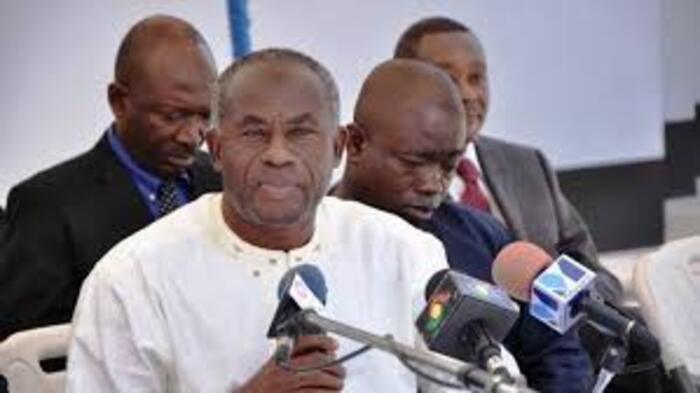
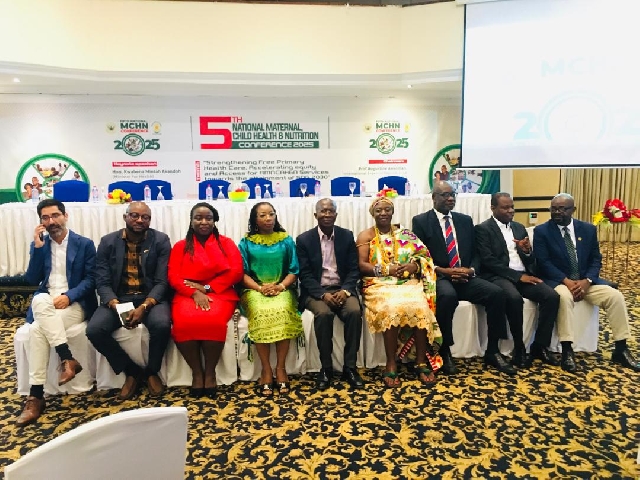
Ghana is grappling with a troubling drop in maternal and child health outcomes, even as the number of trained health workers continues to rise. This was the stark message delivered by Dr. Kennedy Brightson, Director for Public Health at the Ghana Health Service, during the 5th Maternal, Child Health and Nutrition Conference in Accra. Dr. Brightson revealed that between 2022 and 2024, major health indicators—including skilled delivery coverage, adolescent antenatal attendance, and child immunisation- have all witnessed steady declines. Most alarming, he said, is the increase in maternal deaths: 806 in 2022, 861 in 2023, and 819 in 2024. “Eight hundred maternal deaths a year is not something we should ever accept,” Dr. Brightson stressed to conference participants. The conference, themed “Strengthening Free Primary Health Care – Accelerating Equity and Access to Reproductive, Maternal, Child, Adolescent and Nutrition Services towards attainment of the SDG 2030,” brought health experts together to call for urgent investments in primary health care, nutrition, and improved quality of care. These measures, they agreed, are critical to preventing avoidable deaths and curbing rising complications among women and children. A growing concern is the incidence of Visico-Vaginal Fistula (VVF), a debilitating childbirth injury that leaves women incontinent. While specialists repair some cases, limited funding means only 80 fistula repairs are targeted for 2025, leaving many women without help. Dr. Brightson called for stronger health financing, more robust supply chains, better coordination among government agencies, and expanded community health systems. “Primary health care is the backbone of our health system. If it fails, mothers, newborns, children, adolescents, and the elderly will pay the price,” he warned. Other conference speakers highlighted a silent nutrition crisis, pointing to the rising consumption of ultra-processed foods and unhealthy dietary habits, which are fueling high rates of micronutrient deficiencies among women and children. Dr. Maxwell Bisala Konla, a dietitian at the University of Ghana Hospital, urged the government to make healthy diets more affordable and to integrate nutrition services into every primary health care encounter. Meanwhile, Dr. Promise Sefogah, General Secretary of the Society of Obstetricians and Gynaecologists of Ghana (SOGOG), pressed for urgent policy action to support women during the menopausal transition and for universal access to respectful, quality obstetric care. Source: Apexnewsgh.com
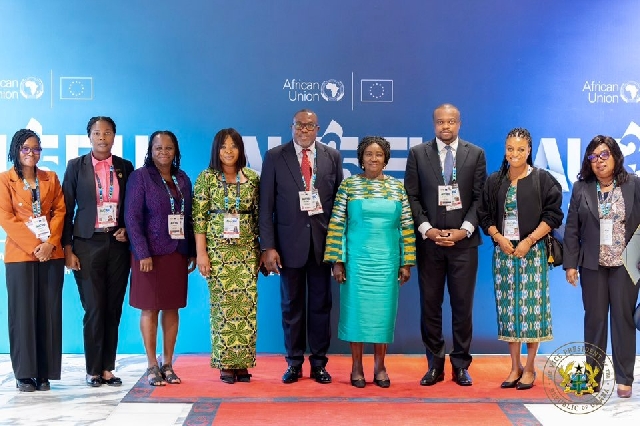
Vice President Opoku-Agyemang Calls for Stronger, Balanced Africa-Europe Partnership at AU–EU Summit
Ghana’s Vice President, Her Excellency Prof. Naana Jane Opoku-Agyemang, has called for a revitalised and equitable partnership between Africa and Europe, urging leaders to build on shared values and mutual respect as she addressed the Seventh AU–EU Summit in Luanda, Angola. Speaking before an audience of Heads of State, government leaders, and senior officials from both continents, Prof. Opoku-Agyemang delivered warm greetings from President John Dramani Mahama and extended congratulations to Angola as it celebrates its 50th Independence anniversary. She described the Summit as unfolding during a period of “profound global transformation,” stressing the need for Africa and Europe to chart a path guided by sustainable development, partnership, and mutual benefit. Reflecting on progress since the landmark Cairo Summit in 2000, the Vice President noted significant achievements in peace, security, and governance, commending the African Peace and Security Architecture (APSA) as a milestone. Yet, she cautioned that persistent challenges, climate shocks, geopolitical tensions, piracy, and ongoing humanitarian crises, require urgent and coordinated action. Turning to Ghana’s own trajectory, Prof. Opoku-Agyemang highlighted the country’s 2026 budget as evidence of a renewed commitment to economic stabilisation and growth. She cited falling inflation, a stabilised cedi, and strengthened fiscal governance as indicators of resilience. Ghana’s economic strategy, she explained, is anchored on restoring stability, enhancing infrastructure and connectivity, and prioritising job creation and human capital, pillars that align with the AU–EU Vision 2030 and position Ghana to contribute to Africa’s ongoing transformation. On matters of peace and security, the Vice President described West Africa as a region of vibrant economies and energetic youth, while warning of rising threats from extremist groups exploiting poverty and environmental challenges. She announced Ghana’s intention to convene a regional meeting to address violent extremism and called for greater support, financial, technical, and logistical, for APSA, the African Governance Architecture, and Regional Economic Communities. Prof. Opoku-Agyemang welcomed the European Union’s €150 billion Global Gateway Initiative, especially its focus on green energy and digital transformation. She expressed Ghana’s hope for further EU assistance with offshore patrol waivers, repairs to the Kpone hydroelectric dam, and improvements to the Damongo water facility. As Ghana continues its leadership on the African Union’s Year of Reparations, the Vice President revealed the country’s intent to present a UN resolution recognising the Trans-Atlantic Slave Trade as a grave crime against humanity, urging European partners to join as co-sponsors. She also praised Africa-Europe cooperation at the UN Human Rights Council and encouraged continued momentum toward justice and equity. Concluding her address, Prof. Opoku-Agyemang invoked the legacy of Kofi Annan, emphasising the inseparability of development, security, and human rights. She urged leaders to forge a partnership that transforms these principles into action, expanding opportunity through peace, and achieving development through stability. Source: Apexnewsgh.com
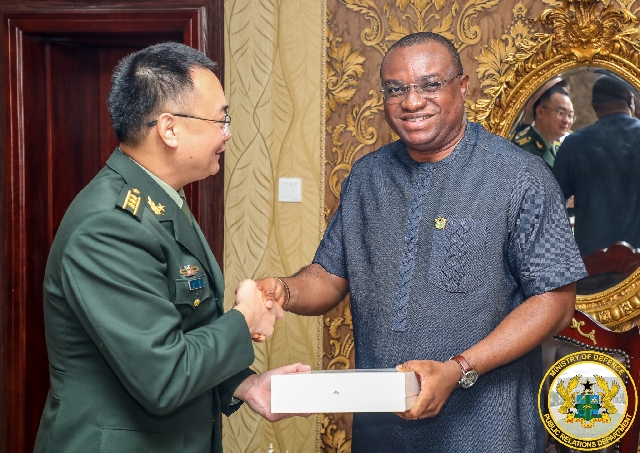
Chinese Defence Attaché Visits Ghana’s Defence Ministry, Pledges Stronger Security Ties
Colonel Dou Yan, the Chinese Defence Attaché to Ghana, paid a working visit to the Ministry of Defence, underscoring the deepening diplomatic engagement between Ghana and China. Welcoming Colonel Dou Yan, Deputy Minister for Defence Mr. Ernest Brogya Genfi expressed sincere appreciation for China’s critical support in the ongoing investigation into the recent Z-9 helicopter crash. Mr. Genfi highlighted that China’s assistance exemplifies its enduring commitment to Ghana’s defence progress. Colonel Dou Yan, in turn, reaffirmed Beijing’s readiness to further strengthen bilateral defence ties. He extended an official invitation to the Deputy Minister to visit China, aiming to facilitate additional high-level dialogues and collaboration. Discussions during the visit centered on expanding military-to-military cooperation and identifying new avenues for partnership, particularly in capacity building, technological advancement, and operational support. Both sides agreed that deepening cooperation would yield mutual benefits and strengthen the security architecture of both nations. Source: Apexnewsgh.com
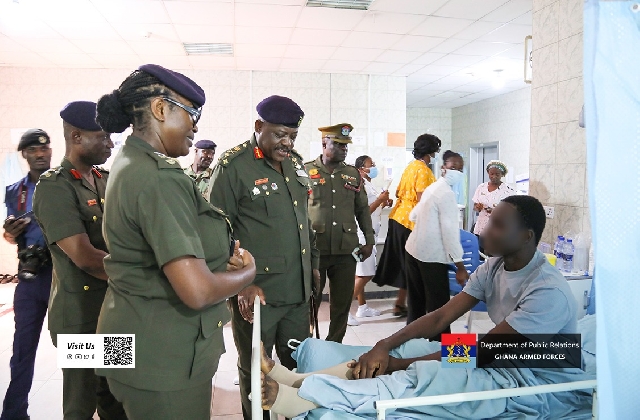
CDS Visits Injured Soldiers at 37 Military Hospital, Pledges Support and Safety Review
Lieutenant General William Agyapong, Chief of the Defence Staff (CDS), has paid a compassionate visit to military personnel recuperating at the 37 Military Hospitals after a recent vehicular accident between Salaga and Tamale. The accident, which occurred late last week, involved a military vehicle carrying duty-bound personnel. Several officers sustained injuries of varying severity and were promptly airlifted to Accra for specialised treatment. On Monday, 24 November 2025, Lt. Gen. Agyapong met with the wounded soldiers, extending the Ghana Armed Forces’ unwavering support and personally commending the hospital’s medical team for their rapid and professional response. He assured the injured officers that every effort would be made to provide them with the best possible care. The CDS also announced that a full investigation would be launched to determine the cause of the accident and to review safety protocols for troop movement and operations. The families of those injured voiced their gratitude for the visit and the ongoing commitment shown by the Armed Forces’ leadership to the welfare of its personnel. Source: Apexnewsgh.com
Majority Caucus Stresses Transparency and Public Input in Ghana’s Lithium Mining Negotiations
The Majority Caucus on the Lands and Natural Resources Committee has put the spotlight on the need for public participation and legal clarity in Ghana’s lithium mining negotiations, insisting that the country’s mineral wealth must be managed through open and transparent processes. Committee Chairman Alhaji Collins Dauda, speaking to the media, outlined the evolving status of the lithium mining agreement currently before Parliament. He drew attention to the significant differences between the original deal presented in 2024 and the revised version now under consideration. According to Dauda, the initial agreement between Ghana and Barari DV Ghana Limited, tabled by then-Minister for Lands and Natural Resources Abu Jinapor, was the result of consultations with traditional authorities and state agencies. However, during parliamentary scrutiny, concerns surfaced over the royalty rate and the fairness of the proposed terms. The 2024 agreement recommended a 10% royalty on lithium, a figure that contradicted Ghana’s Minerals and Mining Act, which, after a 2010 amendment, sets a flat royalty rate of 5%. The committee advised that the law needed to be amended to accommodate this higher rate, but no such amendment occurred, rendering the agreement legally non-compliant and halting its ratification. The new agreement, submitted by the current administration, aligns royalty payments with the legal 5% rate, with Dauda stressing that any future increase would require a formal amendment to the law. To ensure a fair and inclusive process, the committee has launched a wide-ranging public consultation, publishing notices and inviting stakeholder input on the agreement’s terms and the country’s broader approach to lithium mining. Dauda assured that no agreement will be ratified until all legal requirements are met and the perspectives of Ghanaians are fully considered, reaffirming the committee’s commitment to a transparent and beneficial outcome for the nation. Source: Apexnewsgh.com
President Mahama Hails Ghana-UK Partnership During Prince Edward’s Visit
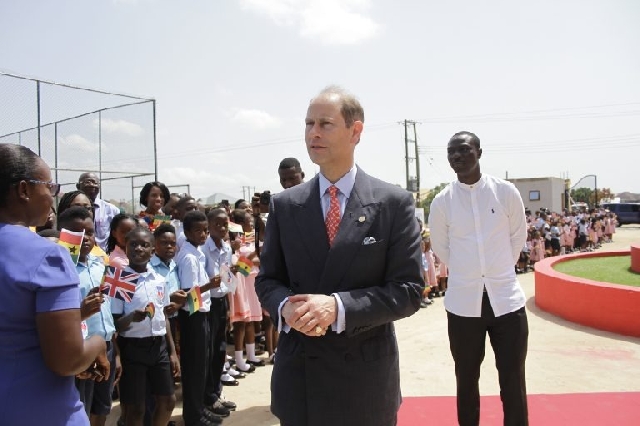
A renewed spirit of friendship was on display at the Jubilee House as President John Dramani Mahama welcomed the Duke of Edinburgh, Prince Edward, reaffirming Ghana’s deep and enduring ties with the United Kingdom. The occasion, marked by ceremonial warmth and diplomatic candor, underscored the shared values, historic bonds, and mutual interests that continue to unite the two nations. Addressing dignitaries gathered at the forecourt, President Mahama reflected on the shifting landscape of international relations. He emphasized that, in the face of mounting global challenges, strengthened multilateralism and close collaboration remain more crucial than ever. The President lauded the UK’s leadership on climate change and called for even greater cooperation to address pressing environmental issues. President Mahama also highlighted the transformative impact of the Duke of Edinburgh International Award in Ghana. He described the programme as a catalyst for growth among young people, fostering discipline, creativity, and ambition. He assured Prince Edward of Ghana’s commitment to supporting and expanding the initiative, expressing confidence that the Duke’s visit would further boost its reach and positive influence. Prince Edward, in his remarks, echoed his passion for the Award, describing it as a powerful vehicle for empowering the next generation. He noted that the programme continues to instill confidence, resilience, and a strong sense of purpose in young participants, qualities needed to thrive in today’s complex world. The day’s events not only reinforced the goodwill between Ghana and the UK but also spotlighted their shared investment in the future of youth, cooperation, and global progress. Source: Apexnewsgh.com
Traders Group Accuses Customs Task Force of Systematic Extortion in Ashanti Region
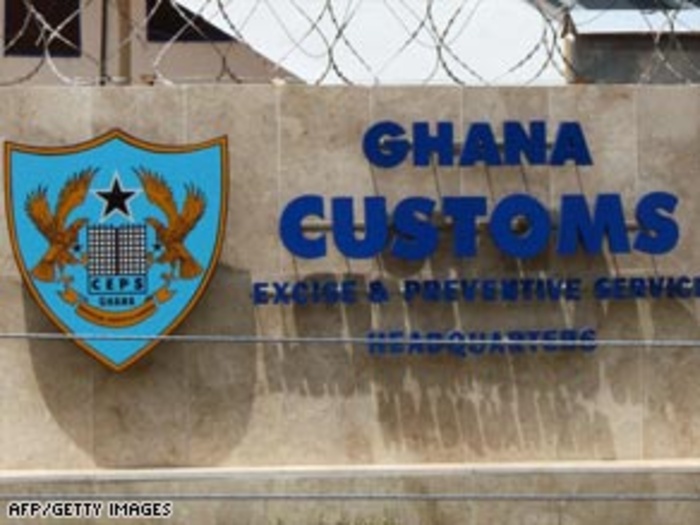
A storm is brewing in Ghana’s business community as the Traders Advocacy Group Ghana (TAGG) has leveled grave accusations of extortion against members of the Ghana Customs Division Task Force operating under the Ghana Revenue Authority in the Ashanti Region. At a press conference in Accra, TAGG President David Kwadwo Amoateng painted a picture of a task force gone rogue. What began as an initiative to improve post-clearance checks and ensure fairness for importers, he claimed, has mutated into a machinery for systematic extortion. “Traders initially welcomed the task force, but its operations have fundamentally transformed into an extortion force,” Amoateng said. The group alleges that funds collected from importers under the pretext of revaluation assessments are siphoned back to Accra, creating incentives for senior officers to perpetuate the existence of these task forces. TAGG questioned the necessity of the force, arguing that Ghana Customs already has robust systems in place for valuation and duty collection. “If Customs were prioritising the national interest and implementing their existing mechanisms efficiently, why would an additional task force be necessary?” Amoateng asked. TAGG spotlighted a case it described as emblematic of the wider problem, involving an officer named Prince Daniels Mensah Odai—allegedly the head of the Ashanti Region Task Force. According to the group, Odai intercepted two containers lawfully cleared in Accra, accused the importer of undervaluation, and demanded GHS 120,000 before settling for GHS 40,000, paid through a combination of mobile money and cash. The payment was later deposited into state coffers, purportedly to cover tracks after the incident was reported. Mr. Amoateng suggested this may be only the tip of the iceberg, asking, “How many other importers have fallen victim to this officer?” He also warned that the practice of inflating recovery figures to create the illusion of robust revenue collection is a recurring problem. TAGG delivered a stern message to the new administration, reminding it that similar issues had eroded public confidence under the previous government. The group outlined a four-point demand: immediate investigation into the allegations, a comprehensive audit of all Customs task forces, transparent systems to eliminate extortion, and an independent reporting channel for traders. Cautioning that official statistics on revenue “recoveries” may mask the true nature of the task force’s operations, TAGG concluded that rooting out corruption within Customs is essential for restoring trust, enabling business growth, and supporting the government’s broader reform agenda. Source: Apexnewsgh.com
Deloitte Warns Bank of Ghana’s NPL Target is Ambitious, Calls for Aggressive Recovery Measures
Deloitte Ghana has sounded a note of caution over the Bank of Ghana’s drive to slash non-performing loans (NPLs) to 10% by the end of 2026, describing the target as ambitious and warning that it will require aggressive recovery actions by banks, even as recent trends show improving asset quality. In its analysis following the presentation of the 2026 national budget, the auditing firm described the banking sector’s ability to meet this goal as a crucial test for Ghana’s broader financial stability. The warning comes on the back of positive momentum: Ghana’s NPL ratio has already declined from 22.8% in 2024 to 20.4% as of September 2025, thanks to a stronger cedi, loan write-offs, recoveries, and moderate credit growth. Still, under new NPL reduction guidelines, all regulated financial institutions are now required to submit board-approved strategies outlining how they plan to manage and reduce bad loans over the next year. Deloitte’s report also highlighted a marked improvement in credit conditions, with average lending rates falling from 30.6% in 2024 to 22.7% in 2025, and projected further declines as macroeconomic stability strengthens. On restructuring, Deloitte pointed to a major turnaround at the National Investment Bank (NIB) following government interventions, which included GH¢450 million in cash, GH¢1.5 billion in marketable bonds, and GH¢500 million in Nestlé Ghana shares. These measures have transformed NIB’s negative capital adequacy to a robust 23%, fully restoring compliance and enabling the bank to refocus on supporting SMEs and expanding its transaction capacity. Deloitte further noted that government plans to recapitalize other state-owned banks could help reinforce sector stability, protect depositor confidence, preserve jobs, and prepare these institutions for future listing on the Ghana Stock Exchange. Source: Apexnewsgh.com
IMF Warns Ghana’s Fight Against Corruption Is at a Breaking Point Amid Chronic Underfunding
Ghana’s battle against corruption is facing a critical threat, with the nation’s key accountability institutions “severely weakened” by persistent underfunding, according to the 2025 IMF Governance Diagnostic Report. The report, conducted in September 2023, cautions that the country’s anti-corruption architecture is approaching a breaking point unless urgent reforms are implemented. The IMF’s findings reveal that major institutions, including the Office of the Special Prosecutor (OSP), the Economic and Organised Crime Office (EOCO), and the Commission on Human Rights and Administrative Justice (CHRAJ), regularly receive less than half of their budgets as approved by Parliament. As a result, agencies tasked with investigating corruption, prosecuting financial crimes, safeguarding public funds, and protecting whistleblowers are left struggling without the basic resources they need to operate effectively. Despite annual budgetary allocations, the report points out that actual disbursements from the Ministry of Finance fall far short, leaving institutions unable to recruit staff, maintain investigations, upgrade technology, or conduct specialised prosecutions. Even the OSP, established to spearhead high-profile corruption cases, is forced to seek clearance from the Ministry of Finance before hiring or paying its own staff, an arrangement the IMF describes as fundamentally incompatible with operational independence. Beyond the financial shortfall, the IMF warns of deep structural vulnerabilities. Ghana’s anti-corruption framework is described as “fragmented, overlapping and exposed to political influence,” with harmful duplication of mandates among the OSP, EOCO, and CHRAJ. The lack of clear coordination protocols, the report says, creates confusion, delays investigations, and allows political actors to exploit institutional weaknesses. The Attorney-General’s sweeping constitutional authority over all prosecutions further undermines the prosecutorial autonomy of agencies like EOCO and the OSP, rendering their independence “more symbolic than guaranteed.” The IMF points to recent high-profile incidents, such as the resignation of the first Special Prosecutor and the removal of the Auditor-General, as evidence of mounting political pressure on Ghana’s anti-corruption bodies. While Ghana has made gains through digitalisation, access-to-information reforms, and improved procurement laws, the IMF asserts that these steps are overshadowed by the deeper structural issues. The report concludes that, without decisive reforms, including guaranteed financing, clearer mandates, and effective insulation from political interference, corruption will continue to drain public revenue, scare off investors, and undermine Ghana’s prospects for economic recovery. Source: Apexnewsgh.com
GNPC and Explorco Refute Allegations Over Data Submission in Springfield Asset Valuation
The Ghana National Petroleum Corporation (GNPC) and its subsidiary, GNPC Explorco, have issued a strong denial of recent allegations suggesting their involvement in the submission of outdated or secondary data for valuing Springfield Exploration and Production Limited’s interest in the West Cape Three Points Block 2 (WCTP-2). These allegations resurfaced following a press release from the Ministry of Energy and Green Transition, which claimed that GNPC and Explorco provided 2020 data, previously used in an arbitration case, instead of more recent 2024 appraisal data for valuation purposes. In a detailed statement released on Monday, GNPC and Explorco dismissed the claims as both misleading and inaccurate. They clarified that they never supplied U.S.-based consultancy Sewell & Associates with any secondary data from the 2020 Aryeetey Report. Instead, the corporations pointed out that the Sewell report itself includes a disclaimer confirming that all data used was supplied exclusively by Springfield. GNPC and Explorco further stated that they had received no communication from Springfield regarding the submission of such data and were unaware that Springfield had commissioned the valuation. Responding to the accusation that the same dataset contributed to Ghana losing an international arbitration case, GNPC insisted that the use of 2020 data was “solely Springfield’s” decision. Neither GNPC nor Explorco, they emphasised, influenced or directed the data used for the Sewell valuation. The corporations also highlighted that Sewell’s disclaimer noted the absence of raw geoscience data for the relevant block, and the firm relied on a 2020 GNPC estimate as provided by Springfield. This, they said, clearly demonstrates they were not responsible for the data supplied. Dismissing further accusations, GNPC and Explorco insisted they did not withhold updated 2024 primary data, maintaining they “were not in control of the process” and could not have concealed any information. They also rejected claims of an attempt to inflate valuations, stressing they had no involvement in the data submission process. Addressing a separate allegation that more than US$700 million of state funds were at risk due to manipulated or discredited information, GNPC described this as entirely false. The Corporation asserted that it has never valued Springfield’s asset at US$700 million nor advised the government to make payments on such a basis. Rather, internal evaluations are routine commercial assessments considering various scenarios, not final valuation recommendations. GNPC affirmed that the government is commencing a transparent process to recruit a competent technical firm and transaction advisor to conduct an independent valuation of the WCTP-2 and related assets, using the most current data available. The Corporation reassured the public that all decisions regarding the Springfield asset have been transparent and are conducted in the best interest of the Ghanaian people. The statement was issued by the Corporate Affairs Division of GNPC. Source: Apexnewsgh.com