
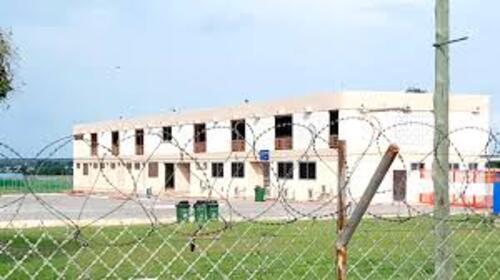



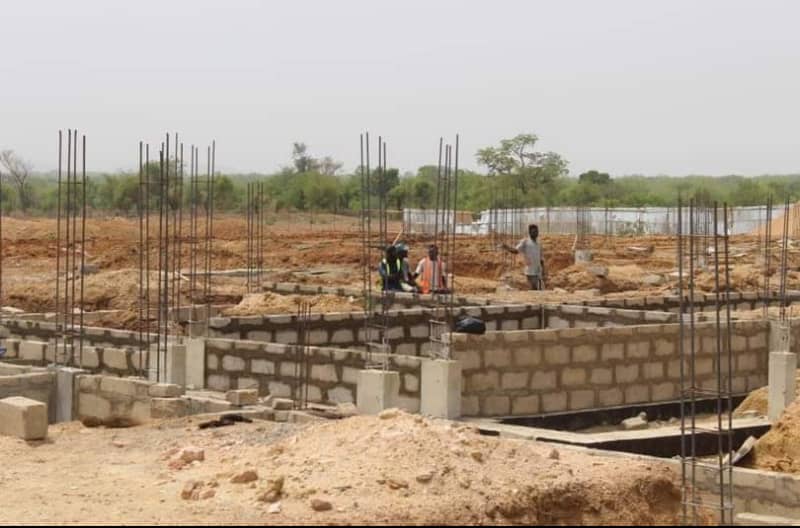
Incoming President John Dramani Mahama is set to inherit a monumental challenge from outgoing President Nana Addo Dankwa Akufo-Addo – completing the ambitious Agenda 111 hospital infrastructure project. Apexnewsgh reports The initiative, launched during the COVID-19 pandemic, aims to construct 111 district and regional hospitals, including two psychiatric facilities, to address critical healthcare infrastructure gaps. However, Dr. Edward Omane Boamah, Director of Elections and IT for the National Democratic Congress (NDC), revealed on Facebook that an estimated $1.4 billion is required to complete the project. This staggering amount underscores the significant resources needed to bring the project to fruition. Dr. Boamah also noted that none of the Agenda 111 hospitals are currently functioning, emphasizing the project’s incomplete status. During his final State of the Nation Address, President Akufo-Addo urged President-elect Mahama to prioritize completing the Agenda 111 projects. Akufo-Addo highlighted the project’s transformative potential, describing it as a cornerstone of Ghana’s healthcare development. Despite progress, with work underway at 99 district sites and two psychiatric hospitals, the pace of construction varies widely, with completion rates ranging from 5% to 95% across sites. The NDC has criticized the handling of the project, citing concerns about its financial burden and incomplete status. Nevertheless, President Akufo-Addo expressed hope that the Mahama government would see the project through to completion, ensuring it contributes to strengthening Ghana’s healthcare system. As President-elect Mahama prepares to take office, the nation will closely watch how his administration tackles this critical aspect of Ghana’s healthcare infrastructure. Source: Apexnewsgh.com
Share Covid data, World Health Organization tells China
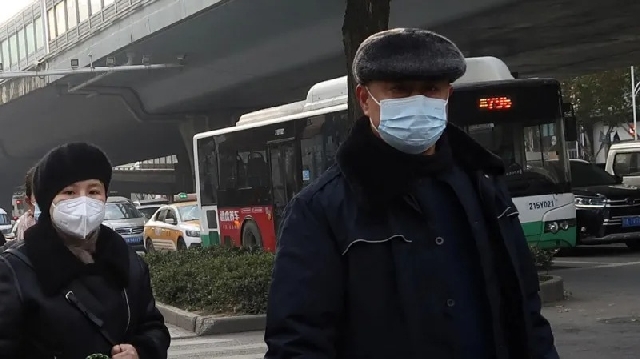
The World Health Organization has urged China to share data on the origins of the Covid pandemic, five years on from its start in the city of Wuhan. “This is a moral and scientific imperative,” the WHO said in a statement to mark what it called the “milestone” anniversary. “Without transparency, sharing, and co-operation among countries, the world cannot adequately prevent and prepare for future epidemics and pandemics,” it added. Many scientists think the virus transferred naturally from animals to humans, but some suspicions persist that it escaped from a laboratory in Wuhan. China has not responded to Monday’s WHO statement. In the past it has strongly rejected the lab leak theory. In September, a team of scientists said it was “beyond reasonable doubt” that the Covid pandemic started with infected animals sold at a market, rather than a laboratory leak. They came to this conclusion after analysing hundreds of samples collected from Wuhan in January 2020. Covid origin studies say evidence points to Wuhan market Covid origin: Why the Wuhan lab-leak theory is so disputedIn its statement, the WHO went back to the early days of Covid and traced its evolution from a local phenomenon to a global scourge, leading to lockdowns around the world and the ultimately successful race to develop vaccines. “Five years ago on 31 December 2019, WHO’s Country Office in China picked up a media statement by the Wuhan Municipal Health Commission from their website on cases of ‘viral pneumonia’ in Wuhan, China,” the organisation said. “In the weeks, months and years that unfolded after that, Covid-19 came to shape our lives and our world,” it went on. The WHO said it “went to work immediately” as 2020 dawned. It recalled how its employees activated emergency systems on 1 January and informed the world three days later. “By 9-12 January, WHO had published its first set of comprehensive guidance for countries, and on 13 January, we brought together partners to publish the blueprint of the first Sars-CoV-2 laboratory test,” it added. The WHO said it wanted to “honour the lives changed and lost, recognise those who are suffering from Covid-19 and long Covid, express gratitude to the health workers who sacrificed so much to care for us, and commit to learning from Covid-19 to build a healthier tomorrow”. In May 2023, the WHO declared that Covid-19 no longer represented a “global health emergency”. Its director general, Dr Tedros Adhanom Ghebreyesus, said at the time that at least seven million people had died in the pandemic. But he added that the true figure was “likely” closer to 20 million deaths – nearly three times the official estimate. Since then, the WHO has repeatedly warned against complacency about the possible emergence of future Covid-like illnesses. Dr Ghebreyesus has said the next pandemic “can come at any moment” and has urged the world to be prepared. Source: BCC
Ashanti Region Reports First Cholera Cases, Health Authorities Take Swift Action
The Ashanti Region has confirmed its first five cholera cases, marking a worrying turn in Ghana’s ongoing cholera outbreak. The cases are spread across three districts: Sekyere South, Kumasi, and Bekwai, with Sekyere South bearing the brunt of the outbreak, reporting three cases. Apexnewsgh reports These confirmed cases bring the Ashanti Region into a growing list of affected areas, including the Western, Greater Accra, and Central Regions, which have all experienced fatal cholera outbreaks in recent months. Nationwide, the situation is dire, with 4,155 suspected cases and 35 fatalities reported since October 2024. In response to the outbreak, health authorities in the Ashanti Region have sprang into action. The Ashanti Regional Health Directorate convened an emergency meeting at the Public Health Emergency Operations Centre, bringing together representatives from key agencies, including the Food and Drugs Authority (FDA) and environmental health officers. To combat the spread of cholera, the Regional Health Directorate has implemented several measures, including: Disinfecting Homes: Disinfecting the homes of confirmed cases to prevent further contamination. Isolation and Contact Tracing: Isolating affected individuals and tracing their contacts to contain the outbreak. Strengthening Surveillance: Strengthening public health surveillance and response efforts in collaboration with district teams. Mobilizing Emergency Committees: Mobilizing public health emergency committees in affected areas to coordinate response efforts. Initial assessments suggest that the confirmed cases are confined to specific areas, and none of the affected individuals used public restrooms. The Regional Health Directorate, led by Dr. Fred Adomako-Boateng, has also intensified awareness campaigns and training for healthcare workers on case definitions, identification, and contact tracing. As the situation continues to unfold, health authorities remain vigilant, working tirelessly to contain the outbreak and prevent further spread. Source: Apexnewsgh.com
Entrance University of Health Sciences Secures Presidential Charter, Elevating to Full University Status
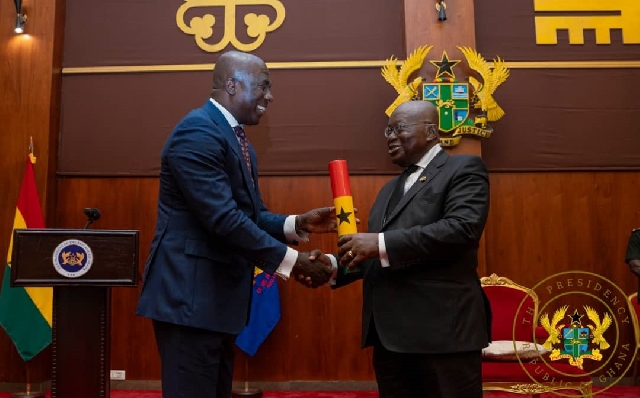
In a historic milestone, Entrance University of Health Sciences has achieved presidential charter status, solidifying its position as a fully recognized and autonomous university. Apexnewsgh reports This prestigious recognition is a testament to the institution’s dedication to excellence in education, research, and community service. As a subsidiary of the Tobinco Group, Entrance University has been striving to strengthen its position in higher education. The presidential charter, granted after a rigorous evaluation, highlights the university’s commitment to academic excellence, innovation, and nation-building. The official charter-granting ceremony took place on December 19, 2024, at the Jubilee House, where Entrance University was one of 14 private institutions honored. President Nana Addo Dankwa Akufo-Addo emphasized the significance of the charter, stating it represented the highest recognition a tertiary institution in Ghana could achieve. With this achievement, Entrance University joins the ranks of top institutions in the country, enabling it to award degrees independently and develop academic programs without external oversight. The university’s leadership has expressed gratitude to its faculty, staff, and students, whose combined efforts made this historic accomplishment possible. Looking ahead, Entrance University plans to introduce medical and dentistry programs to its range of courses for students in the coming year. This expansion is expected to further solidify the university’s position as a leading institution in health sciences education. The presidential charter is a significant milestone not only for Entrance University but also for the Ghanaian education sector as a whole. As President Akufo-Addo remarked, “This milestone is a testament to the government’s unwavering commitment to academic excellence, innovation, and nation-building.” Source: Apexnewsgh.com
NPP Pledges to Revolutionize Ghana’s Healthcare with Integrated Medicine Approach
In the vibrant city of Kumasi, a pivotal meeting unfolded, bringing together herbal medicine practitioners who play a crucial role in Ghana’s healthcare landscape. Apexnewsgh reports At the heart of this gathering was Dr. Matthew Opoku Prempeh, the Vice-Presidential Candidate of the New Patriotic Party (NPP), who stood before the audience, eager to acknowledge and celebrate their invaluable contributions. With a firm belief in the power of traditional remedies, Dr. Opoku Prempeh addressed the attendees, highlighting how herbal medicine serves as an essential pillar in meeting the health needs of Ghanaians. He spoke passionately about its affordability, accessibility, and cultural relevance, reinforcing the idea that traditional practices are not just complementary, but integral to a holistic healthcare system. “Our healthcare system thrives when we integrate both conventional and traditional medicine,” he asserted. He continued by expressing the NPP’s commitment to building a resilient healthcare framework that recognizes the strengths of herbal medicine practitioners. Under the visionary leadership of the NPP’s Presidential Candidate, Dr. Mahamudu Bawumia, he outlined the party’s plan to bolster the herbal medicine industry. This initiative aims to not only create more job opportunities but also to advance local research and enhance access to quality healthcare for every Ghanaian. Dr. Opoku Prempeh’s message was clear: by valuing and promoting the integration of herbal medicine with modern practices, the nation could unlock its full potential. “We deeply value the role of herbal medicine in our healthcare system. Together, we can harness its benefits and push the health sector forward,” he passionately declared. As the meeting drew to a close, he appealed to the practitioners, urging them to support Dr. Bawumia and the NPP in the upcoming elections. He emphasized their shared vision for a healthcare sector that not only thrives but also adequately serves the diverse needs of all citizens. The gathering resonated with enthusiasm, as the practitioners recognized the importance of uniting their efforts for a healthier future in Ghana. Source: Apexnewsgh.com
Improving Maternal Health: Adongo Donates Beds, Mattresses, and More to 4 Communities
As the incumbent Bolgatanga Central Member of Parliament and NDC Parliamentary Candidate, Hon. Isaac Adongo has always been driven by a passion to serve his community. Apexnewsgh reports His latest donation of medical supplies to health facilities in his constituency is a testament to his commitment to improving the lives of his people. What makes this donation even more remarkable is that Hon. Adongo funded it entirely from his private resources. In a humble and unassuming tone, he revealed that he was aware that if he were to write to any government agency or organization for support at this time, his request would likely be ignored. Undeterred by this reality, Hon. Adongo took it upon himself to provide the necessary medical supplies to ensure that mothers and newborns in his constituency receive the best possible care. His selfless gesture is a shining example of leadership and a reminder that true public service is about putting the needs of others before one’s own. As Hon. Adongo continues to work tirelessly for the betterment of his community, his actions serve as a beacon of hope for a brighter future. This generous gesture couldn’t have come at a better time, as the health facility was in dire need of essential items. The medical supplies were received on behalf of the Municipal Health Director by Mr. Tidan Louis, the Clinical Care Coordinator. Extending his appreciation to Hon. Isaac Adongo, Mr. Tindan, who could not hide his excitement said, the donated supplies will greatly benefit the facility’s clients, particularly those in labor or detention, who require comfortable and hygienic conditions. “We are very grateful for such a gesture,” he expressed, further highlighting the significance of this donation in enhancing the facility’s capacity to provide quality care. The medical supplies, which included beds, mattresses, and other essential items, will undoubtedly make a tangible difference in the lives of the facility’s clients. As Mr. Tindan acknowledged, this donation is a testament to the MP’s commitment to supporting the local community and improving healthcare outcomes. Below are detailed supplies by Hon. Isaac Adongo. Kalbeo received three(3) beds, three(3) mattresses, three (3) IV polls and three(3) side beds lockers. Tindonsobiligo received three(3) beds, three(3) mattresses, three(3) IV polls and three(3) side lockers. Nyorkokor received three(3) beds, three(3) mattresses, three(3) IV polls and three(3) side lockers. Tindonmolgo took for her beneficiaries two(2) beds, two(2) mattresses two(2)IV polls and two side beds lockers. Yikene for her part took two(2) beds, two(2) mattresses and two(2) IV polls and two(2) side beds lockers. Madina had two(2) beds, two(2) mattresses, two(2) IV polls and two side beds lockers. Source: Apexnewsgh.com
SoNM Community Comes Together to Honor Dr. Yakong’s Nursing and Midwifery Excellence Award
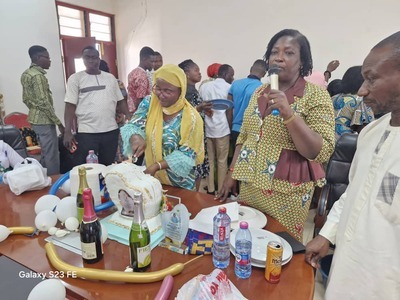
The School of Nursing and Midwifery (SoNM) was abuzz with excitement on Thursday as faculty members threw a surprise party to honor their esteemed colleague, Dr. Vida Nyagre Yakong. Apexnewsgh reports The celebration was in recognition of Dr. Yakong’s outstanding achievement, having bagged the prestigious Nursing and Midwifery Education and Research Excellence Award, organized by the Ministry of Health in Takoradi. The party was attended by a diverse group of distinguished guests, including clinical coordinators from major hospitals in Tamale, the Human Resource Director of the University for Development Studies (UDS), and clinicians from various hospitals in Tamale township. As Dr. Yakong walked into the party, she was met with thunderous applause and warm smiles from her colleagues. Overcome with emotion, she expressed her heartfelt gratitude to the faculty members for their love and support. She revealed that she had been touched by the fact that her colleagues had not only voted for her but had also organized a party to celebrate her achievement. Dr. Yakong shared her perspective on wealth, saying that being rich is not just about having a lot of money, but about being able to get what you want. For her, the love and support shown by her colleagues were a true manifestation of riches, compassion, and togetherness. The party was not only a celebration of Dr. Yakong’s achievement but also an opportunity for faculty members to socialize and reconnect with each other. As they mingled and shared stories, the sense of camaraderie and shared purpose was palpable. The party was a testament to the strong bonds of friendship and collegiality that exist within the SoNM community. Source: Apexnewsgh.com
GHS emphasizes crucial role of journalism in health emergencies
Ghana Health Service’s National Coordinator for Community Engagement and Health Promotion, Joel Abekuliya, has emphasized the crucial role of responsible journalism in reporting health emergencies and risk communication. “Today, we’re gathered to reiterate the importance of responsible journalism, especially in the face of rapidly spreading diseases,” Abekuliya began. “As one of the pillars of risk communication during health emergencies, journalists play a vital role in shaping public perception and action.” Abekuliya highlighted the need for journalists to write responsibly, producing stories that benefit the public and promote health equality. “In this technological era, we must leverage digital tools to fact-check online content and ensure credibility.” He stressed that journalists must prioritize verifying information from trusted sources, enabling the public to make informed decisions about their health. Abekuliya acknowledged the media’s significant contributions to promoting protective measures and combating health challenges. “We recognize the media’s power in shaping public opinion and influencing behavior.” However, he also cautioned against the risks of misinformation. “Sometimes, false information spreads quickly, and we must work together to correct it.” To address these challenges, Abekuliya emphasized the importance of collaboration between health officials and journalists. “By working together, we can identify solutions and promote accurate, timely information.” In conclusion, Abekuliya expressed optimism about the potential for responsible journalism to drive positive change. “Together, let’s strive for successful health communication that benefits all Ghanaians.” Through this call to action, Abekuliya reaffirmed the Ghana Health Service’s commitment to partnering with journalists to promote public health and well-being. However, the engagement which the participation of Journalists from Upper East, Upper West, North East and Northern Region also witnessed the present of Health Promotion Officers of these regions in attendance and officials from WHO. The training workshop was supported by the World Health Organization (WHO). Source: Apexnewsgh.com/Ngamegbulam Chidozie Stephen Contact: +233248250270/+233256336062 for your publications
The genesis of National Health Insurance in Ghana: Final settlement
By Prof. Robert Baba Kuganab-Lem Introduction The government of Ghana have variously contemplated on how best to finance health care and all have tried to develop a system of financing that will reduce the financial limitations that cost of health care imposed on citizen’s access to health particularly the poor and vulnerable. Before independence access to health care was narrowed to expatriates and the few Ghanaians working with the public service. The government of Osygyefo Dr. Kwame Nkrumah established the Ghana Health Service. The object of the service was to open health care to all Ghanaians. The service included principles of health insurance and health care was free at the point of use. Prime Minister Abrefa Busia’s government in 1971 started charging for hospital services through the hospital fee act of 1971. The view of the government then was that the hospital fees will reduce unnecessary and health excessive use of health facilities and also raise some revenue for the facilities. This was not full cost recovery. Government still had to hugely subsidies health care. In the 1980s it became extremely difficult for government to fund health care. Government therefore introduced the Hospital Fees Regulation of 1985. This ushered in the principle of cost recovery. For the first time Ghanaians had to pay the cost of health care at the point of use. This fee regulation it was reported resulted in a drop in attendance at health facilities particularly in rural areas. The law was amended in 1990 and the law allowed health facilities to retain 100% of the revenue and also keep a revolving fund for drugs. It is this amendment that ushered in the term CASH and CARRY. In local parlance it connoted no money, no treatment. It was a very unpopular term. Several pieces of research point to a fact that some of the advantages of user fees were not materialised. It rather created problems of equity and for most of the population services were no longer affordable. Motivation for Health Insurance The Hospital Fees Regulation of 1985 (cost recovery) was largely resulting from structural adjustment programmes introduced by the World Bank and the IMF to correct balance of payment deficits. The act distorted the health seeking behaviour patterns of Ghanaians. The system placed a heavy financial burden on the poor and led to inequities in access to healthcare. But government had no option than to agree to cost recovery in an effort to stabilise the economy of the country, which had taken a nosedive. In other to mitigate the widening gap of access to health care, the government introduced an exemption policy in 1992. The essence of the policy was to exclude the poor and vulnerable from paying user fees. There were reports that that the exemption directive was hardly used. Service providers found the exemption policy cumbersome and laborious to implement. The inability of the exemption policy to work points to a known fact that all poor relief is given grudgingly and reluctantly by service providers. The regressive nature of the cash and carry policy, coupled with the lackadaisical implementation of the exemption policy resulted in diminishing access of the population to health care. This agitated government and non-governmental organisations considerably and thus the beginning of the exploration of a more equitable system for guaranteeing financial access to health care. The concept of health insurance in Ghana predates the establishment of the National Health Insurance Scheme (NHIS) and has its roots in community-based health insurance initiatives. Various community-based health insurance schemes (also known as mutual health insurance schemes) existed in Ghana, particularly in rural areas. These were small, localized efforts where community members pooled resources to pay for healthcare when needed. The Catholic Church played a very critical role in the establishment of health insurance in Ghana. The first and most successful scheme was the Nkoranza Community Health Insurance Scheme based at St Michael hospital in Nkoranza. The Catholics established through the support of GTZ at Damongo the Damongo Community Health insurance scheme. These schemes which started in the early 1990s became a model for community-based insurance schemes in other parts of the country. NDC and Health Insurance Agenda President Rawlings in 1995 in order to mitigate the regressive nature of the cash and carry system introduced the ideal of health insurance scheme by piloting a scheme at Dodowa. He then commissioned the Ministry of Health to undertake a feasibility study on community health insurance. The main thrust of the commissioned feasibility study was to provide policy-makers with relevant data on the demand for and feasibility of health insurance schemes. It was also to assist to formulate a health insurance policy that would suit the largely rural population within the Ghana socio-economic context. The government through the MoH received from a private consultancy group an explicit proposal in late 1995. This consultancy produced a comprehensive report on the feasibility for the establishment of a National Health Insurance in Ghana. The consultancy proposed strongly the establishment of a centralised national health insurance company for all contributors to the SSNIT and registered cocoa farmers. It also recommended pilot rural based community-financed schemes for the non-formal sector. The then government got SSNIT to establish a Subsidiary Company charged with the responsibility of piloting insurance schemes in the Eastern Region. In its 2000 manifesto the NDC stated that Health Insurance will be a major strategy for mobilising additional resources and for ensuring financial access to health care in time of need. They highlighted that the pilot work already carried out will form the basis for a mix of insurance schemes, both public and private, national and local to cater for salaried employees, the self-employed as well as both urban and rural communities. They further stated in the manifesto that one of the most effective ways of keeping the cost of health care to a minimum is through a Health Insurance Scheme and it is for this reason that the NDC Government conducted in-depth studies and pilot projects to facilitate
John Mahama Promises Hope for Kidney Disease Patients with State-of-the-Art Dialysis Centers