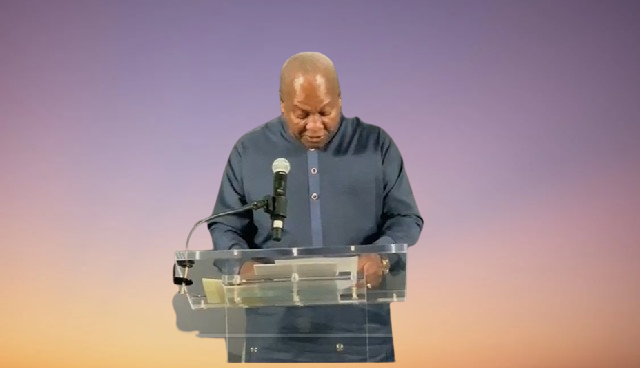

President John Dramani Mahama, serving as the African Union Champion for African Financial Institutions, has launched the Accra Reset, a transformative framework aiming to revolutionize global development institutions, financing, and partnerships as the Sustainable Development Goals (SDGs) era draws to a close. The unveiling took place at a high-level side event during the 80th Session of the United Nations General Assembly (UNGA) in New York, drawing heads of state, multilateral leaders, and private sector partners. Mahama warned that the global development order is on the brink of collapse, citing setbacks from the COVID-19 pandemic, worsening climate shocks driving millions into hunger, and crippling debt burdens that see countries spending more on interest than on health and education. With fewer than half of the 169 SDG targets on track, he called for urgent action beyond “development-as-usual.” “The world is only five years from 2030. The question is not simply what replaces the SDGs, but how to design institutions and financing systems that actually work,” Mahama stated. “Workability is the name of the game, innovative financing instruments, new business models, and smarter coalitions that multiply resources rather than ration them.” The Accra Reset is built on three pillars: sovereignty, workability, and shared value. Its first focus will be on health, transitioning from aid dependency to health sovereignty, reflecting commitments made at the Africa Health Sovereignty Summit in Accra earlier this year. A Club of Accra coalition will pilot innovative financing and investment initiatives in health, climate, food security, and job creation. A Global Presidential Council, featuring leaders from Africa, Asia, Latin America, and beyond, will provide political leadership and accountability, supported by a Global College of Advisors made up of experts in health, finance, innovation, and business. The initiative received widespread international backing: Former Nigerian President Olusegun Obasanjo called for a break from aid dependency. Former UK Prime Minister Gordon Brown endorsed the Reset as “a plan for the future.” Kenyan President William Ruto emphasized the need for financing national ambitions and accountability for universal health coverage. Barbados Prime Minister Mia Mottley pledged support for advancing pharmaceutical manufacturing. Access Bank Chairman Aigboje Aig-Imoukhuede promised robust private-sector engagement. Dr. Tedros Adhanom Ghebreyesus (WHO) and Dr. Ngozi Okonjo-Iweala (WTO) affirmed institutional support for “rewiring” global norms. Concluding the event, Mahama recalled the 2001 Monterrey Consensus that sparked initiatives like GAVI and the Global Fund, declaring the need for “a new vision of multilateralism—one that shifts from wish lists to engines of sustainable value creation.” Source: Apexnewsgh.com
Chiana-Paga MP in Hot Seat: Summoned by NDC FEC After Fiery TV Remarks
The Member of Parliament for Chiana-Paga, Mr. Nikyema Billa Alamzy, has been summoned by the Functional Executive Committee (FEC) of the National Democratic Congress (NDC) after a controversial appearance on GHOne TV. In a letter dated September 29, 2025, the party’s leadership directed Mr. Alamzy to appear before the committee on Tuesday, September 30, at the NDC headquarters in Adabraka, Accra. The summons followed what the party described as “widely circulated video recordings” in which the MP was heard questioning the rationale behind decisions taken by the party’s leadership in his constituency, alongside other remarks deemed uncomfortable by the hierarchy. “You are hereby invited to appear before the committee to provide clarification and further explanation,” the letter stated. The development comes amid confusion and mixed reactions in the Chiana-Paga constituency. Mr. Alamzy, after facing backlash, was seen in another video apologizing to the leadership of the party. Yet, in a sharp twist, the lawmaker later denied making such remarks in the first place, insisting that the video had been “maliciously edited” by individuals who, in his words, “do not like me.” According to him, “the video has been tampered with to suit the agenda of my detractors.” Despite his denials, sections of his constituents have backed the substance of his earlier comments, stressing that Chiana-Paga has not seen any meaningful appointments or development projects under the current leadership. “There is nothing to show in this constituency,” one constituent remarked, echoing the MP’s controversial claim. Meanwhile, observers are questioning why the MP chose to apologize for remarks he insists were not his. “He shot himself in the leg by apologizing for no wrongdoing,” a member of the public said. As Mr. Alamzy prepares to face the FEC on Tuesday, political watchers are keenly following the unfolding drama, which has left the MP caught between his own constituents’ frustrations and the expectations of his party leadership. Below is the full letter: Source: Apexnewsgh.com
NPP National Leadership Disavows Regional Chairmen’s Claims, Reaffirms Commitment to Fair Internal Processes
The national leadership of the New Patriotic Party (NPP) has publicly distanced itself from controversial remarks made by two of its regional chairmen, labeling their statements as “baseless” and inconsistent with the party’s core values. In a statement signed by General Secretary Justin Kodua Frimpong on September 28, 2025, the NPP called on the public and its members to disregard the claims made by Ashanti Regional Chairman Bernard Antwi Boasiako (Wontumi) and Bono Regional Chairman Kwame Baffoe (Abronye DC). Abronye stirred controversy on live television by suggesting he had influence over the compilation of polling station albums, while Wontumi alleged that the party’s scheduled January 31, 2026, presidential primary date was designed to benefit a particular aspirant. The party categorically rejected both assertions. “No individual, irrespective of rank or position, has a monopoly or unilateral control over the compilation of polling station albums,” the statement said, reaffirming the NPP’s commitment to fairness and transparency in all internal processes. Regarding Wontumi’s claim, the NPP clarified that the timing of the January 31 primary was a strategic move intended to give the party ample time to reorganize and reposition itself for the 2028 general elections, not to benefit any individual. The leadership further assured party members that transparent procedures would be followed at every stage of the internal electoral process, vowing to uphold credibility and unity within the party. Source: Apexnewsgh.com
Israeli Firm Contradicts Attorney-General’s Claims in Adu-Boahene Cyber Defence Trial
New revelations have surfaced in the ongoing trial of former National Signal Bureau (NSB) Director-General Kwabena Adu-Boahene, challenging earlier assertions by Attorney-General and Minister of Justice Dr. Dominic Ayine regarding the alleged non-delivery of cyber defense systems to Ghana. During court proceedings, Dr. Ayine had stated that “no cybersecurity system of the description in the January 30, 2020, contract was ever received by the Bureau of National Communications or by its successor agency, the National Signals Bureau, or by the Government of Ghana.” He further cited an inventory confirmation from the National Security Secretariat indicating the equipment was never received into official stores. However, International Security Consulting Holding Ltd. (I.S.C HOLDING Ltd.), the Israeli company contracted to supply the system, has refuted these claims in a letter addressed to Samuel Atta Akyea, Esq., counsel for Mr. Adu-Boahene, dated May 28, 2025. The company asserted that all cyber defence systems procured under the confidential January 30, 2020 agreement were fully delivered to Ghana’s National Security as contracted. The correspondence reads, “We hereby declare and for the avoidance of any doubt that: all Cyber defence systems, procured by the NSB, supplied under a confidential agreement signed on January 30th 2020, with an associated continuing service covenant, were fully delivered to Ghana’s National security.” I.S.C HOLDING Ltd., known for its high-level security consultancy and global government partnerships, also expressed its willingness to clarify or formally engage with Ghanaian authorities to verify the delivery and operational status of the systems. The company emphasized the credibility and experience of its consultants, and clarified that its statement specifically pertains to Mr. Adu-Boahene’s tenure as NSB Director-General. The firm reaffirmed its reputation for delivering “confidential, cutting-edge security solutions” and pledged full cooperation with any formal inquiries related to the contract. Source: Apexnewsgh.com
Haruna Iddrisu Leads NDC Presidential Race, Poll Shows Tight Competition Among Top Contenders
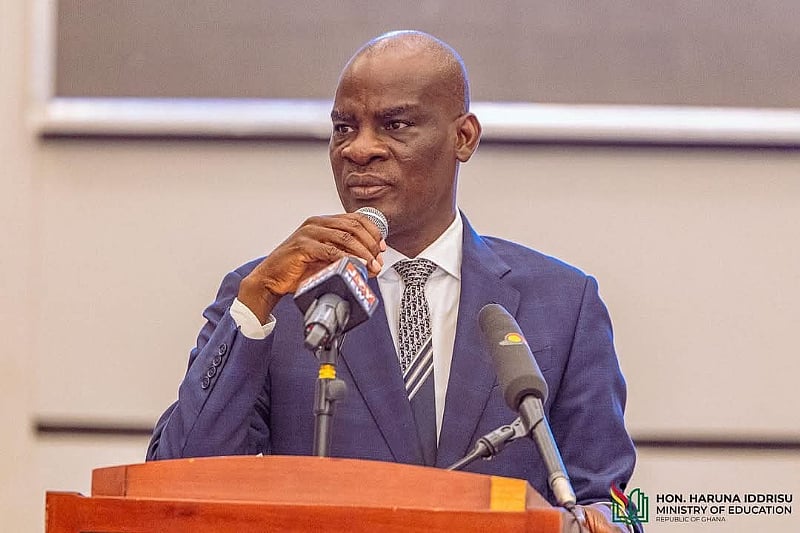
Global Info Analytics has released new polling data revealing that Minister of Education Haruna Iddrisu is currently leading the race to become the National Democratic Congress (NDC) flagbearer. According to the survey, Iddrisu commands 30% support, followed by NDC National Chairman Johnson Asiedu Nketia with 24%. Finance Minister Dr. Cassiel Ato Forson secures 18%, while Chief of Staff Julius Debrah trails with 10%. Minister of Foreign Affairs Samuel Okudjeto Ablakwa has 8%, Agric Minister Eric Opoku, Joshua Alabi, Armah Kofi-Buah, and Kwame Awuah-Darko each have 2%, Spio Garbrah 1%, and Okoe Vanderpuye with less than 1%. The poll also explored alternative scenarios. In a three-horse race without Ato Forson, Haruna Iddrisu’s support jumps to 45%, with Asiedu Nketia at 37% and Julius Debrah at 18%. Among NDC voters, Iddrisu garners 47%, Asiedu Nketia 39%, and Debrah 14%, while in swing regions, Iddrisu leads with 48% to Asiedu Nketia’s 37% and Debrah’s 15%. Conversely, if Haruna Iddrisu is not in the running, the race becomes a close contest between Asiedu Nketia (40%) and Ato Forson (38%), with Julius Debrah at 22%. Among NDC voters, Asiedu Nketia and Ato Forson are nearly tied at 42% and 41% respectively, with Debrah at 17%. In the swing regions, Ato Forson takes the lead with 47%, followed by Asiedu Nketia at 38% and Debrah at 15%. The results highlight intense competition within the NDC, with shifting dynamics depending on the lineup of candidate. Former Vice President Dr. Mahamudu Bawumia has surged ahead in the New Patriotic Party’s (NPP) presidential primaries, according to the latest poll by Global Info Analytics. The poll, published on Monday, September 29, shows Dr. Bawumia commanding 47 percent of delegate support, positioning him as the clear front-runner in the party’s internal contest. Despite his commanding lead, the survey also revealed that a significant portion of delegates remain undecided, leaving room for shifts as the primaries approach. Businessman and former Assin Central legislator Kennedy Agyapong is Dr. Bawumia’s closest challenger, but the data indicates he has yet to fully capitalise on any dip in Dr. Bawumia’s support. Analysts suggest that unless Mr. Agyapong can sway the undecided delegates to his camp, Dr. Bawumia’s advantage will be difficult to overturn. The poll highlights both Dr. Bawumia’s strong showing and the fluid nature of the race, as delegates continue to weigh their options. With the NPP’s flagbearer contest set to play a pivotal role in the party’s strategy for the 2028 general election, political observers believe the outcome will be crucial in determining the governing party’s strength heading into the national polls. Source: Apexnewsgh.com
Ghana’s President Mahama Slams US Over Visa Denial to Palestinian Leader
Ghanaian President John Dramani Mahama has strongly criticized the United States for denying visas to Palestinian Authority President Mahmoud Abbas and his delegation, preventing them from attending the 80th UN General Assembly. Mahama described the move as “deeply troubling” and warned that it sets a dangerous precedent for the United Nations. Delivering his address at the UN General Assembly in New York on September 25, 2025, Mahama reaffirmed Ghana’s unwavering support for Palestine, recalling the country’s formal recognition of the State of Palestine in 1988. He emphasized Ghana’s consistent backing of a two-state solution, dismissing claims that this would reward militant groups like Hamas. Mahama also highlighted the dire humanitarian situation in Gaza, condemning the “collective punishment” of Palestinians. He criticized the UN for using vague language to describe the situation, stating, “For nearly two years, and for fear of reprisals, we here in this General Assembly have been playing hide and seek with language to find the right words to help us avoid or excuse what we all know is taking place in Gaza.” The President urged the UN to take decisive action to end the “crimes” being committed in Gaza, warning that continued delays in global intervention would lead to more unnecessary loss of life. Thousands of Palestinians have already lost their lives in the past two years, Mahama lamented. In his address, Mahama called on the UN to demonstrate moral courage and act decisively to resolve the Israel-Palestine conflict. This incident highlights the complexities of international diplomacy and the challenges faced by global leaders in addressing sensitive geopolitical issues. Source: Apexnewsgh.com
Vice President Opoku-Agyemang Champions Decentralisation at National Dialogue, Outlines Reset Agenda Reforms
Vice President Prof. Jane Naana Opoku-Agyemang has reaffirmed the government’s dedication to deepening Ghana’s decentralisation process, calling it a central pillar of the Reset Agenda for national development. Speaking at the Maiden National Dialogue on Decentralisation and Responsive Governance, held at the Kempinski Hotel in Accra, the Vice President underscored the vital role of empowered local governments in advancing democracy and sustainable growth. “Building a capable state must begin with functional and ethical local governments. We must commit to giving citizens a stronger voice, as prescribed by the directive principles of state policy in our constitution,” she stated. Highlighting tangible progress, Prof. Opoku-Agyemang revealed that over GHS 2 billion has already been disbursed through the District Assemblies Common Fund, fuelling community-level development and essential services. However, she emphasized that resources alone are not sufficient, urging data-driven, evidence-based approaches that directly address citizens’ needs. Drawing on international lessons, the Vice President pointed to Uganda’s success, where fiscal transfers paired with robust citizen monitoring have led to marked improvements in health and education. “When decentralisation is matched with real empowerment and accountability, the results can be profound,” she remarked. Unveiling the government’s priorities under the Reset Agenda, she announced several key reforms: increasing allocations to the District Assemblies Common Fund, moving towards the election of Metropolitan, Municipal, and District Chief Executives (MMDCEs), supporting assemblies to boost their own-source revenues, and leveraging local income to attract private investment for development. Prof. Opoku-Agyemang also disclosed that work is progressing on the National Decentralisation Policy and Strategy (2026–2030), which aims to devolve greater power and resources from the centre to local governments. The two-day dialogue convened government officials, Members of Parliament, development partners, traditional and religious leaders, and civil society actors to help shape Ghana’s policy direction for the next five years. “Let us envision a Ghana where governance is closer to the people, where institutions are responsive, and where citizens are active participants in shaping their paths,” the Vice President declared as she officially opened the dialogue. Source: Apexnewsgh.com
Health Minister Akandoh Urges Self-Financing as U.S. Aid Suspension Exposes Ghana’s Vulnerability
Minister of Health Kwabena Mintah Akandoh has sounded the alarm over Ghana’s reliance on foreign aid, emphasizing the urgent need to establish a robust, self-financing structure for the nation’s health sector. His warning comes in the wake of the recent suspension of U.S. assistance to Ghana, triggered by an executive order that halted most foreign aid, including vital USAID programmes. The abrupt withdrawal has created a funding shortfall estimated at $156 million. In an exclusive interview, Mr. Akandoh described the situation as a wake-up call for the country, urging Ghana to take full ownership of its health financing. He pointed to the creation of the Accra Reset Fund as a pivotal step toward sustainable domestic funding, aimed at insulating essential health programmes from external shocks and disruptions. Backing the Minister’s stance, Acting Chief Executive of the National Health Insurance Authority (NHIA), Dr. Victor Asare Bampoe, underscored the importance of health in the reset agenda, suggesting that the same self-financing model could eventually be applied to other sectors of national development. Expanding on the government’s vision, Deputy Chief of Staff Nana Oye Bampoe Addo reaffirmed the NDC administration’s commitment under President John Dramani Mahama to building a self-reliant governance framework. She noted that internally funding crucial programmes—particularly in health—would ensure their continuity and resilience in the face of global uncertainties. Source: Apexnewsgh.com
Former Minister Joseph Cudjoe Urges National Security Status for Ghana’s Major Rivers
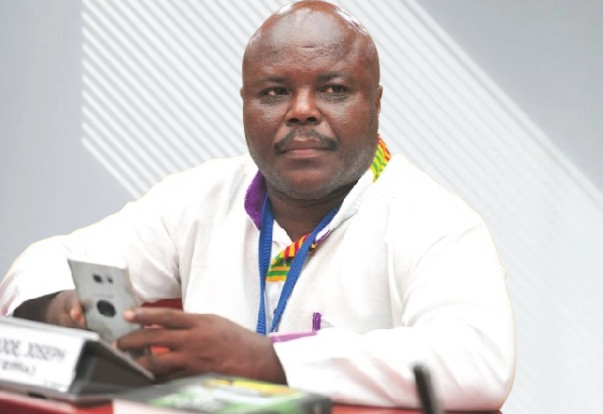
Former Minister for Public Enterprises, Joseph Cudjoe, has called for Ghana’s major rivers to be classified as critical national security assets. His proposal aims to shield these vital water bodies from ongoing destruction and pollution, which he warns could threaten the nation’s survival and future development. Speaking on the issue, Mr. Cudjoe stressed the urgent need to place rivers such as the Volta, Black Volta, White Volta, Pra, Ankobra, Tano, Densu, and all rivers with water treatment plants and irrigation systems, under the protection of a specialised security force or the regular military. He argued that any harmful activities near these rivers should be treated as acts of aggression against the state, warranting a strong security response. “These rivers are indispensable for our agriculture, hydroelectric power generation, transportation, and drinking water supply,” Mr. Cudjoe explained. He pointed out that other countries, including the United States, China, India, Brazil, Egypt, and Israel, have already implemented robust measures to secure their river systems. Mr. Cudjoe further asserted that enacting this proposal into law, supported by a dedicated budget, could curb illegal mining (galamsey) and provide a lasting solution to river pollution. “We may face resistance from those mining in and around the rivers, but many Ghanaians will welcome this decisive step, knowing that the government is confronting the issue head-on,” he concluded. Source: Apexnewsgh.com
President Mahama Champions African Self-Reliance with Accra Reset Initiative
In a momentous gathering in New York, President John Dramani Mahama officially launched the Accra Reset Initiative, a bold vision designed to chart new, self-sustaining pathways for funding healthcare and other vital sectors across Africa. The high-level roundtable drew together an impressive assembly of world leaders, former presidents, and heads of global institutions. Co-chairing the event alongside former Nigerian leader Olusegun Obasanjo, President Mahama welcomed the participation of the Director-General of the World Health Organisation (WHO), the World Trade Organisation (WTO), and top officials from major international financial institutions. Taking the stage for the keynote address, President Mahama delivered a passionate call to action. He urged African leaders to break free from the cycle of donor dependency and to unite around collective, homegrown financing solutions. Mahama argued that Africa’s future security and prosperity hinge on building robust internal mechanisms capable of weathering global shocks and uncertainties. He outlined the ambitious vision behind the Accra Reset Agenda, emphasizing the need for African nations to learn from decades of unpredictable donor support. External assistance, he stressed, can no longer serve as the bedrock for the continent’s development. “We cannot continue to gamble Africa’s future on the unpredictability of foreign aid,” Mahama affirmed. “The time has come for us to take charge of our own development path.” With the Accra Reset Initiative, President Mahama has ignited a crucial continental conversation. The agenda aims to inspire African countries to mobilize domestic resources, strengthen regional cooperation, and innovate new financing models, laying the groundwork for sustainable healthcare systems and broader development achievements across the continent. Source: Apexnewsgh.com