Kufuor Warns Politicians: NPP’s 2024 Defeat a Wake-Up Call Against Mismanagement xr:d:DAFLisjIUjk:1298,j:40543563849,t:22111014
Opinion, Politics

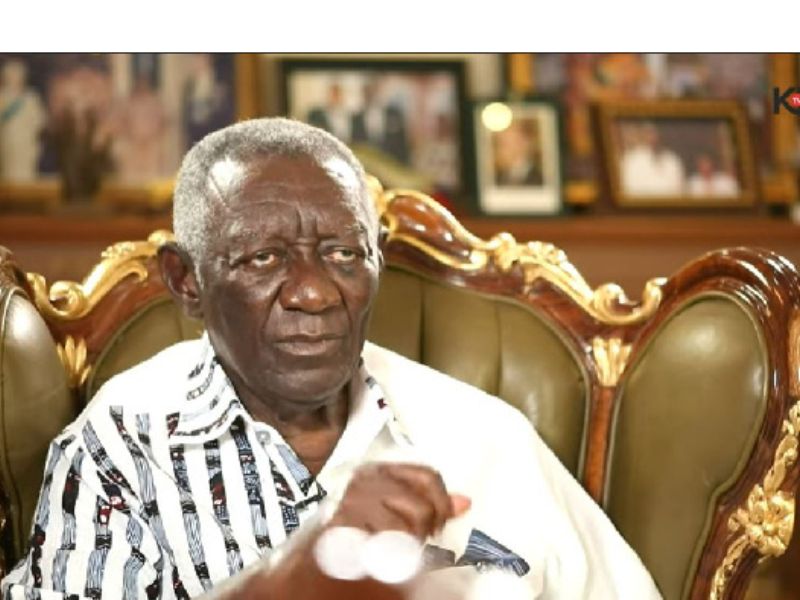
Kufuor Warns Politicians: NPP’s 2024 Defeat a Wake-Up Call Against Mismanagement

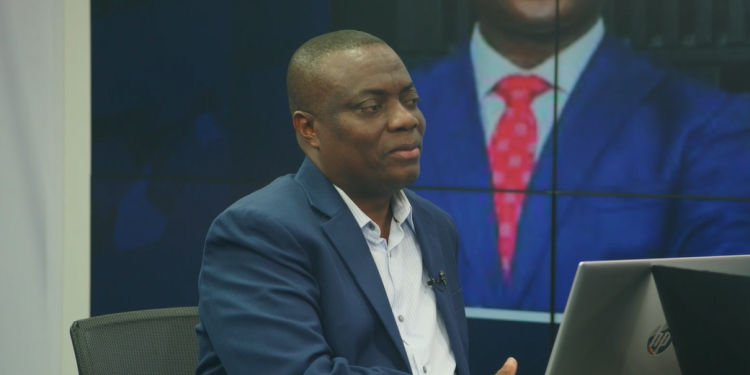
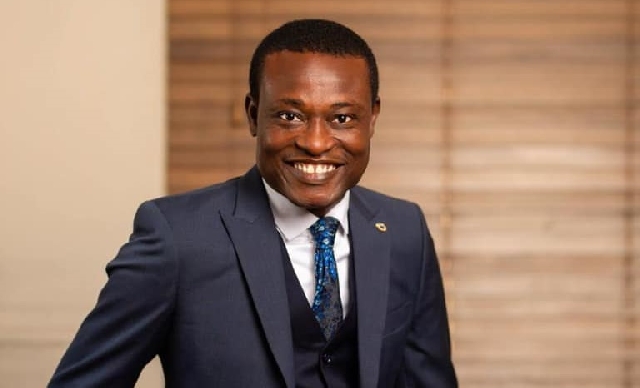
Former President John Agyekum Kufuor has sent a strong message to Ghanaian politicians, urging them to treat the New Patriotic Party’s (NPP) defeat in the 2024 elections as a clear warning: the electorate will not tolerate mismanagement. Appearing on The Delay Show, Mr. Kufuor candidly dissected the reasons behind the party’s loss. He attributed the defeat to several controversial decisions under President Nana Addo Dankwa Akufo-Addo, including the Domestic Debt Exchange Programme (DDEP), the National Cathedral project, and the failed Power Distribution Services (PDS) deal. “The Ghanaian electorate cannot be taken for granted. Politicians must learn from this,” he stressed, emphasizing that the election results reflected widespread public dissatisfaction with these key decisions. Reflecting on the party’s journey, Mr. Kufuor recalled that the NPP’s landslide victory in 2016 was built on the back of his administration’s achievements. “Before 2016, the campaign was anchored on my achievements. The government started well, but things changed after he took office,” he observed, noting a shift in governance priorities after President Akufo-Addo assumed office. The former President highlighted how post-COVID-19 decisions, particularly those affecting the bond market, the handling of the PDS deal, and the National Cathedral project, became flashpoints for public anger. He revealed that he was never consulted about the Cathedral and only learned of the project after construction was underway. He further criticized the demolition of state properties, including housing for judges, to make way for a project that remains incomplete. Mr. Kufuor traced the NPP’s recent electoral trajectory: an overwhelming victory in 2016, a razor-thin and contentious result in 2020 that led to a hung Parliament, and the emphatic defeat in 2024. “We won massively in 2016. The 2020 elections were tight and gave us a hung Parliament, and 2024 was something else altogether,” he stated. Concluding his reflections, Mr. Kufuor delivered a caution to all politicians: to retain the trust of Ghanaians, leaders must govern with transparency, discipline, and a keen sensitivity to the expectations of the people. Source: Apexnewsgh.com

Read More
Minority Demands Legal Action Over Ministry of Transport’s GHS10 Million Overspend
Opinion, Politics

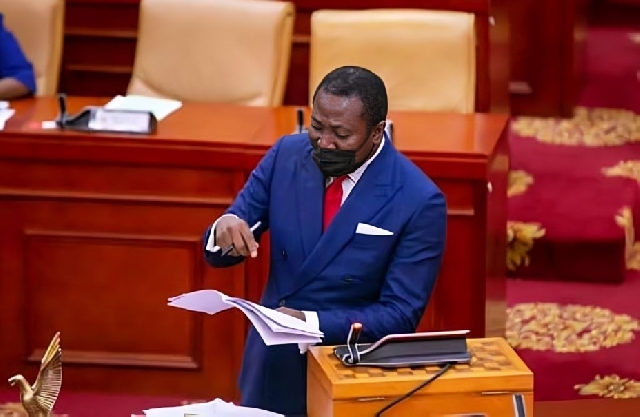
Minority Demands Legal Action Over Ministry of Transport’s GHS10 Million Overspend

The Minority in Parliament is demanding urgent legal action against officials of the Ministry of Transport following allegations of unauthorised spending of nearly GHS10 million above the ministry’s approved 2025 budget. According to the Minority caucus, Parliament sanctioned GHS83 million for the ministry’s capital expenditure, but reports indicate that the ministry exceeded this figure by approximately GHS10 million, a move the caucus says constitutes a breach of the Public Financial Management Act. During debate on the ministry’s 2026 budget allocation on December 2, 2025, Minority Leader Alexander Afenyo Markin insisted that those responsible must be held accountable. He described the overspend as a serious violation warranting immediate investigation and consequences. Speaking on the floor of Parliament, Afenyo Markin questioned whether any officials had been referred to the Office of the Special Prosecutor, warning that the gravity of the breach could result in prosecutions. The Minority caucus is now calling for a thorough probe to ascertain how the excess funds were spent and why the ministry operated well beyond its authorised budget. Source: Apexnewsgh.com

Read More
Parliament Approves GH¢5.3 Billion for Roads Ministry, but Funding Gaps Remain Majority in Parliament
Opinion, Politics

Parliament Approves GH¢5.3 Billion for Roads Ministry, but Funding Gaps Remain

Parliament has approved GH¢5.3 billion for the Ministry of Roads and Highways for the 2026 financial year, a significant move in the government’s ambitious plan to expand and modernise Ghana’s road network. This allocation is part of a wider infrastructure initiative aimed at strengthening connectivity across the country. Alongside the approved budget, the government has earmarked GH¢30 billion in oil revenue under the Big Push Programme, dedicated to supporting major road development projects nationwide. The goal of this initiative is to finance substantial upgrades, ease transportation bottlenecks, and improve regional access. During the presentation of the Roads and Transport Committee’s report to Parliament, sector minister Governs Agbodza welcomed the allocation but cautioned that it was insufficient to meet the ministry’s actual needs. He revealed that the ministry is currently supervising road contracts valued at over GH¢110 billion, a figure that dwarfs the newly approved budget. Describing the allocation as inadequate, Minister Agbodza stressed that the ministry’s commitments extend far beyond what the 2026 budget provides. “I agree with my colleagues on the GH¢5 billion, but the GH¢5 billion allocated is not enough. Though it may sound like one of the biggest allocations, it is not enough at all,” he emphasized. Despite the funding shortfall, the Ministry of Roads and Highways has reaffirmed its commitment to advancing key road projects. The ministry will continue to work with the government to secure additional resources, aiming to close the funding gap and deliver on its infrastructure promises for the benefit of all Ghanaians. Source: Apexnewsgh.com

Read More
Dr. Nawaane cut-sod for transformative projects in Nabdam
Opinion, Politics

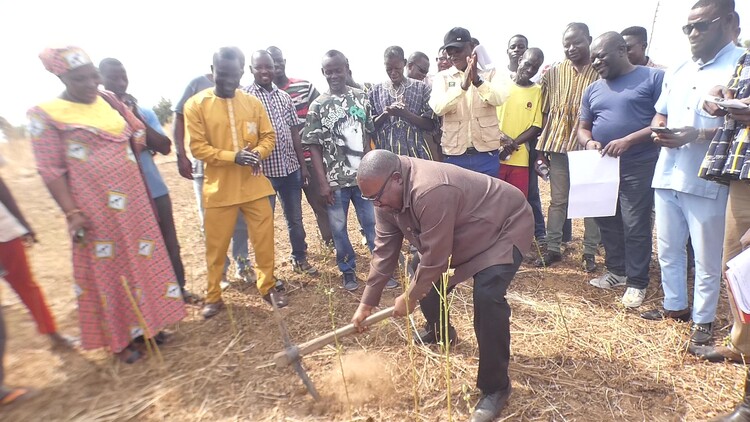
Dr. Nawaane cut-sod for transformative projects in Nabdam

On a bright Monday morning, the Nabdam Constituency in Ghana’s Upper East Region buzzed with unusual excitement. The air was thick with anticipation and hope as community members from far and near gathered in several towns to witness an event that would mark a turning point in their lives. Chiefs in regal attire, elders with wisdom etched on their faces, women carrying children on their backs, and youth eager to see change, all converged for a historic occasion: the sod-cutting ceremonies led by their Member of Parliament, Dr. Mark Kurt Nawaane. The sod-cutting started at Soliga, a community that, for years, had grappled with limited access to basic amenities. As the sun climbed higher, the crowd swelled, filling the open grounds where the ceremony would take place. The chiefs, resplendent in traditional robes, sat at the center, flanked by elders and surrounded by an enthusiastic assembly of townsfolk. Dr. Nawaane arrived to a spirited welcome. There was singing, drumming, and dancing, a celebration that was both a show of gratitude and a rallying call for unity. As he took the stage, the noise faded, replaced by the eager silence of expectation. With humility, Dr. Nawaane began his address. He called it “a great day,” not just for himself, but for the entire district. He explained that this moment was a direct result of a visionary promise made by the President of the Republic, John Dramani Mahama. The President, Dr. Nawaane recalled, had pledged that 80 percent of the District Assembly Common Fund would be allocated to the Assembly, with 10 percent dedicated specifically to health infrastructure and health activities. This policy, he emphasized, was not mere rhetoric; it was bearing fruit in the form of tangible projects that would uplift lives. The crowd listened intently as Dr. Nawaane spoke of the longstanding needs of Soliga. For years, the community had yearned for a health post, a place where mothers could deliver their children safely, where the sick could receive care without traveling miles, and where the elderly would have a measure of comfort in their twilight years. The people had even taken matters into their own hands, constructing a modest building with limited resources, a testament to their determination and resilience. “But today,” Dr. Nawaane declared, “we are here to begin the construction of an official Community-based Health Planning and Services (CHPS) Compound, a health facility worthy of Soliga’s aspirations.” Applause erupted as he spoke, the relief and joy on the faces of the assembled evident for all to see. He paid tribute to the community’s spirit, to the elders who had kept hope alive, to the chief who had advocated tirelessly, and to the women who had borne the brunt of inadequate healthcare. “When this facility is completed, healthcare will be at your doorstep,” he promised. “No longer will you need to journey two or three miles for primary health services.” Among those in attendance was Madam Sadia Salifu, the Nabdam District Health Director. Her excitement was unmistakable. She spoke candidly to the media about the struggles the people of Soliga had endured. The existing community-built structure, she explained, was barely adequate, offering little in the way of comfort or medical safety. “This new facility is good news for more than a thousand people in Soliga,” she said. “It will change lives.” The chief, too, gave his blessings, expressing gratitude not only to the MP and the President but also to the people for their perseverance. There was a palpable sense that something momentous was unfolding, a shift from frustration to fulfillment, from hope deferred to hope realized. The day’s significance did not end in Soliga. Dr. Nawaane’s itinerary included several other communities, each with its unique needs and aspirations. In Damolga, the focus was on education. The community, like Soliga, had struggled with inadequate school infrastructure. The sod-cutting here marked the start of the construction of a modern three-unit classroom block. But this was no ordinary school building. The plans included a headteacher’s office, a storeroom, an ICT lab, a library, a staff common room, an eight-seater KVIP toilet, and two gender-friendly urinals. The design reflected a commitment to holistic education, providing not just classrooms, but the resources and facilities needed for contemporary learning. In Nangodi, two separate projects were underway. The first was the expansion of the Health Directorate Offices. The new building would feature three modern offices, a mini-conference hall, and three water closet toilets. This expansion was vital for improving healthcare administration and ensuring that health workers had a conducive environment in which to serve the people. The second project in Nangodi addressed a different, yet equally pressing need: animal husbandry. The MP cut the sod for a new pen to house stray animals. The facility would include feeding and storage areas, a mechanized borehole for water, and even a bedroom and W/C for the caretaker. This project recognized the importance of agriculture in the local economy and sought to provide humane, organized solutions for managing livestock. In Kongo, Dr. Nawaane turned his attention to food safety and sanitation. The existing slaughterhouse, crucial for the community’s butchers and meat traders, was incomplete and ill-equipped. The new project aimed to finish the construction of the slaughterhouse and fit it with a modern biodigester sanitation system. This innovation would ensure that meat processing was both safe and environmentally friendly, protecting public health and supporting local businesses. The final stop was Pelungu, where the focus was once again on sanitation—a perennial challenge in many rural communities. The planned construction included a ten-seater, four-flat water closet toilet, a five-unit bathhouse, and a mechanized borehole. These facilities would serve hundreds, providing dignity, hygiene, and a better quality of life. Through each speech, handshake, and shovel of earth, Dr. Nawaane’s message was clear: these projects were not isolated acts of charity, but part of a cohesive vision for Nabdam’s future. They were the product of thoughtful policy, community engagement, and a determination to see real, lasting change. The day’s events

Read More
Ayariga Blames NPP for Energy Sector Woes, Cites Setbacks to 24-Hour Economy Ambition Mahama Ayariga
Opinion, Politics

Ayariga Blames NPP for Energy Sector Woes, Cites Setbacks to 24-Hour Economy Ambition

Majority Leader Mahama Ayariga has delivered a scathing critique of the previous New Patriotic Party (NPP) government, accusing it of mismanaging Ghana’s energy sector and warning that the country’s much-anticipated 24-hour economy cannot take off until the Electricity Company of Ghana (ECG) is stabilized. Speaking before Parliament on Thursday, November 27, Ayariga specifically cited failures in the Millennium Challenge Account Energy Compact 2, claiming that mismanagement resulted in a US$190 million loss for the nation. He said, “They mismanaged the Millennium Challenge Account Energy Compact 2 and in the process we lost $190 million. By giving the distribution to a certain PDS, which went and forged records in providing a payment guarantee, they caused this country dearly.” Ayariga also referenced a recent investigation into the holdup of ECG containers at the port, revealing that demurrage charges had ballooned to over GH¢909 million due to negligence. He drew attention to irregularities in contract awards, highlighting that contracts worth GH¢159 million were cleared improperly, including a GH¢127.6 million contract awarded to a company without customs house agent registration. The Majority Leader further noted significant deviations between budgeted and actual procurement costs. “This is the record of the NPP in the management of the Energy sector…The situation at ECG is in the budget. The recent container holdup investigations report of the ECG reveals the mess at the ECG. Due to your negligence, demurrage of over GHS909 million was incurred at the port. Corruption was at its height,” Ayariga told the House. He concluded by emphasizing that the NPP’s legacy of mismanagement and procurement irregularities must be addressed if Ghana is to realize the vision of a 24-hour economy. “You stand here, and you ask when is 24-hour economy is starting. 24-Hour economy will start when we have cleared the mess at ECG, and we have created a 24-hour energy system,” Ayariga asserted. Source: Apexnewsgh.com

Read More
Speaker Bagbin Rules Nyindam Can Remain in Parliament Pending Appeal Window
Opinion, Politics

Speaker Bagbin Rules Nyindam Can Remain in Parliament Pending Appeal Window

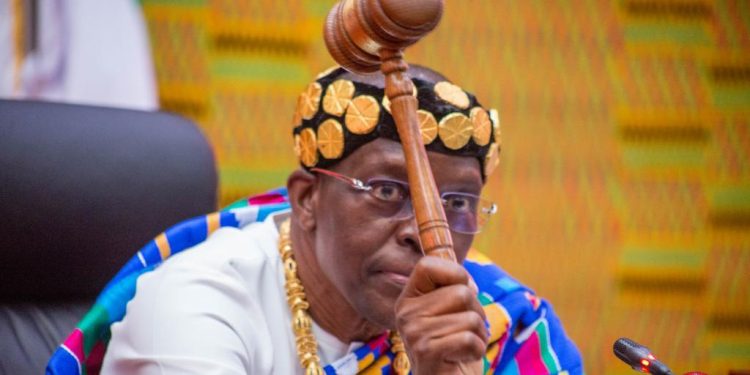
Speaker of Parliament Alban Bagbin has determined that Matthew Nyindam, the Member of Parliament for Kpandai, cannot be barred from participating in parliamentary proceedings at this stage, despite a Tamale High Court ruling that ordered a rerun of the Kpandai parliamentary elections. The ruling comes after the Majority in Parliament called for Nyindam’s exclusion from debates, citing the court’s decision delivered on Monday, November 24, 2025. Addressing the issue before the House convened on Thursday, November 27, 2025, Speaker Bagbin explained that, under the law, it is premature to disqualify Nyindam, as the mandatory seven-day stay of execution of the High Court’s order has not yet expired. Bagbin referenced the Court of Appeal rules (1997 C.I 197, as amended by 2020 C.I 192), which provide a seven-day window during which the losing party may appeal and a stay of execution is automatically in effect. He also cited a Supreme Court precedent—Mensah vs. Ghana Commercial Bank 2025-2026—which held that any enforcement action taken before the expiration of this period is considered premature and void. The Speaker clarified that, as such, Nyindam has a statutory seven-day period following the High Court’s ruling, which expires on December 1, 2025. “During this period, the High Court’s ruling cannot form the basis for the Speaker to instruct the Clerk to notify the Electoral Commission that the Kpandai seat is vacant,” Bagbin stated. Bagbin further explained that should Honourable Nyindam decide to file an appeal or seek a further stay of execution under rule 27(1) of C.I. 19, enforcement of the judgment could be postponed until a final decision is reached by the appropriate court. Source: Apexnewsgh.com

Read More
Concerned Krobo Youth Group Applauds President Mahama for Extending IGP Yohuno’s Tenure
Opinion, Politics

Concerned Krobo Youth Group Applauds President Mahama for Extending IGP Yohuno’s Tenure

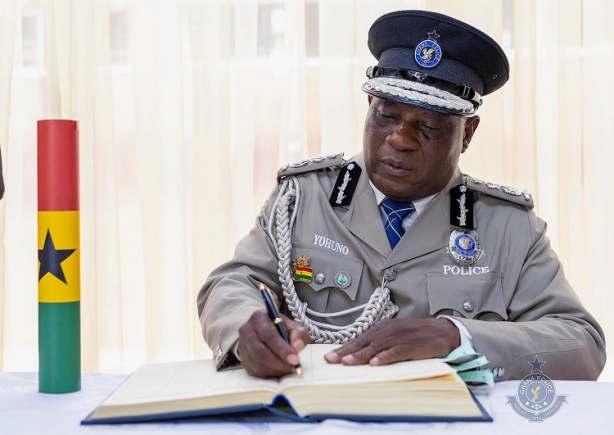
The Concerned Krobo Youth Group in the Greater Accra Region has publicly commended President John Dramani Mahama and the Police Council for their decision to extend the term of Inspector-General of Police (IGP), Mr. Christian Tetteh Yohuno, by an additional two years. In a statement signed by Yakubu Ibrahim on behalf of the group, the youth hailed the move as a well-deserved acknowledgment of IGP Yohuno’s outstanding leadership and steadfast service to the Ghana Police Service. Mr. Yohuno’s career spans several high-profile roles, including Divisional Commander for Accra Central, Accra Regional Operations Commander, Deputy Accra Regional Commander, and Director-General of the Motor Traffic and Transport Directorate (MTTD). His exemplary contributions to law enforcement have earned him numerous accolades, notably the Grand Medal for his distinguished efforts against armed robbery and other crimes. The group highlighted that the extension of his tenure is a testament to his unwavering commitment to maintaining law and order nationwide. They expressed confidence that IGP Yohuno’s ongoing leadership will continue to strengthen the police force and positively impact public safety. On behalf of the Ga-Adangme people and all Ghanaians, the Concerned Krobo Youth Group extended heartfelt congratulations to IGP Yohuno, celebrating his dedication and the trust placed in him for the continued stability and security of the country. Source: Apexnewsgh.com

Read More
President Mahama Hails Ghana-UK Partnership During Prince Edward’s Visit
Opinion, Politics

President Mahama Hails Ghana-UK Partnership During Prince Edward’s Visit

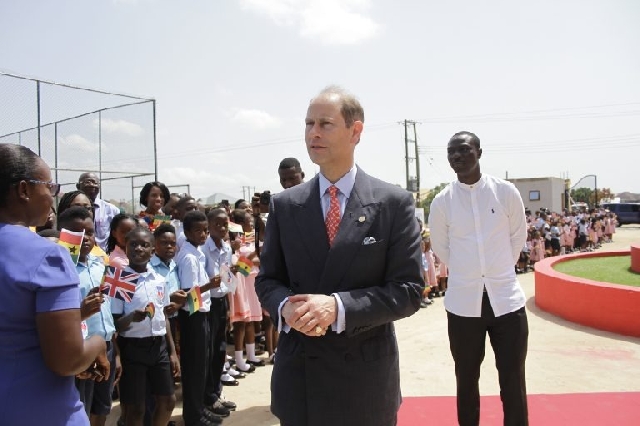
A renewed spirit of friendship was on display at the Jubilee House as President John Dramani Mahama welcomed the Duke of Edinburgh, Prince Edward, reaffirming Ghana’s deep and enduring ties with the United Kingdom. The occasion, marked by ceremonial warmth and diplomatic candor, underscored the shared values, historic bonds, and mutual interests that continue to unite the two nations. Addressing dignitaries gathered at the forecourt, President Mahama reflected on the shifting landscape of international relations. He emphasized that, in the face of mounting global challenges, strengthened multilateralism and close collaboration remain more crucial than ever. The President lauded the UK’s leadership on climate change and called for even greater cooperation to address pressing environmental issues. President Mahama also highlighted the transformative impact of the Duke of Edinburgh International Award in Ghana. He described the programme as a catalyst for growth among young people, fostering discipline, creativity, and ambition. He assured Prince Edward of Ghana’s commitment to supporting and expanding the initiative, expressing confidence that the Duke’s visit would further boost its reach and positive influence. Prince Edward, in his remarks, echoed his passion for the Award, describing it as a powerful vehicle for empowering the next generation. He noted that the programme continues to instill confidence, resilience, and a strong sense of purpose in young participants, qualities needed to thrive in today’s complex world. The day’s events not only reinforced the goodwill between Ghana and the UK but also spotlighted their shared investment in the future of youth, cooperation, and global progress. Source: Apexnewsgh.com

Read More
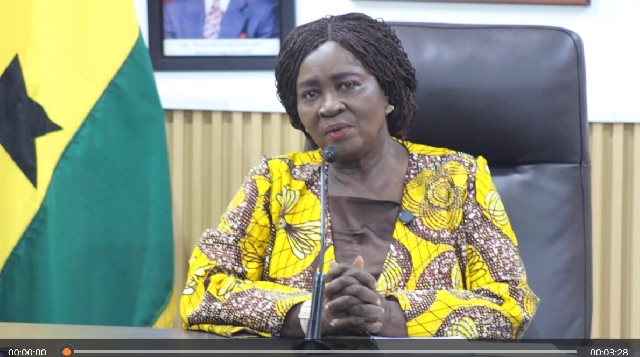
Vice President Prof. Naana Jane Opoku-Agyemang Urges AU–EU Leaders to Unite Against Violent Extremism
Opinion, Politics

Vice President Prof. Naana Jane Opoku-Agyemang Urges AU–EU Leaders to Unite Against Violent Extremism

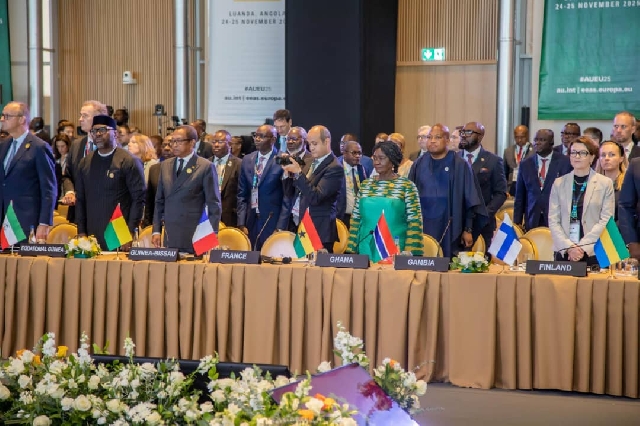
At the 7th African Union–European Union Summit, Vice President Prof. Naana Jane Opoku-Agyemang delivered a powerful message on behalf of President John Mahama, calling on African and European leaders to intensify their joint efforts against violent extremism. Highlighting the growing insecurity in West Africa, she proposed a dedicated regional meeting to find targeted solutions to the pressing threat. “Extremist groups continue to exploit poverty, marginalisation, and political fragility across our sub-region,” Prof. Opoku-Agyemang warned. “Ghana is proposing a focused meeting on violent extremism to tackle the root causes of insecurity through regional unity and community-based peace-building.” Reaffirming Ghana’s commitment to a revitalised AU–EU partnership, the Vice President emphasised the importance of shared values, equity, and mutual respect. She recalled the vision adopted at the 2022 AU–EU Summit, reiterating Ghana’s role in Africa’s transformation agenda, the strengthening of governance systems, and support for regional economic communities. Prof. Opoku-Agyemang also pointed to Ghana’s recent progress in stabilising its economy, mentioning declining inflation, a steadying cedi, and ongoing public financial management reforms. Outlining Ghana’s national development priorities for 2026, she listed: Infrastructure and connectivity to accelerate economic growth Job creation and human capital development for inclusive prosperity Enhanced stability and confidence in governance and fiscal management On the broader security landscape, the Vice President praised the African Peace and Security Architecture as a significant achievement but cautioned that climate change, political unrest, and maritime threats are deepening humanitarian challenges across the continent. She called for renewed commitment to peace-building and resilience. Prof. Opoku-Agyemang commended the European Union’s Global Gateway Initiative, which pledges €150 billion to Africa, particularly in renewable energy and digital infrastructure. She highlighted Ghana’s own priorities under the programme, such as the hydro dam and Wongbo water facility, and advocated for support of an AU waiver on offshore patrols to strengthen maritime security in the Gulf of Guinea. In a historic announcement, she revealed Ghana’s intention to introduce a United Nations resolution on reparations for the trans-Atlantic slave trade, inviting European partners to join as co-sponsors. She described the slave trade as “one of humanity’s gravest injustices.” Citing the late Kofi Annan, Prof. Opoku-Agyemang reminded summit attendees: “There can be no development without security, no security without development, and neither without respect for human rights.” She concluded her remarks by urging Africa and Europe to transform policy commitments into concrete action, insisting that peace, opportunity, and stability must drive the next phase of the AU–EU partnership. Only through a strong and collaborative relationship, she asserted, can the two continents deliver sustainable prosperity for their people. Source: Apexnewsgh.com

Read More
A Section of Ghanaians to Stage Protest Demanding Removal of Special Prosecutor Special Prosecutor Kissi Agyebeng
Opinion, Politics

A Section of Ghanaians to Stage Protest Demanding Removal of Special Prosecutor

A section of Ghanaians gathered with a single mission: to demand the removal of the Special Prosecutor, Kissi Agyebeng. Their reason was clear; they believed he had failed to fulfill the mandate of his office. The previous day, Apostle Abraham Larbi Lincoln, the lead convener of the protest, addressed the media. He asserted that the group had lost confidence in the Special Prosecutor and called on President John Dramani Mahama to terminate Mr. Agyebeng’s appointment. The protest, themed “Agro Ne Fom,” was intended to shine a spotlight on what the group described as inefficiency within the Office of the Special Prosecutor. “We will be in our reds, and we will be there to present our case. If he doesn’t listen, then we know the kind of person he is. We are marching straight to the Jubilee House, and we will petition the President,” Apostle Lincoln declared, emphasizing the group’s determination. Apostle Lincoln was quick to clarify that their demonstration was not driven by personal animosity. “We do not hate Mr. Agyebeng,” he explained, “but we believe the office must be either reformed or dissolved entirely, with all staff removed.” Adding to the chorus of criticism, private legal practitioner Martin Kpebu revealed that 15 separate petitions had already been filed seeking the Special Prosecutor’s removal. “When was the last time you heard of other persons subject to Article 146 proceedings ever having 15 petitions filed against them? That tells you that there is something wrong,” Mr. Kpebu asserted, highlighting the growing public dissatisfaction with the office. As the protestors prepared to march to the Jubilee House to present their petition, the nation watched to see how the President would respond to their demands and whether the calls for change at the Office of the Special Prosecutor would be heeded. Source: Apexnewsgh.com

Read More