





Over 40 Basic Schools in Bolgatanga Municipality without classroom and furniture–MCE
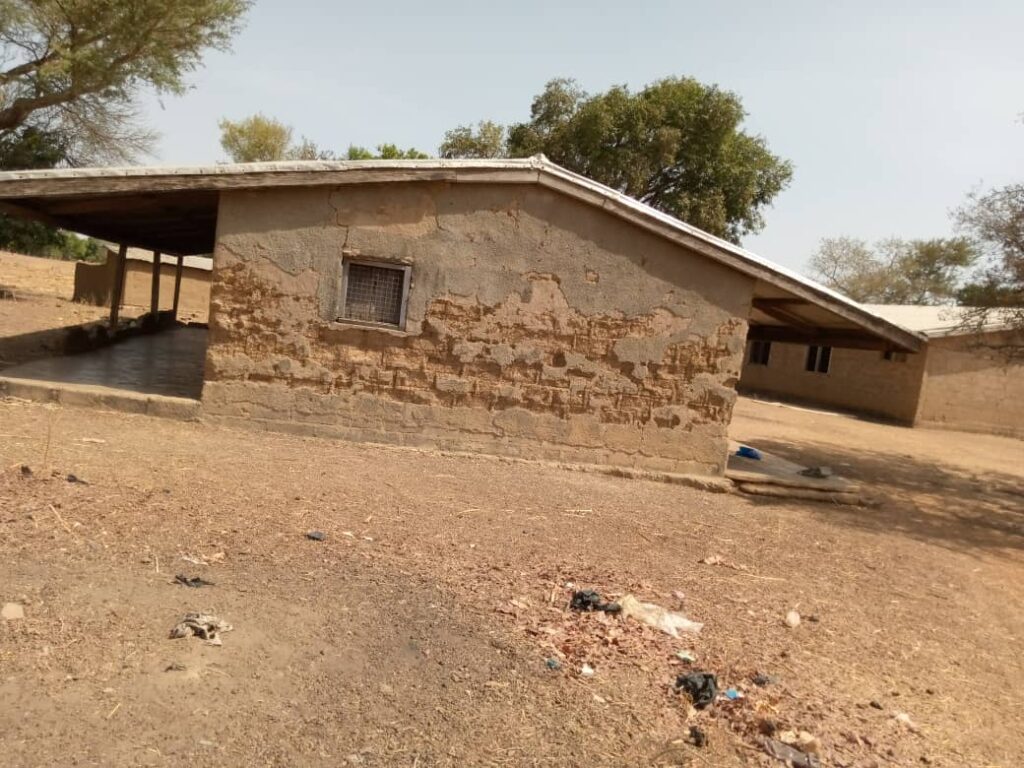
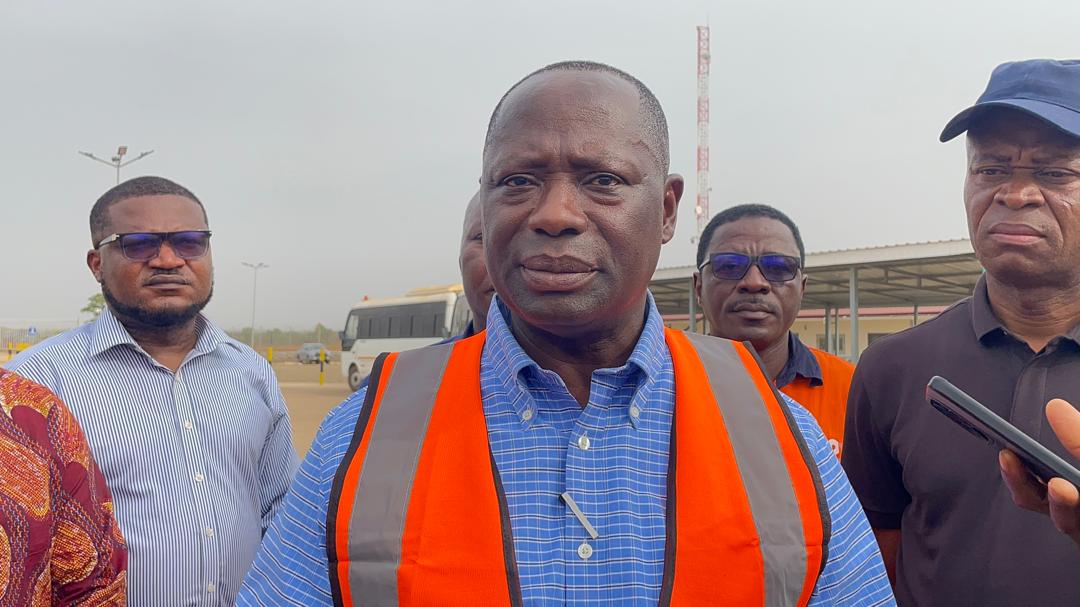
It has been revealed that over 40 Basic Schools in the Bolgatanga Municipality of the Upper East Region have no classrooms or furniture. This was revealed by the Municipal Chief Executive (MCE) Mr. Rex Asanga during a press soiree organized by the Upper East Regional Coordinating Council (RCC) on December 15, 2021. Responding to a question asked about a neglected school in his community in Sumburungu known as Atampuurum B primary, Mr. Asanga acknowledged the school’s long-awaited predicament. According to him, there are over 40 neglected schools across the Municipality: “That’s true, me from that area i know the problem and is not just Atampuurum B primary. When I took up office, i asked the Municipal Director of Education to give me a list of all the schools that have no classrooms or furniture and she brought a list of over 40 schools. So we are looking to see how we can prioritize and begin systematically to see if we can solve some of these problems. So, is not just Atampuurum B primary only, there are so many schools that are having a problem with infrastructure and furniture” he confirmed Apexnewsgh.com/Ghana/Ngamegbulam Chidozie Stephen Please contact Apexnewsgh.com on email apexnewsgh@gmail.com for your credible news publications. Contact: 05555568093
If you already have laptop still take it and give it out to your family members—NAGRAT PRESIDENT to Teachers

It appears the agitation and cry by teachers across the country are not in any way felt by the Leadership of the National Association of Graduate Teachers (NAGRAT). The leadership of NAGRAT has cautioned its members across the country that they stand on a losing path if they reject the One Teacher-One Laptop programme brought to them by the NPP government. He said the laptops form part of the measures being rolled out by the Ministry of Education to motivate teachers to perform better. According to NAGRAT, teachers who refuse to take the laptops because of the issues surrounding their procurement will later suffer it. Mr. Angel Carbonu, insisted the laptops are to unearth the professionalism in teachers across the country. He further described it as a good deal from the government to all teachers. Mr. Carbonu said teachers stand to lose a great deal if they refuse to take the laptops because the government is bearing a major portion of the price. He said the laptops are a motivator rather than a burden on the teachers. “Teachers who feel they already have laptops should still take it and give it out to their family members because the product is one of the subsidized freebies from the government to teachers”, he said Apexnewsgh.com/Ghana/Ngamegbulam Chidozie Stephen Please contact Apexnewsgh.com on email apexnewsgh@gmail.com for your adverts and credible news publications. Contact: 05555568093
Include us in the national standardized test–GNAPS President to Government

National President Ghana National Association of Private Schools (GNAPS) Dr. Damasus Tuurosong said, they are advocating to be included in the national standardized test which is to be conducted across the country’s public schools. He said Government has left Private schools behind. Speaking to the media Tuesday, November 23, 2021, during a regional congress organized by the Upper East branch of the Ghana National Association of Private Schools, Dr. Tuutosong revealed that there is a provision in the new curriculum for national standardized tests to be conducted across all basic schools in order to assess the student competency in literacy and numeracy. He added that is going to be across the country in order to measure the level of progress. “Now, because is a new curriculum, both private and public school are at lost, as to what standard is used to measure the schools. So we are advocating that, this been the first of its kind at least our Ghana Education Service, Ministry of Education should consider private schools been part of this. So that we can assess all schools across the country using the same criteria for assessment” He said Apexnewsgh.com/Ghana/Ngamegbulam Chidozie Stephen Please contact Apexnewsgh.com on email apexnewsgh@gmail.com for your credible news publications. Contact: 05555568093
Ranks in GES and their attached salaries and allowances paid teachers

To be a teacher in Ghana comes with a lot of benefits although the majority complain about the monthly salaries paid to them monthly. The Ghana Education Service (GES) does not only pay salaries to teachers in the various ranks but also pays some deserving allowances to teachers. This post is to enlighten and encourage younger ones who have the interest to work with the GES as teachers in the near future not to give up their dreams because there are major benefits that many teachers won’t disclose to them. This article will mainly throw more light on teachers’ salaries and allowances received by teachers in each of the GES ranks. Firstly, let’s take a look at the ranks and their salaries and look at the allowances in the latter part. GES RANKS OF TEACHERS AND THEIR ATTACHED SALARIES The following are the ranks in the Ghana Education Service (GES). A rank is a hierarchical arrangement of positions in the GES. It is vital to note that in the teaching fraternity, workers’ salaries are determined by ranks. There are ten ranks in the GES. From the top (Highest) to downwards (Lowest) are the ranks. Note that the salaries mentioned in this article start at Grade Base. Grade Base means the initial salaries the below-mentioned ranks receive but as time goes on, every year their steps increase with corresponding money addition. The salary levels start at 25.1, 24.1., 20.1, 18.1. 16.1…etc. Kindly note that these analyses were made in line with the 2021 Single Spine Salary Structure released by the Ministry of Finance. Director General Deputy Director Assistant Director I Assistant Director II Principal Superintendent Senior Superintendent I Senior Superintendent II Superintendent II Superintendent I Teacher DIRECTOR-GENERAL The Director-General is the rank highest in the GES. The rank is based on political appointment by a sitting government upon recommendations by the GES Council. This means that whoever is appointed as a Director General serves for a maximum of four (4) years and then leaves office with the particular government that appointed him/her. The Director-General of GES performs special functions which lead to the implementation of better educational policies in the country. Aside from the above, the DG of GES seeks the promotion, upgrading, and recruitment of graduates from both universities and colleges. The DG is also responsible for negotiating with the government for better conditions of service such as payment of salaries and allowances to teachers. The DG of GES is paid good allowances such as clothing allowances, travel allowances, etc. The salary level of the DG is 25 with an annual salary of GHS75, 050.10. Dividing the annual salary by the 12 months will be equal to GHS6,254.175. Hence the monthly gross salary of the DG of GES is GHS6,254.175. NOTE: Gross salary is the monthly amount salary paid by the Controller And Accountant General’s Department (CAGD) without any deduction. After deductions are made, the amount paid to you is known as the NET SALARY. DEPUTY DIRECTOR-GENERAL The Deputy Director-General is the next in command in the absence of the Director-General. In GES, there are two deputy directors. We have the deputy director in charge of quality and assurance and the deputy director in charge of management service. Their sole responsibility is to provide technical and administrative support to the Director-General which will intend to help the Ghana Education Service to achieve its targets. They, therefore, help to coordinate the activities of other divisions under the GES. The salary level of the Deputy Director-General of GES is 24 with an annual salary of GHS65,581.98. Dividing the figure by 12 months will be GHS 5,465.165. This means that the DD receives GHS 5,465.165 as a monthly salary. ASSISTANT DIRECTOR I The responsibility of Assistant Director I is to track the progress of policies implemented by the Ministry of Education. One will have to serve under the Assistant Director II rank for 3 years before qualifying to be promoted to the above rank. Before one can be promoted after he/she has written and passed the annual promotion aptitude test conducted by the GES. The average salary level of this rank is 20 with an annual salary of GHS37,600.45. Dividing this by 12 months will give you GHS3,133.370 as monthly gross. ASSISTANT DIRECTOR II The above rank serves as an assistant to Assistant Director I. They provide assistance to Assistant Director I as they help in discharging the duties and responsibilities. Before one qualifies for the above rank, he/she must serve a minimum of three (3) years as a Principal Superintendent in GES. The salary level of GES staff on this rank is 18 with an annual gross salary of GHS29,1999.72. This means that the monthly gross salary is GHS2,433.31. PRINCIPAL SUPERINTENDENT The Principal Superintendent (PS) rank is attained in GES when one serves for a minimum of 5-years or more under the Senior Superintendent I rank. However, persons who get recruited using their degree certificate are put on the above rank without having to pass through the senior superintendent rank. They are put in charge of managing schools in the circuits and they are also responsible for managing the classrooms. The salary level for the above rank is 16 with an annual gross of GHS23,852.14. Dividing this by 12 months will give you a monthly salary gross of GHS1,987.678. SENIOR SUPERINTENDENT I A teacher qualifies to be put on this rank when he/she has served under the senior superintendent II rank for four (4) years with encouraging work output. They are usually diploma holders from the college of education. Teachers under this rank are placed on the salary level of 15. The annual gross is GHS21,197.30 with a monthly gross of GHS1,766.441. SENIOR SUPERINTENDENT II Teachers who are diploma holders are rightly put on this rank after recruitment by the GES. They are mainly college graduates who graduate with diploma certificates. SALARY LEVEL: 14. ANNUAL GROSS: GHS18,837.96. MONTHLY GROSS: GHS1,569.83 TEACHERT his rank covers unprofessional persons in the GES. Unprofessional here mean individuals who did not study or read education as a course but have found their way to work with the GES. These can be individuals
‘No Ghana card no pay’ order ‘preposterous’ – GNAT

The Ghana National Association of Teachers (GNAT) has said the directive by the Controller and Accountant-General’s Department (CAGD) that public sector workers will not be paid from December if they do not have a Ghana card as “preposterous”. In a statement, GNAT said: “We wish to state that the said public notice is not only unfortunate, but preposterous, egregious, and intimidating and that Ghanaian workers would not stand such knee-jerk approaches to solve someone else’s laissez-faire attitude towards resolving perceived shortcomings and lapses in the [payroll] system.” “We wish to emphasise that it is the onus of the NIA to ensure all workers secure the NIA cards, so the NIA should liaise with the CAGD, the employers, and the workers themselves to have the cards issued them (the workers) and save them (the workers) from being held hostage, by the CAGD. We are not happy that workers would be held to ransom and harassed, as a result of the operational lapses of both the NIA and the CAGD.” GNAT urged the CAGD to rather “help facilitate the process and stop intimidating and harassing workers.” Meanwhile, the Ghana Federation of Labour (GFL), the umbrella body of some workers in Ghana, has served notice that it will test the authority of the Controller and Accountant-General’s Department in tying the salaries of public sector workers to the Ghana card, in court. “We are going to test the authority of the Controller on the use of the Ghana Card as the sole form of identity for the payment of salaries in court”, General Secretary Abraham Koomson said on Thursday. The GFL wondered why the CAGD is rather not using the Social Security and National Insurance Trust (SSNIT) card of workers for that purpose. Mr Koomson said the federation is considering holding discussions with the leadership of some other public sector workers to test the authority of the Controller as far as the directive is concerned. “For the Controller to say it will not pay the salaries of workers who do not have Ghana card as a form of identity on their personal data is absurd”, Mr Koomson stressed. “As a federation, we will not sit down for our members to be mistreated by the Controller”, he warned. He urged the Controller to come clean on the directive before things get out of hand. Mr Koomson contended that some workers have registered for the Ghana card since last year but are yet to receive it from the National Identification Authority (NIA). “So why the hurry for the Controller to tie the payment of salaries of workers to the acquisition of the Ghana card?” he queried. He said it was high time the government took steps to ensure that all salary workers are registered before such fiats were issued. “If this action is targeted at people who are not working to stop receiving salaries, then it is good but for workers who have been validated to have worked, it’s problematic”, he observed in an interview with Neat FM. —classfm Please contact Apexnewsgh.com on email apexnewsgh@gmail.com for your credible news publications. Contact: 05555568093
Zorkor SHS students stand and eat in the sun and rain
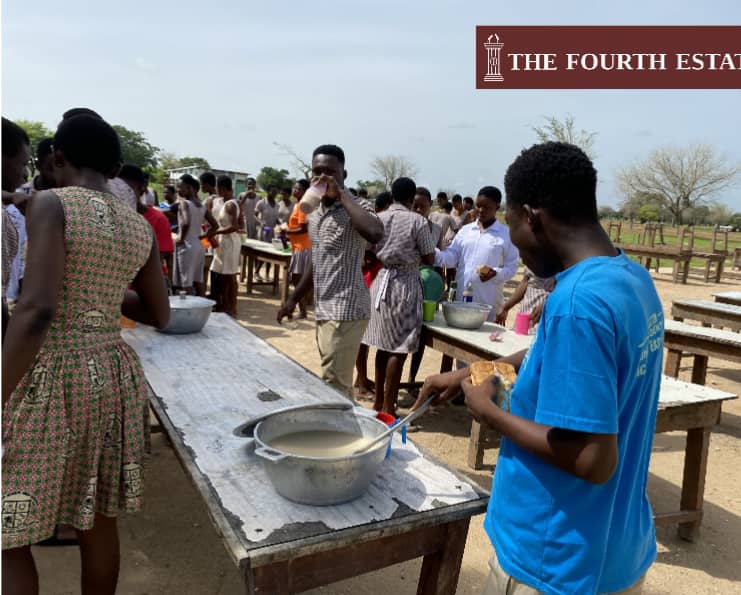
It was mealtime at the Zorkor Senior High School in the Bongo District of the Upper East Region when The Fourth Estate visited. But only a handful of the students were present for breakfast. The school has a population of about 1,200, but a majority were on the mid-term’s break. It is often said that the fewer, the merrier; but in the case of these students, mealtime cannot be associated with merrymaking. It is the most dreaded part of their lives as students. They have no roof over their heads, so they dine in the sun. And in the rain, when it is not very severe. It was only nine o’clock, but the blistering northern Ghana sun had served enough warning that it would be worse when they returned for lunch later in the afternoon. Off the record, the students shared their daily misery and frustration when they had to take their meals in the open. They had not been permitted by the school authorities to grant an interview so they would not speak on the record. “I wish you had come here on a rainy day,” one of the students told The Fourth Estate. When it rains, they have to go through the rain to take their meals. But when the rainfall is severe, they stay away. The students say when there is heavy rain, they stay away. The students take their meals on the concrete foundation of the abandoned dining hall project. Below the raised concrete surface where the students are taking porridge with bread, a donkey is grazing. It is tied closely to the dining area so that it does not feed on the crops nearby. There are only a handful of dining tables, some with visible deterioration from the vagaries of the weather. The tables are not enough so instead of ten students to a table, thirty students use one table at mealtime. There are no chairs. Once they are served, some stand and eat, while others look for the nearest shade. It is a situation that raises concerns in the Covid-19 pandemic, but they appear more concerned about the epidemic of deprivation. They have many problems, but their main concern is the fact that they cannot eat in a decent environment. That has been the plight of these students since their temporary dining hall structure collapsed on June 10, 2021. Zorkor SHS was established by the chiefs and people of Zorkor in 2009 when the Computerised School Selection and Placement System did not place some students from the community. The school was later adopted by the government, but it still remained an orphan, in many respects, as far as some critical infrastructure is concerned. In 2016, the government awarded a contract for the construction of a dining hall for the school. That contract has been abandoned at the foundation level. The project halted because the contractor had not been paid. The chief of Zorkor Kodrogo and member of the school’s governing board, Naba Adindaa Awamyelum II, said the school had always lacked a number of amenities. The students used to eat in the open because the small baobab tree close to the kitchen had insects and other pathogens falling into their food whenever they ate under it, he said. He was, therefore, happy when the assembly awarded the contract for the construction of a temporary structure after many appeals from the school and traditional authorities. Naba Adindaa Awamyelum II said he took an interest in the project, but at a point, the contractor could not complete the work. The assembly did not pay all the money needed to do the work. The chief of Zorkor Kodrogo and member of the school’s governing board, Naba Adindaa Awamyelum II, said the school had always lacked a number of amenities. In 2018, the Bongo District Assembly awarded a contract for the construction of a temporary dining hall structure but that structure has collapsed, leaving the students with no option, but the open space. The contractor said the District Assembly should be held responsible for the collapse of the structure. The supervising engineer of the project, Ayuba Issakah Aguba, told The Fourth Estate that the initial contract, worth about GHc70,000, was for the construction of a 12 by 25 metres structure. The school authorities protested that it was too small and could not contain even half of the students. The size was subsequently increased to 15 by 50 metres, according to Mr Aguba, the contractor’s engineer. Mr Aguba said the contractor required at least GHc230,000 to build a structure that could be strong enough to accommodate the students. According to him, the Bongo District Assembly said it could not afford to pay that amount so the assembly brought its own drawings and specifications. Mr. Aguba said his estimates with the assembly’s drawings showed that the least amount needed for the project was GHc160,000. Again, the assembly said it could not afford GHc160,000. The district assembly, according to Mr. Aguba, said it could only commit 90,000 for the project. Even with that, the assembly ended up paying only GHc70,000 cedis. Mr. Aguba said the weight of the structure required bigger concrete pillars if it was to stand the test of time. He was not surprised that the structure had collapsed, saying he had warned the assembly about it. The collapsed temporary structure Assembly’s response The Bongo District Assembly has denied responsibility for the collapse of the temporary dining hall. “To say that we made the contractor do shoddy work is casting a slur on our integrity,” the Bongo District Chief Executive, Peter Awimbisa Ayamga, told The Fourth Estate. He admitted the cost of the project was revised upwards when the initial estimate of GHc130,000 proved not enough. He could, however, not remember the exact cost the assembly agreed with the contractor. “If you have done work which is not of good quality, or [if] the wind was too strong and pulled it down, why do you blame the assembly?” he asked. He said the plight
UER: Students of Bolgatanga Sirigu SHS Protest Over Inadequate Infrastructure and Accommodation
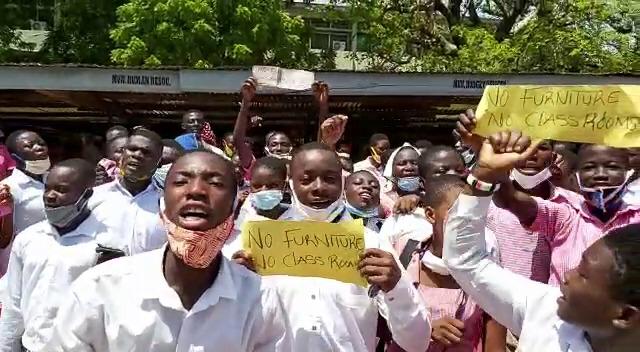
Students of Bolgatanga Sirigu Senior High School has storm the Bolgatanga Municipal Assembly to register their displeasure over lack of adequate infrastructure furniture and accommodation to create an enabling environment for teaching and learning. They also expressed concern over the combined class for the final year students to have tuition for the core subjects while their electives will be taking care of later. Speaking to Apexnewsgh.com they lament the situation is affecting the final year students who sit in the classroom without observing the social distance protocol. “Since we came, there is no furniture for us to sit and looking at our population, they said 3 students per one furniture and they asked us to observe COVID-19 protocol. Now we are crowded and there is no enough classroom for us to sit”. They presented their petition to the Municipal Education Director Stella Estella Kyeebo in the presence of the Bolgatanga Municipal Chief Executive Joseph Amiyuure Atura. Reacting to the petition Madam Kyeebo assured the students that the petition will be forwarded to the Regional Director for consideration. “You know that you did a wrong thing by taking the law or laws into your hands. You are aware that, the municipal director is there isn’t it? That is why you direct your petition to the municipal director. So, if you have challenges, why didn’t you come to me? Leadership could have come, if you hard challenges with your school or your teachers, you could have sent a delegation to the office. I have written several letters to Accra through the regional director about infrastructure of the school and they are working on it and we are following up”. She describe the timing for the protest as wrong and urged the students to employ other alternatives to seek redress Please contact Apexnewsgh.com on email apexnewsgh@gmail.com for your credible news publications. Contact: 05555568093
GES sometimes gives unanalyzed directives that doesn’t urger well for administration – Retired Educationist.

A retired educationist Robert Ajene has observed with worry the lack of consultation between the Ghana Education Service and Heads of Schools before issuing directives. He observed these directives impede smooth administration of schools and call on the Conference of Head of Assisted Secondary Schools CHASS to unite forces to resist these unanalyzed and unilateral decisions that seek to indoctrinate the educational system. Mr. Ajene’s comment follows the confusion where the GES issued directives to the Achimota School and the Wesley Girls High school but both schools rejected the directives. Achimota College refused admission for two Rastafarian students while the Wesley Girls High Schools prevent Muslim students from observing Ramadan. The former headmaster of Bawku Secondary School called for a revision of some of the policies relating to religions to reflect modern times adding that culture is dynamic and what worked in time past cannot be applicable today. Speaking on the Big Issues Morning Show on GBC URA Radio monitored by Apexnewsgh.com, the founding Principal for Bolgatanga Polytechnic now Bolgatanga Technical University expressed concern over the pool of frustrated unemployed youth in the society that pose a national security threat to the country. He said he is not surprised some youth have started a campaign to protest the unfulfilled promises and economic challenges in the country. He noted that the situation can be attributed to the failure of the educational curriculum to train the hands more than the brain. Mr. Ajene called on the government to equip technical Vocational training institutes and Technical Universities to provide practical hands-on training to create self-employed graduates as a way to solve the unemployment situation. Please contact Apexnewsgh.com on email apexnewsgh@gmail.com for your credible news publications. Contact: 05555568093
Robert Ajane Praised past governments for improved education development up north (WATCH VIDEO)
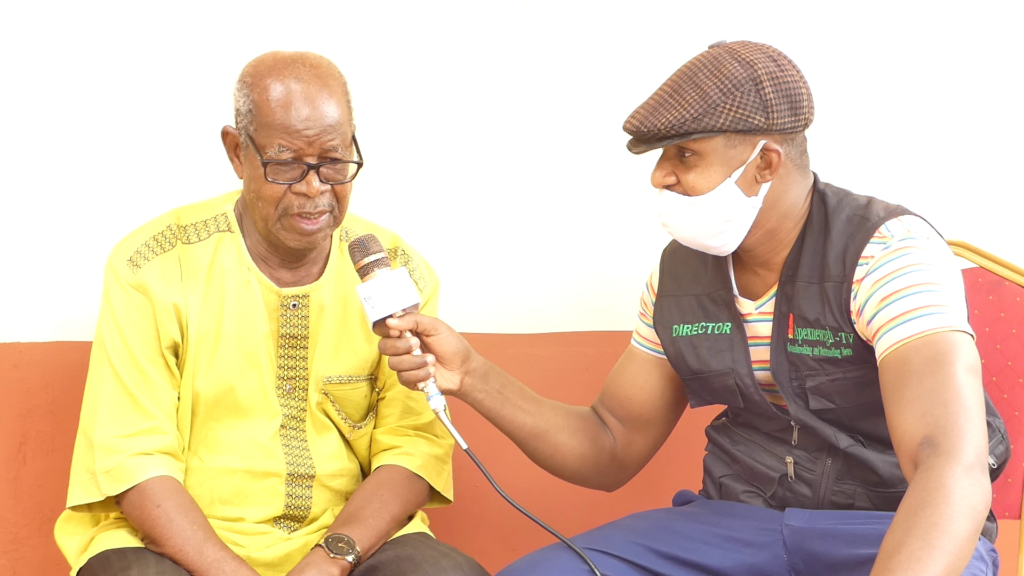
A retired educationist Robert Ajane education in Upper East said, he has seen some tremendous development over the past years with the effort of the past governments. Mr. Ajane who was speaking in an engagement with Apexnewsgh-Tv maintained that in the past there was no University found within the northern zone. Adding that currently, the people of Upper East can boost of two universities. “Today am happy, that despite that we should praise past government because of the following: we didn’t have the University anywhere in the north, as we speak in Bolga, we have a technical university, we have a University in Navrongo, we have a University in Waa. You see, indirectly that is the path. You see before, the northerners have to travel down south to seek for places, and they couldn’t get. But easily, they can walk in. So, who will say this is not development? He asked However, he still insist development is rather widening the gap between the north and the south. “We have vied the type of development that is rather widening the gap between the north and the south and I have right to say that and I would never regret saying that. I haven’t seen any movement that is bringing this together. He stressed Apexnewsgh.com/Ghana/Ngamegbulam Chidozie Stephen Please contact Apexnewsgh.com on email apexnewsgh@gmail.com for your credible news publications. Contact: 05555568093
GES directs Achimota School to admit Rastafarians
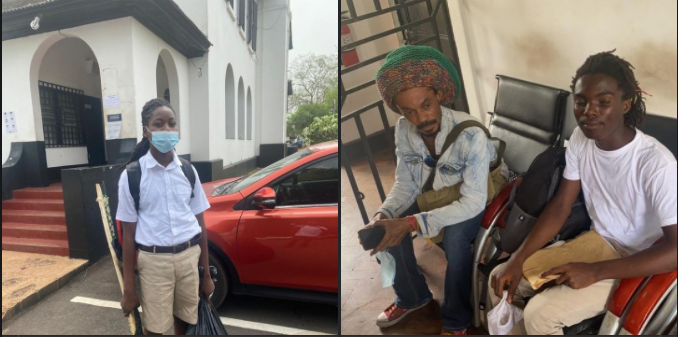
The Ghana Education Service (GES) has directed the headmistress of Achimota School to admit the two teenage students whose admissions were withdrawn due to their dreadlocks. This comes after an intense and sustained online protest against the decision of the Achimota school authorities. A former Member of Parliament for Kumbungu, Ras Mubarak who once had dreadlocks also waded into the conversation and slammed authorities for denying the two students admission into the prestigious school due to their dreadlocks. The former lawmaker who joined the protest online said the high-handed decision by the school authorities was a breach of the law and called for it to be reversed. “What the authorities in Achimota school have done constitutes a breach of articles 21(1)(c), 25(1), 26(1) 28(3) and 28(4) of our constitution. They have humiliated those kids on the basis of the kids’ Rasta culture. Not accepting them into the school because of their dreadlocks is degrading treatment which is frowned upon under article 28(3). “The school may have its rules, but those rules, and all other rules and laws are subservient to the constitution of Ghana. The supreme law of the land is the constitution. I hope the decision would be reversed, in the overall best interest of the school and the affected children,” the former MP who had dreadlock in the past said. Following the public uproar, the Director-General of the GES, Prof. Kwasi Opoku-Amankwah has taken remedial action directing the authorities to admit the two students. He told the Daily Graphic that the Head is not within the law to withdraw the admissions of the students on the basis that they are wearing dreadlocks. “So you cannot say that you will not admit someone on the basis of the person’s religious beliefs, and so, we have asked the Head to allow the children to be in the school,” Prof. Opoku-Amankwah said. Kasapafmonline.com Please contact Apexnewsgh.com on email apexnewsgh@gmail.com for your credible news publications. Contact: 0555568093