

UER: Queen mother calls for the abolishment of negative customs that deny women arable land
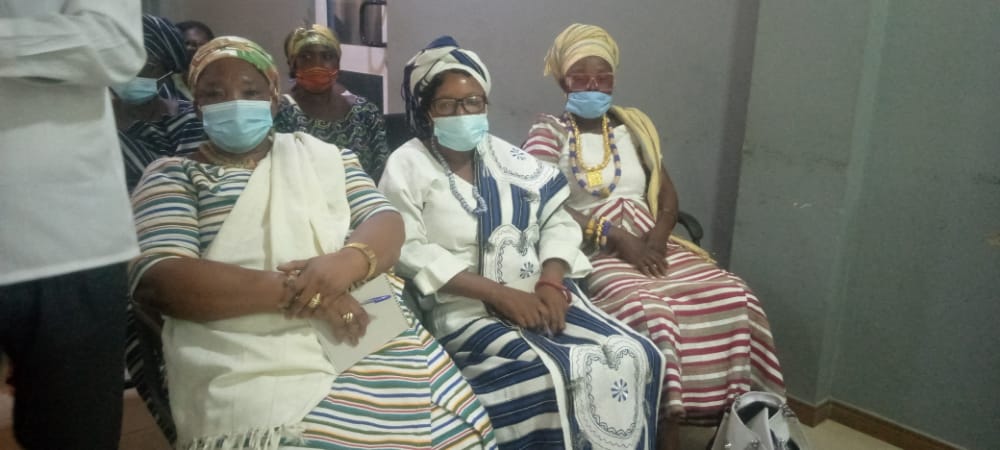
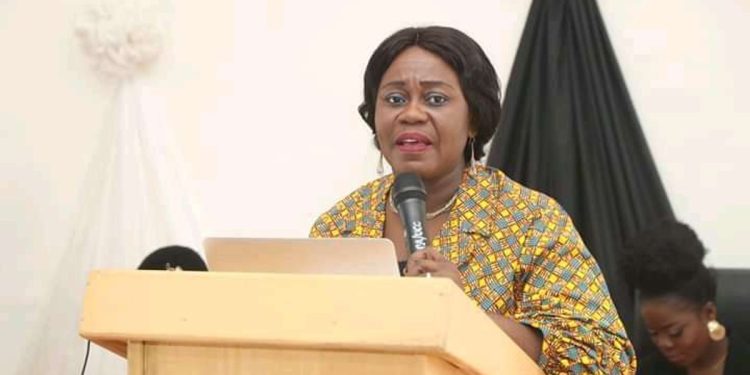
A Queen mother in the Bawku West District, Poanab Esther Alale has identified negative masculinity as unfavorable cultural practices as a serious hindrance to the women acquiring arable lands and other productive resources arguing that women have to work on their husband’s lands before gaining access to their own land. She cited instances where widows have to work on the land of the senior representative of the late husband’s house at the demise of the husband. Speaking on the sidelines of the regional stakeholder’s engagement on women access to arable farmlands and productive resources in Bolgatanga, the Poanab noted the challenge with traditional authorities securing arable lands for women as there are custodians of the lands who most often than not, do not see the need for women to have their own share of the land. According to her, she laments when the queen mothers in their various jurisdictions mobilize women to unite forces to press home their demand to access arable lands, the chiefs see that as an attempt to belittle their power. She further called on the government to formulate policies and programmes to help women gain access to land for agricultural activities. However, the Paramount Chief of the Bongo Traditional Area Naba Baba Salifu Atamale Leemyaruum appealed to other traditional rulers to liaise with landowners to grant women ownership of arable farmlands and as he pointed the need for women to also have access to tractors to enable work on their farms. He indicated that women in his jurisdiction have been given arable lands at the eastern part of the district bordering Burkina Faso to venture into agricultural activities in the area. Naba Leemyaruum acknowledged the challenge of male dominance over their female counterpart in gaining access to farmlands and expressed confidence that with sensitization the dominance will break for women to possess their own farmlands to boost agricultural activities in the region. Please contact Apexnewsgh.com on email apexnewsgh@gmail.com for your credible news publications. Contact: 05555568093
UER: PFAG, CIKOD and National Sesame Business Farmers Association appeals for govt support in agroecology
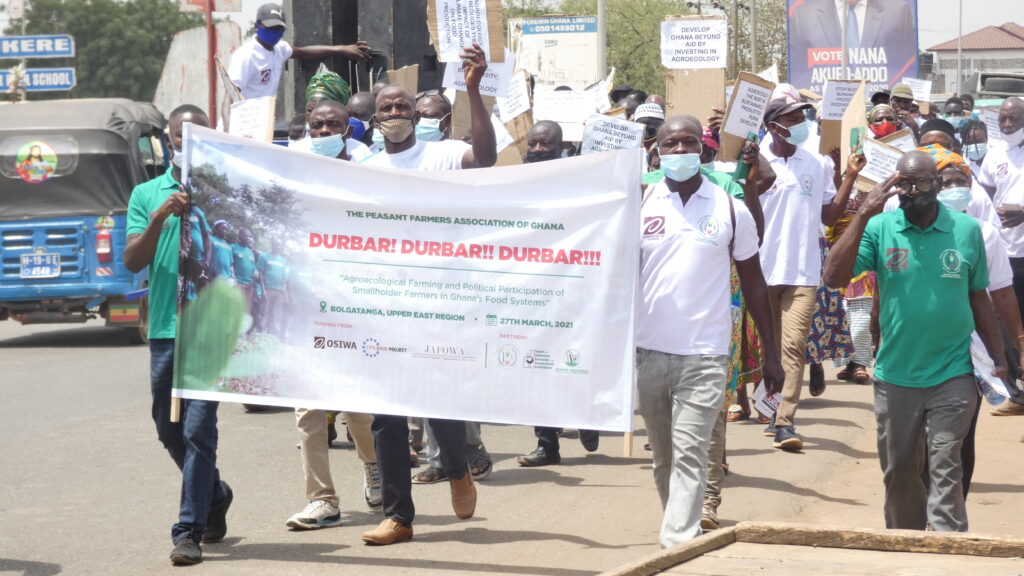
Peasant Farmers Association of Ghana (PFAG), Centre for Indigenous Knowledge and Organizational Development (CIKOD), and Ghana National Sesame Business Farmers Association in the Upper East Region have appealed to the government through a petition submitted- to the Upper East Regional MOFA Director to invest in agroecology to help address climate change impact on smallholder farmers in northern Ghana. According to the petition presented to the Regional MOFA Director Francis Ennor by the National President Peasant Farmers Association of Ghana Abdul Rahman Mohammed, the current farming practices coupled with mining activities and population growth led to the destruction of our forest landscape. Northern Ghana is almost like a desert, all the tree cover and the vegetation is gone, the rainfall pattern is erratic and inconsistent, high temperatures and the emergence of pests and diseases. However, they also register their disappointment that there was no budget allocation for the continuation of the one village one dam, as they appealed to the government to reconsider putting money for the completion of dams under construction as part of the one village one dam and used the remaining money for desilting of the existing dams that are silted, also appealed to government to subsidize simple mechanization services and water pumping machines for the youth to continue with dry season gardening and livestock rearing activities. Etc The Upper East Regional Director of the Ministry of Food and Agriculture (MOFA) Francis Ennor upon receiving the petition from the PFAG, acknowledged their contributions towards the country’s growth. According to the Regional MOFA Director, the appeal for government to invest in agroecology is a call in the right direction as he assured them of sending their message across through the Agric Minister to the President. Meanwhile, through the generous support of the Open Society Initiative for West Africa (OSIWA), The 11thhourproject and The Joint Action for Farmers’ Organizations in West Africa (JAFOWA), members of Peasant Farmers Association of Ghana (PFAG), Ghana National Sesame Business Farmers Association and Centre for Indigenous Knowledge and Organizational Development (CIKOD) also embarked on a walk to sensitize the general public on the need to adopt the practices and principles of #Agroecology in the Upper East region. Below is the full statement: Statement to His Excellency, the President of the Republic of Ghana on the need to increase funding for Agroecology His Excellency The President of the Republic of Ghana Flagstaff House Bolgatanga 27th March, 2021 His Excellency, MAINSTREAMING AGROECOLOGY FOR FOOD SOVEREIGNTY The Peasant Farmers Association of Ghana (PFAG), Centre for Indigenous Knowledge and Organisational Development (CIKOD) and Ghana National Sesame Business Farmers Association appeal to the government to invest in agroecology to help address climate change impact on smallholder farmers in northern Ghana. Your Excellency, Ghana relies heavily on agriculture as a key sector of her economy. Agriculture plays a significant role in poverty reduction, food security and employment. Vibrant agriculture sector will help reduce the movement of young men and women to southern Ghana to search for non-existing jobs will be reduced. The current farming practices coupled with mining activities and population growth led to the destruction of our forest landscape. Northern Ghana is almost like a desert, all the tree cover and the vegetation is gone, the rainfall pattern is erratic and inconsistent, high temperatures and the emergence of pests and diseases. There is a limited investment to combat climate change, ensuring environmental sustainability and improving the incorporation of indigenous knowledge in farming. This has contributed to deforestation, depletion of our biodiversity and poor agricultural performance in recent times. With agroecology, we are able to still produce, maintain our soil cover, plant more trees, rear livestock and poultry leading to an increase in income for smallholder farmers. With improved economic activities, there will be a reduction of the youth traveling to southern Ghana to seek greener pastures. We are therefore appealing for investment in the following areas: We are disappointed that there is no budget allocation for the continuation of the one village one dam. We appeal to the government to reconsider putting money for the completion of dams under construction as part of the one village one dam and used the remaining money for desilting of the existing dams that are silted. We also appeal to the government to subsidize simple mechanization services and water pumping machines for the youth to continue with dry season gardening and livestock rearing activities There is a need to re-orient public expenditure priorities in order to focus more on important agricultural development priorities such as rural infrastructure and training in agroecological farming skills. In particular, we recommend investment in technologies that focus on recognizing, preserving and utilizing appropriate traditional and indigenous knowledge. The government needs to be more aggressive in promoting sustainable agriculture to smallholder farmers. This will require an integrated soil fertility management approach. Promote the joint use of organic and inorganic fertilizers in the short run and promote organic fertilizer in the long run. Your Excellency, for all the above reasons, we urge you to redirect investment priority towards promoting agroecological farming for agriculture today and for the future. Your humble compatriots: Centre for Indigenous Knowledge and Organisational Development Peasant Farmers Association of Ghana Ghana National Sesame Business Farmers Association Meanwhile, through the generous support of the Open Society Initiative for West Africa (OSIWA), The 11thhourproject and The Joint Action for Farmers’ Organizations in West Africa (JAFOWA), members of Peasant Farmers Association of Ghana (PFAG), Ghana National Sesame Business Farmers Association and Centre for Indigenous Knowledge and Organizational Development (CIKOD) also embarked on a walk to sensitize the general public on the need to adopt the practices and principles of #Agroecology in the Upper East region. Apexnewsgh.com/Ghana/Ngamegbulam Chidozie Stephen Please contact Apexnewsgh.com on email apexnewsgh@gmail.com for your credible news publications. Contact: 0555568093
Automobile company ‘recommended’ by MOFA disappears with farmers’ big cash.

Some farmers are in life-and-death grief in the Upper East Region as an automobile company said to have been officially recommended to them by the Ministry of Food and Agriculture (MOFA) is believed to have fled with some large amounts of cash they deposited individually to acquire subsidized tractors and other automobiles for farming purposes. Amos Abane, one of the affected farmers, told Starr News he made a partial payment of GH¢36,200 in 2013 (8 years ago) to ADPL Auto Services for a 70-horsepower tractor valued at GH¢76,000. Then, he was assured that the tractor would be delivered in 3 months’ time as part of an agreement he had with the company. His expectations grew into uncertainties as the company failed to keep its word. Anxious, he placed a complaint call to the company soon after the promised period had elapsed; but the firm, in response to that call, rather sought to dispatch a 50-horsepower tractor to him on the excuse that the price of the 70-horsepower brand he requested had been increased generally on the market. “They said I should go for the tractor at the MOFA office in Bolgatanga. When I went there, it was a small one I met— 50 horsepower— not the 70 horsepower that I paid for. I called them again and told them the agreement was 70 horsepower and asked why they were giving me 50 horsepower without a trailer and a harrow. “I asked them how much I was supposed to pay for the small one even if I would have to accept it like that. They told me it was the same cost as the 70 horsepower because inflation had made tractor prices go up. I said the 50 horsepower could not serve the purpose. Then, they said if I wanted the 70 horsepower, the price had gone up and that I should add Gh¢15,000 to the Gh¢76,000. I paid the extra Gh¢15,000 but the tractor never came,” Abane said. He said he kept pressing for the tractor until the company finally came clean about its inability to provide the tractor and promised to return his money. Later, he received a letter from the company saying the promised refund would be made through a post-dated cheque in 6 months’ time. The cheque came through MOFA but it could not be processed when Abane took it to a branch of the Agricultural Development Bank (ADB) in the Upper East regional capital, Bolgatanga. The amount that was discovered in the company’s account at the bank at the time was just a little over GH¢36, according to him. He says the company does not answer telephone calls from him anymore since then— since 20th August 2015. The company “fails” to show up at High Court Robert Ababil, another agro-businessman, suffered the same disappointment after he paid Gh¢17,500 to the same company to procure a subsidized Kia truck for a sachet water packaging business and for farming activities. Ababil also complained to the company in a telephone call about the non-delivery of the long-paid-for truck and he, too, received a post-dated cheque from the company for a refund of his money. But, as it did happen to Abane at last, he, too, had his hopes dashed after the cheque “bounced back in his face” at the ADB’s branch in Bolgatanga. The amount of money he met in the company’s account could not even help him back home on a cheap public minibus if he withdrew it at the bank. Frustrated, Ababil and Abane resorted to legal action. But they became even more depressed as the company reportedly remained evasive by failing to appear at the Bolgatanga High Court Two from the time the case began in 2015 up to a moment in 2016 that saw the two complainants suddenly decide on their own (out of increasing weariness) to stop appearing for the hearing. “What I am going through is worse than what anyone can call challenges. I was selling cement and I put all the money I had from that cement business into trying to purchase a tractor for farming. That ended it. Now, I’m out of business. The most painful part was when my children got admissions and couldn’t proceed. One of my children gained a university admission to study architecture but I could not raise money for him to join his colleagues because of what had happened to me. He is now in Kumasi working miserably as a loading boy at a lorry station. “My daughter also had admission at the Navrongo College of Education. The extended family had to sit in a meeting to mobilize money in bits before she was able to go to school. I have suffered a lot. Ababil’s business, too, as I am much aware, is suffering today because there is a limit to how far he can distribute the pure water he is selling without the Kia truck he paid so much for. He is struggling seriously,” Abane said. Telephone calls placed to the company by Starr News upon receipt of the complaints from the bankrupt farmers went unanswered. When Starr News approached authorities at the MOFA’s regional department in Bolgatanga with copies of documents bearing the MOFA stamp and detailing transactions that have left some already-poor farmers in the region rather more impoverished, the authorities said they would contact the “National Agric Engineering Directorate” on the matter and investigate the staff involved in the deal. Starr News will keep the spotlight on this subject. Starrfm Please contact Apexnewsgh.com on email apexnewsgh@gmail.com for your credible news publications. Contact: 0555568093