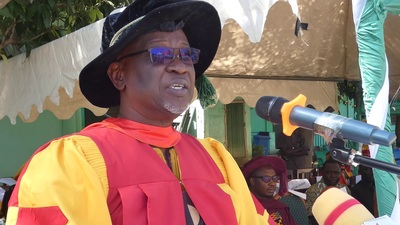
MITDS Council Chairman Celebrates 10th Anniversary and 6th Graduation Ceremony
Education

MITDS Council Chairman Celebrates 10th Anniversary and 6th Graduation Ceremony

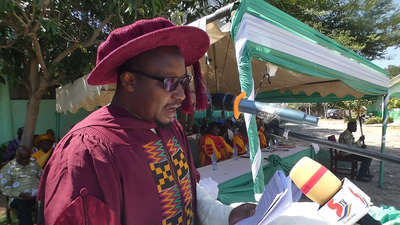
Naa Ganglaar Bog-Belagr Tater V, MITDS Council Chairman, delivered an inspiring speech at the institution’s 10th anniversary and 6th graduation ceremony. The event marked a significant milestone, honoring eight PhD and six MPhil graduates. Apexnewsgh reports “Today, we gather to celebrate a momentous occasion,” Naa Tater V began. “Our affiliated university, the University for Development Studies (UDS), has enabled us to hold multiple ceremonies within a year, a testament to our growth.” The Council Chairman congratulated the graduates, urging them to make a positive impact. “Your expertise and knowledge should inspire change. Remember your duty to contribute to your families, nation, and world.” Two honorary doctoral degrees were conferred upon individuals who significantly contributed to MITDS’ existence. Their achievements were recognized through citations. Naa Tater V saluted President and staff, teaching and non-teaching, for achieving this feat. “MIDS’ investment has yielded substantial gains in Ghana’s skilled knowledge and manpower development, producing 36 first degrees, 17 MPhils, and 26 PhDs.” He paid tribute to Professor Saa Dittoh, foundation chairman, and colleagues who navigated challenging times. “Professor Dittoh’s leadership was instrumental in MITDS’ success.” As MITDS celebrates its decade, the Council looks forward to significant additions to its achievements. “Congratulations to today’s graduates and honorary awardees. MITDS’ survival and success are no mean feats. We’ve established a legacy of excellence.” Advocating for Grass Economy Policy The Council has closely followed MITDS’ groundbreaking research on dry grass utilization. “We strongly advocate for a dedicated grass economy policy and program tailored to Northern Ghana,” Naa Tater V emphasized. “This initiative will reduce perennial bushfires and harmful climate effects.” International Partnerships The Council Chairman extended gratitude to Mr. Marvin Hokstram from the Netherlands and Dr. Salifu Yakubu from the United States for delivering successful public lectures. “We acknowledge the beginning of a fruitful partnership with the Broos Institute and look forward to remarkable outcomes.” The ceremony concluded with a sense of pride, accomplishment, and anticipation for MIDS’ future achievements. Source: Apexnewsgh.com Contact: +233256336062/ +233248250270 

Read More
MITDS Celebrates 10 Years with Generous Computer Donation to Yikene Basic School
Education, Featured

MITDS Celebrates 10 Years with Generous Computer Donation to Yikene Basic School

A remarkable transformation is unfolding at Yikene Basic School, thanks to a generous donation from the Millar Institute for Transdisciplinary and Development Studies (MITDS). Apexnewsgh reports Just ahead of their 10th anniversary celebration, MITDS has once again showcased its commitment to education by providing the school with an assortment of computers, marking their second contribution in just two months. The atmosphere at Yikene Basic School was filled with gratitude as Headmaster Mr. Solomon George Gbenga received the computers. He expressed heartfelt thanks to Prof. David Millar and the entire MITDS team, acknowledging the significance of this donation. “These computers will significantly shape our pupils’ futures,” he remarked, clearly recognizing the transformative potential of technology in the lives of his students. The donation aligns with MITDS’ corporate social responsibility initiative, which aims to uplift educational standards and enhance teaching and learning experiences within the community. Officials from MITDS emphasized their vision of equipping students with essential Information and Communication Technology (ICT) skills, ensuring they thrive in an increasingly digital world. With the new computers, Yikene Basic School has ambitious plans to set up a dedicated computer lab, and they’ve extended an invitation to MITDS for the grand inauguration. Mr. Gbenga reiterated the critical role that technology plays in modern education, promising that the school would use this invaluable donation to benefit its students fully. This act of generosity not only aims to enhance the pupils’ ICT skills but also seeks to bridge the digital divide, support quality education, and foster a generation equipped to navigate the complexities of the digital age. As Yikene Basic School embarks on this exciting journey, the commitment of MITDS to community development shines brightly, empowering the next generation of leaders in the process. Source: Apexnewsgh.com/Ngamegbulam Chidozie Stephen Contact: +233248250270/+233256336062 for your publications

Read More
Towards Peaceful Resolution Of The Conflict In The Bawku Enclave For Sustainable Development—A DRATF DISCUSSION PAPER NOT A BLUE-PRINT
Featured, Opinion

Towards Peaceful Resolution Of The Conflict In The Bawku Enclave For Sustainable Development—A DRATF DISCUSSION PAPER NOT A BLUE-PRINT

A Concept Paper           PUT TOGETHER BY THE DIOCESE OF NAVRONGO-BOLGATANGA THROUGH THE GOOD GOVERNANCE JUSTICE AND PEACE DIRECTORATE                   IN COLLABORATION WITH MILLAR INSTITUTE FOR TRANSDISCIPLINARY AND DEVELOPMENT STUDIES (MITDS)             INTENDED AS A WORKING DOCUMENT TO KICK-START DIALOGUES AND DISCOURSES ON THE BAWKU CONFLICT           TOWARDS PEACEFUL RESOLUTION OF THE CONFLICT IN THE BAWKU ENCLAVE FOR SUSTAINABLE DEVELOPMENT: A Concept Paper “Without Peace there is no Meaningful Development and without Meaningful Development there is no Future…..” 1.0 PRELUDE This piece is put together from a Development Lens and not so much from a Governance Lens. Governance here is as relevant as it plays a key role in contemporary development; as captured in the current Decentralization Model adopted for Ghana; where Chiefs are Key Stakeholders especially at the District Assembly Level but even more so at the Unit Committee Levels (Fridy and Myers, 2019; Mensah et al., 2024; Baazeng and Dery, 2024; Kuupiel, 2024). The various minds contacted at the preliminary phase of putting this idea to paper are concerned citizens (Elders, Chiefs, Various Fonctionnaires) who are increasingly getting worried about the amounts that is spent in ensuring that people can still live in Bawku. This concern is in tandem with concerns about the spillover effects of the disagreement into other parts of the Country, and the potential for opportunistic incursions from the neighboring Countiries – cross-border disturbances. Leveraging on these expressed concerns and the numerous pieces of advice that was freely given; and an overwhelming need, identified by the people themselves, to have window of opportunity to meet and dialogue on the way to resolve their differences and proffering solutions to their own challenges, this paper is initiated. These silent voices that are often not heard in the open, these few citizens and the concerned actors of the north contacted, are calling for something on the table that they can all be seeing to be contributing to. Hence, or otherwise, this zero-draft position to kick-start constructive conversations is being tabled for consideration by all. The conversations might lead to immediate resolution of the Bawku situation or evolve into a roadmap to peace, or might turn out to be a white elephant/ non-starter. Not preempting the outcomes, it is part of the foreseen that the process could take a couple of months or even years; to get transformed into an acceptable product. If it fails to deliver on its intentions, posterity and history would remember us as concerned citizens of the area that made an effort to contribute to resolving the Bawku impasse. 2.0 EXPERIENCES OF THE NAVRONGO-BOLGATANGA DIOCESE 2.1 What was done over the period as regards the Bawku Conflict Background and Context of Project The Diocese of Navrongo-Bolgatanga through the Good Governance Justice and Peace Directorate has been engaged in peacebuilding and conflict prevention in the Diocese for a very long time.  The Diocese has been contributing to peacebuilding efforts in different parts of the Diocese in a piece meal form. However, a more coherent approach was adopted when the Directorate was established in 2014 to focus on peacebuilding, conflict prevention, justice, security and humanitarian response issues. Through the Nunciature, CRS Ghana, the Diocese initiated in peacebuilding efforts in the Eastern Corridor of the Diocese (Bawku Conflict, Bunkpurugu-Yunyoo etc). With funding from MISEREOR, the directorate has been active in peacebuilding in the Corridor since 2014. NABOCADO has undertaken the following in the Bawku Conflict Through the Bishop; held Dialogue sessions with the key actors in Bawku (led by Chief Samuel Bugri (Mamprusi and Chief James from Kusasi). This facilitated process culminated in the agreement of the parties to have the Okro burial and a tentative date agreed on by the parties. A budget was received by the parties requesting for support from the Diocese. While preparations were being done by the Diocese, the process was truncated by unguarded pronouncement by a prominent member from one of the parties at a programme in Garu.  This effectively stalled the process and attempts to revive the process was unsuccessful as the Mamprusi representative was evasive and stopped responding to the invitation by the Bishop. Note that the okro burial, a traditional mediation process would have committed, traditionally, the parties in Bawku to cease fire on violence. Sustained Accompaniment with Community Peace Structures (Community Peace Agents/CPAs and Justice and Peace Committees/JPC): The INPEACE project funded by MISEREOR of Germany continued to engage and train 95 (65M, 30F) CPAs and 21 (16M,5F) JPCs in two districts with tools in conflict prevention and peacebuilding.  The participants were refreshed with skills in dialogue, negotiation, conflict analysis, resolution and conflict sensitive planning. These skills enabled CPAs and JPCs to track conflict related incidents arising in communities and respond appropriately. They are also able to analyze the shifting power dynamics in communities including government authorities, traditional leaders and religious leaders. Promoting Youth-Leadership led Discussions on Social Cohesion and Peaceful Co-existence Our focus with youth in leadership in the conflict areas served to achieve two things: develop conflict resolution skills in youth and develop youth role models as entry points in institutions where some of the youth work. Fifty-two (52) youth leaders and assembly members were trained in two districts of Bunkpurugu-Nakpanduri and Yunyoo districts. 5 Promoting Young Peacebuilders through Radio and Activism-This focused on empowering young person under the School Peace Club (SPCs) model. The project provided young people with training in radio-based peace education and community mobilization for coordinated activities. Members of the SPCs have been equipped with skills to talk on peace and find common ground to co-exist in schools and communities with sharp divisions along ethnic lines. 6 Strengthening District level stakeholder engagements for Development-The INPEACE project facilitated an interfacing platform for skills development and advocacy for key local government staff and assembly members on non-violent approach to peacebuilding. The platform provided skills in conflict sensitive planning, conflict resolution and advocacy

Read More
Millar Institute Supports Refugee Camps with Clothing Donation Ahead of 10th Anniversary
Featured, Opinion

Millar Institute Supports Refugee Camps with Clothing Donation Ahead of 10th Anniversary

The Millar Institute for Transdisciplinary and Development Studies (MITDS) has demonstrated its commitment to corporate social responsibility through a generous donation to Tarikom and Zinni refugee camps in the Upper East and West regions. Professor David Millar, MITDS President, led the initiative. Apexnewsgh reports On behalf of MITDS, Mrs. Lydia Mamata Millar, Professor Millar’s wife, presented fairly used clothing to address the urgent need for refuge seekers who cannot afford basic attire. This donation aligns with MITDS’ 10th-anniversary celebrations, focusing on vulnerable communities. The Institute’s proactive approach embodies its dedication to transdisciplinary development and social responsibility. MITDS’ humanitarian gesture reflects its commitment to supporting marginalized communities, promoting dignity and well-being among refugees. However, excitement filled the air as Dr. Joseph Bangu, Director of Good Governance, Justice and Peace at NABOCADO, received the generous donation for refugee support. The Navrongo-Bolgatanga Catholic Diocesan Development Organization will distribute the fairly used clothing to camps in the Upper East and West regions. “This donation will greatly enhance the physical appearance and dignity of our refugees,” Dr. Bangu beamed. “It’s a tremendous boost to their well-being.” With heartfelt gratitude, Dr. Bangu praised Professor David Millar and the Millar Institute for Transdisciplinary and Development Studies (MITDS) for their kindness. “Your compassion brings hope and comfort to those in need,” he said. The partnership between NABOCADO and MITDS exemplifies the power of collaboration in uplifting vulnerable communities. This selfless act embodies the spirit of empathy and social responsibility, transforming lives in Ghana’s refugee communities. Source: Apexnewsgh.com/Ngamegbulam Chidozie Stephen Contact: +233248250270/+233256336062 for your publications    

Read More
Prof. Millar extends cooperate social responsibility to Chiana-Nakong road as he backs DCE
Featured, Opinion

Prof. Millar extends cooperate social responsibility to Chiana-Nakong road as he backs DCE

The Chiana-Nakong road—a vital route for travelers heading to the Upper West Region—is undergoing a transformative facelift. The initiative, spearheaded by Chiana-Paga District Chief Executive Mr. Gerald Ataogye, marks a significant step forward as the District Road Improvements Programme (DRIP) equipment has been mobilized to address the road’s long-standing issues. Apexnewsgh reports During a recent visit to the Upper East Region, Vice President Dr. Mahamudu Bawumia reassured the community that a contractor would soon be dispatched for the road repairs. However, in response to mounting calls for action, Mr. Ataogye took it upon himself to secure the necessary resources, catalyzing the much-needed repair work. As of Sunday, October 27, 2024, reports from Apexnewsgh indicated remarkable progress on the rehabilitation, bringing much-deserved relief to commuters who had suffered for far too long on the bumpy journey. This road upgrade is just one part of an overarching initiative to enhance infrastructure within the region. Further boosting the project was the collaboration with Prof. David Millar and the Millar Institute for Transdisciplinary and Development Studies (MITDS). As they prepared for their upcoming 10th anniversary celebration, Prof. Millar stepped forward, providing fuel to support the ongoing construction efforts. His generous contribution allowed the team to work more efficiently, paving the way for a smoother and more durable road surface. On a recent visit to the site, Prof. Millar expressed his admiration for the progress made by the construction team, noting the quality of the work accomplished thus far. The partnership between the District Assembly, under Mr. Ataogye’s leadership, MITDS, and local stakeholders not only exemplifies community-driven development but also highlights the power of collaboration. This collective endeavor aligns seamlessly with the government’s broader commitment to improving regional connectivity. With the Chiana-Nakong road’s impending upgrade, residents and travelers alike can look forward to a safer, more reliable transportation route that promises to invigorate travel, trade, and economic growth throughout the region. Source: Apexnewsgh.com/Ngamegbulam Chidozie Stephen Contact: +233248250270/+233256336062 for your publications

Read More
Millar Institute Organizes Free Health Outreach in Yikene Community ahead of 10 Year Anniversary
Featured, Health

Millar Institute Organizes Free Health Outreach in Yikene Community ahead of 10 Year Anniversary

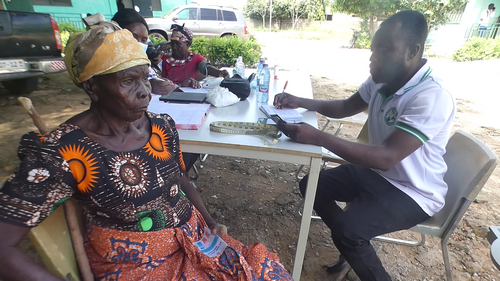
The Millar Institute for Transdisciplinary and Development Studies (MITDS) has organized a remarkable health outreach program for the people of Yikene and the general public as part of its upcoming 10-year anniversary celebration. Apexnewsgh reports The health outreach program drew a massive turnout from community members of all ages. The event was a testament to MITDS’s commitment to giving back to the community, with the planning committee emphasizing the importance of “a healthy life is a wealthy life.” The comprehensive health outreach included blood donation, eye examinations, and dental checks for teeth, nose, and ear, as well as blood pressure screenings. One of the most touching aspects of the event was the special attention given to students, teachers, and the elderly, ensuring that vulnerable groups received the necessary care. The beneficiaries expressed heartfelt gratitude to the Millar Institute for its kindness, with one community member expressing, “We’re thankful for this free health outreach. It’s a blessing to have our health checked and receive treatment.” The health outreach not only marked a significant milestone for the Institute but also highlighted its mission to positively impact the surrounding community. By providing essential health services, MITDS reinforced its role as a responsible and caring institution, demonstrating its dedication to improving lives beyond the classroom. Below are some of the outreach pictures Source: Apexnewsgh.com/Ngamegbulam Chidozie Stephen Contact: +233248250270/+233256336062 for your publications  

Read More
Millar Institute Donates 28 Dual Desks to Yikene Basic School
Education, Featured

Millar Institute Donates 28 Dual Desks to Yikene Basic School

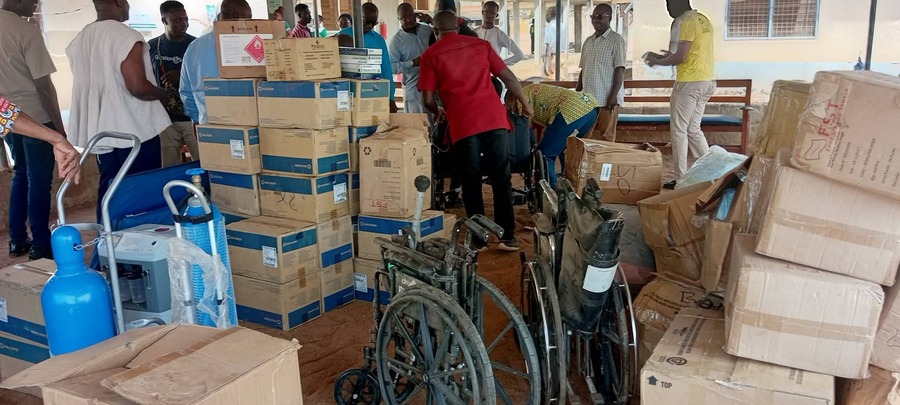
The Millar Institute for Transdisciplinary and Development Studies is celebrating its 10th anniversary with a heartwarming gesture. Apexnewsgh reports  To celebrate this milestone, the institute has generously donated 28 dual desks to Yikene Basic School, underscoring its unwavering commitment to education and corporate social responsibility. During the donation ceremony,Mr. Isaac Dasoberi, a proactive member of the anniversary planning committee, took the opportunity to emphasize the significance of supporting less privileged schools. “Education is our priority,” he passionately stated. “Charity begins at home, and Yikene community is our home.” He said In a touching display of gratitude, Mr. Dasoberi extended acknowledgment to the Yikene Chief for his invaluable support, advice, and interventions over the past decade. Furthermore, he expressed deep appreciation to the schoolteachers for their unwavering dedication. On behalf of Prof. Millar, the institution and the planning committee chairman, Mr. Dasoberi formally presented the donation to the Municipal Education Director ably represented by the PRO Mr. Agunga-Dongo Fredrick Ayine, highlighting the institute’s unwavering commitment to giving back to its community and promoting education. This heartwarming gesture exemplifies the Millar Institute’s dedication to making a positive impact on its community and fostering a culture of learning and development. At the donation ceremony, Madam Patience Iyaaba, Dean of Teachers at Yikene Basic School, took the stage with a confident yet warm smile. She began her speech by expressing profound gratitude to the Millar Institute for Transdisciplinary and Development Studies (MITDS) for their unwavering support. “Thank you so much for the support you have given us,” she began. “Yikene school is a relatively new school, with the Junior High section established only 4-5 years ago. Despite our youth, we’ve achieved tremendous success, thanks to the community, Prof. David Millar, and other supporters.” Madam Iyaaba then painted a vivid picture of the school’s remarkable journey, highlighting its academic accomplishments. She proudly shared that due to the school’s outstanding academic performance and discipline, the enrollment had significantly increased. Moreover, she joyfully announced that the school had achieved outstanding BECE performance, ranking among the top 10 schools in the municipality. Madam Iyaaba attributed these successes to the community’s involvement and the invaluable support of organizations like MITDS. “We’re grateful for this donation of 28 dual desks, which will enhance our learning environment,” Madam Iyaaba said, her voice filled with genuine appreciation. “We wish MITDS a happy 10th anniversary and continued success in their endeavors.” The Bolgatanga Municipal Director of the Ghana Education Service, Agunga-Dongo Frederick Ayine, expressed gratitude to the Millar Institute for Transdisciplinary and Development Studies and Prof. Millar for their generous donation. The municipality was facing a staggering deficit of 9,000 furniture pieces, with only 150 dual desks received from the Government of Ghana that year. This shortfall was even more alarming considering that over 100 furniture pieces became unusable each term. Mr. Ayine emphasized that without community support, the municipality risked falling behind in education. However, there was a beacon of hope. The Millar Institute’s donation marked a significant step towards bridging this gap. Prof. David Millar had been a steadfast supporter of education, previously collaborating with the Municipal Chief Executive to provide furniture to schools. Mr. Ayine acknowledged this effort and urged school teachers to reciprocate the trust placed in them. “To whom much is given, much is expected,” Mr. Ayine reminded the teachers. “Once people are investing in you, it means they have a certain level of trust in you to deliver.” He encouraged the teachers to take good care of the donated furniture, ensuring that the investment yields positive results. This partnership between the Millar Institute and the Bolgatanga Municipal Education Service served as a model for community-driven initiatives that could propel education forward in the region. By working together, they were able to create a brighter future for the students and the community at large. Meanwhile, Yikene Assemblyman, Hon. Asaare Francis Akolbila, was overjoyed as he stood witness to a heartwarming gesture from the Millar Institute. The institute had generously donated 28 dual desks to Yikene Basic School, and Mr. Akolbila couldn’t contain his delight. “The donation is a tremendous relief for our children,” expressed Akolbila, his face beaming with happiness. “For far too long, they’ve had to make do with lying on the floor while learning, which has significantly impacted their educational experience.” Emphasizing the critical need for proper furniture, the assemblyman highlighted its role in creating a conducive learning environment. “This donation will greatly contribute to improving the quality of education in our area,” he stressed. Hon. Akolbila expressed his heartfelt gratitude to the Millar Institute, coinciding with their 10th-anniversary celebration. “As you mark this milestone, I pray that God richly blesses you and continues to enhance your institution,” he conveyed with sincerity. The assemblyman’s sentiments resonated with the community’s deep appreciation for the Millar Institute’s unwavering commitment to education and development. This meaningful partnership is poised to leave a lasting impact on Yikene’s youth, empowering them to reach their full potential. The PTA Chairman, Mr. Gilbert Azanto, expressed deep gratitude towards Professor Millar for the generous gift of 28 dual desks from the Millar Institute. “Professor Millar’s kindness has truly brought happiness to our school,” Azanto remarked. “This donation will greatly improve our learning environment.” However, Azanto also used the opportunity to draw attention to other critical needs within the school. Pointing out unfinished projects, he evoked the famous words from Charles Dickens’ beloved novel: “Like Oliver Twist, we ask for more.” Mr. Azanto extended a warm invitation to the people of Yikene and to kind-hearted individuals outside the community to rally behind the school’s development. “We require assistance to finish these projects and ensure our children receive the best possible education.” The PTA chairman’s plea shed light on the ongoing challenges faced by Yikene Basic School. Despite the contribution from the Millar Institute, the school still requires support to address its infrastructure and resource deficiencies. Madam Victoria Aloni of Bolgatanga West Circuit School Improvement and Support Officer (SISO) has expressed heartfelt appreciation for the

Read More
Millar Institute Targets District Assemblies to Champion Grass Economy Innovation
Featured

Millar Institute Targets District Assemblies to Champion Grass Economy Innovation

Dr. Maxwell Ba-an Tengolzor, a lecturer at the Millar Institute for Transdisciplinary and Development Studies, is leading a project to transform the grass economy in Northern Ghana. Apexnewsgh reports With funding from the Food and Agriculture Organization (FAO), the project aims to turn 10 million tons of grass into productive resources, such as charcoal, briquettes, biochar, and paper. Dr. Ba-an explained that the project is training rural women in three regions – Upper East, Upper West, and Northern Region – to produce these resources and use biochar as a sustainable alternative to chemical fertilizers. The project has already conducted training sessions, conferences, and workshops in all three regions. The ultimate goal is to leverage the grass economy to influence social protection policies at the local government level, particularly in areas such as school feeding programs and poverty alleviation initiatives. To achieve this, Dr. Ba-an and his team have invited technical experts, social welfare directors, agriculture departments, forestry services, and other stakeholders to a national policy forum in Bolgatanga. Professor David Millar, President of the Millar Institute, addressed stakeholders at a forum, emphasizing the institute’s goal to revolutionize the North’s economy through innovation. He highlighted the district assembly as the primary target for this initiative, leveraging the region’s natural advantage as the “grass land” of Ghana. Meanwhile, addressing stakeholders at the forum, Professor Millar encouraged stakeholders to champion this innovation through the assembly, stressing the importance of educating donors about the initiative’s regional focus and potential national benefits. He explained that, although a national dialogue was initially planned, the institute opted to begin with district-level discussions to ensure grassroots engagement and ownership. By focusing on the district assemblies, the Millar Institute aims to empower local communities to drive economic growth and development, positioning the North as a model for sustainable innovation in Ghana. Source: Apexnewsgh.com Thanks for reading from Apexnewsgh as a news publishing website from Ghana. We encourage you to freely share this story via social media platform and follow us on;  Facebook on APEXNEWSGH-Tv or Please contact Apexnewsgh.com on email apexnewsgh@gmail.com for your credible news publications. Contact: 0248250270/0256336062.    

Read More
Mainstreaming Grass Biochar in Agriculture: A way to go for Farmers–Clifford Amoah Adagama Clifford Amoah Adagama, of KANBACU
Climate Change, Featured

Mainstreaming Grass Biochar in Agriculture: A way to go for Farmers–Clifford Amoah Adagama

Clifford Amoah Adagama, of Kessena Nankana Cooperative Baobab Processors Union (KANBACU), has emphasized the potential of grass biochar to transform agriculture in the region. Apexnewsgh reports Speaking at a dialogue meeting organized by the Millar Institute for Transdisciplinary and Development Studies (MITDS) in Bolgatanga, Mr. Adagama highlighted the benefits of mainstreaming biochar into agricultural production. Mr. Adagama noted that introducing biochar to dry season farming can help reduce the reliance on chemical fertilizers, promote soil rejuvenation, and increase fertility levels. This innovation has the potential to support women farmers who struggle to access capital for chemical fertilizers. KANBACU has already received training on biochar production and has started initial pilots. Mr. Adagama stressed the need for government support to scale up this innovation, advocating for a seed fund to be established for environmental conservation and protection initiatives. This fund would enable innovators to access resources to develop and scale their technologies, reducing the environmental impact of bushfires in the region. According to him, the adoption of grass biochar in agriculture has the potential to reduce pressure on farmers, promote conservation, and increase household income. Mr. Adagama’s call to action emphasizes the importance of government investment in this innovation to reduce the environmental impacts of bushfires and promote sustainable agriculture practices. Source: Apexnewsgh.com Thanks for reading from Apexnewsgh as a news publishing website from Ghana. We encourage you to freely share this story via social media platform and follow us on;  Facebook on APEXNEWSGH-Tv or Please contact Apexnewsgh.com on email apexnewsgh@gmail.com for your credible news publications. Contact: 0248250270/0256336062

Read More
Embracing Grass Biochar: A Game-Changer for Farmers in Talensi Peter Abunga, Department Social Welfare and Community Development Talensi
Climate Change, Featured

Embracing Grass Biochar: A Game-Changer for Farmers in Talensi

Peter Abunga, Department of Social Welfare and Community Development Talensi, has expressed his enthusiasm for grass biochar, a innovation that has the potential to revolutionize farming in the region. Apexnewsgh reports Speaking at a dialogue meeting organized by the Millar Institute for Transdisciplinary and Development Studies (MITDS) in Bolgatanga, Mr. Abunga shared his views on the benefits of grass biochar, highlighting its potential to improve soil fertility, reduce the need for chemical fertilizers, and increase water retention in the soil. Mr. Abunga, who comes from a farming background, emphasized the significance of this innovation for farmers in the region. He noted that the use of chemical fertilizers has become increasingly expensive, making it difficult for farmers to afford. Grass biochar, on the other hand, is a cost-effective and sustainable solution that can help enrich soil fertility, reduce soil erosion, and increase crop yields. The Department and Community Development Talensi official expressed his gratitude to the Millar Institute for introducing this innovation and urged the government to intervene and support the implementation of grass biochar in farming practices. He emphasized that government backing is crucial for the success of this policy, particularly in the context of the Planting for Food and Jobs initiative. Mr. Abunga’s endorsement of grass biochar is a testament to its potential to transform farming in Talensi and beyond. As a community leader, his support is essential in promoting this innovation among farmers and encouraging its adoption. “With government support, grass biochar can become a game-changer for farmers in the region, improving their livelihoods and contributing to food security”. He stressed Source: Apexnewsgh.com Thanks for reading from Apexnewsgh as a news publishing website from Ghana. We encourage you to freely share this story via social media platform and follow us on;  Facebook on APEXNEWSGH-Tv or Please contact Apexnewsgh.com on email apexnewsgh@gmail.com for your credible news publications. Contact: 0248250270/0256336062

Read More