




Minority in Parliament Demands Full Disclosure on Narcotics Seizures and Prosecutions After Major Cocaine Bust

The Minority in Parliament has called for the immediate publication of comprehensive and verifiable data on narcotics seizures, arrests, and prosecutions in Ghana since January 2025. The demand comes on the heels of a major international incident: the seizure of nearly 3.9 tonnes of cocaine at France’s Port of Dunkirk from a container reportedly shipped from Ghana. Speaking ahead of Parliament’s emergency sitting on Tuesday, September 29, Rev. John Ntim Fordjour, representing the Minority, urged the executive branch to release real-time, primary-sourced information on all narcotics-related law enforcement activities. “We no longer want to learn about the state of our borders from foreign customs officers,” Rev. Fordjour stated. He emphasized that Parliament’s role must include scrutinizing institutional and systemic weaknesses, as well as investigating any possible complicity of state agencies. “Parliament is not a spectator in this matter,” he said. “The Constitution gives it the power to appoint committees, to summon and to demand answers.” Rev. Fordjour noted that any parliamentary committee formed would be empowered to compel witnesses, request documents, and conduct public proceedings unless national security dictated otherwise. The Minority stressed that the fight against narcotics should transcend party politics. “The trafficker does not check party cards. The young person destroyed by addiction does not ask which side of the House his member sits on,” Rev. Fordjour remarked, urging bipartisan cooperation. He called on the government to make all relevant data publicly accessible, arguing that transparency would provide Ghanaians with a clearer understanding of the country’s enforcement efforts and challenges surrounding narcotics control. Source: Apexnewsgh.com
GES Appeals to Striking Teachers to End Industrial Action and Safeguard Academic Stability
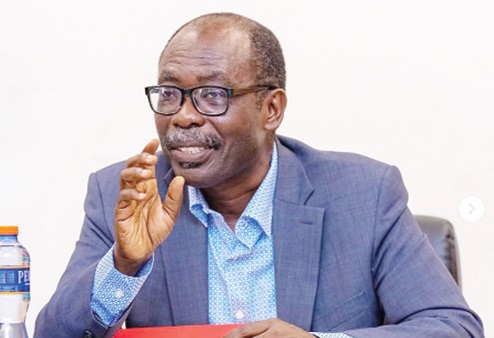
The Ghana Education Service (GES) has issued a heartfelt appeal to pre-tertiary teacher unions, urging them to call off their ongoing strike as government agencies work to resolve their concerns. Director-General Professor Ernest Kofi Davis, addressing the press on Tuesday, September 29, warned that the strike could jeopardize the hard-won stability of the academic calendar. He emphasized that, for the first time in six years, students at all levels had resumed classes within September, marking the return to a predictable and synchronized school year. “This did not happen by accident. It was achieved through hard work,” Professor Davis remarked, highlighting the progress made in restoring stability to Ghana’s education system after years of disruptions. The ongoing strike, declared by GNAT, NAGRAT, and PRETAG, centers on unresolved issues such as unpaid promotion arrears, delays in negotiating a new Collective Agreement, and the non-implementation of the Deprived Area Allowance. The unions launched the industrial action on September 25 after repeated appeals for their demands went unmet. Professor Davis assured teachers that the government, in collaboration with the Ministry of Education, Ministry of Labour, Controller and Accountant-General’s Department, and other stakeholders, is actively working to address their grievances. He cited recent efforts to mechanize teacher promotions as evidence of GES’s commitment to improving conditions for educators. Urging the unions to reconsider their stance, Professor Davis stressed the importance of protecting the academic calendar and called on all stakeholders to support efforts to keep the school year on track. “We wish to associate ourselves with the Ministry of Education’s appeal to teachers to rescind their decision as we work hard to address their issues,” he said. Source: Apexnewsgh.com
COPEC Warns of Steep Fuel Price Hikes, Urges Swift Action to Protect Consumers

Ghanaian motorists should brace for a sharp rise in fuel prices, the Chamber of Petroleum Consumers (COPEC) has warned. In a statement released today, COPEC projected that petrol prices could climb from GH¢16.90 to GH¢17.78 per litre, while diesel may see an even steeper jump from GH¢18.24 to GH¢22.42 per litre in the next pricing window. COPEC attributed the expected increases to rising international Free-on-Board (FOB) prices and a recent 1.2% depreciation of the cedi. Petrol’s FOB price rose by 4.26%, and diesel’s by a significant 8.51%, pushing pump prices higher. According to COPEC, petrol is expected to retail between GH¢16.89 and GH¢18.67 per litre, while diesel could range from GH¢19.40 to GH¢21.44 per litre, within a ±5% margin of their projections. To help cushion consumers from the impact, COPEC called on the government to fast-track expansion works at the Tema Oil Refinery (TOR), aiming to boost refining capacity from 45,000 to 100,000 barrels per day. The chamber believes this move would reduce Ghana’s reliance on imported petroleum products and help stabilize prices in the long run. COPEC also appealed to Oil Marketing Companies (OMCs) to consider reducing their profit margins temporarily, so as not to overburden consumers amid the looming price hikes. Source: Apexnewsgh.com
Ghana Faces Uphill Battle to Control HIV Epidemic by 2030, Says Health Official
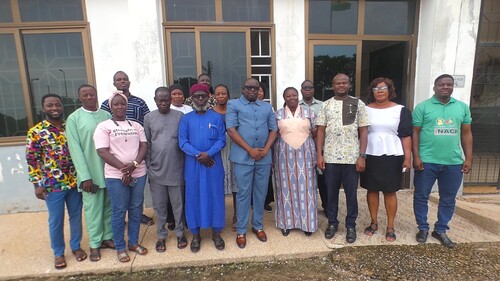
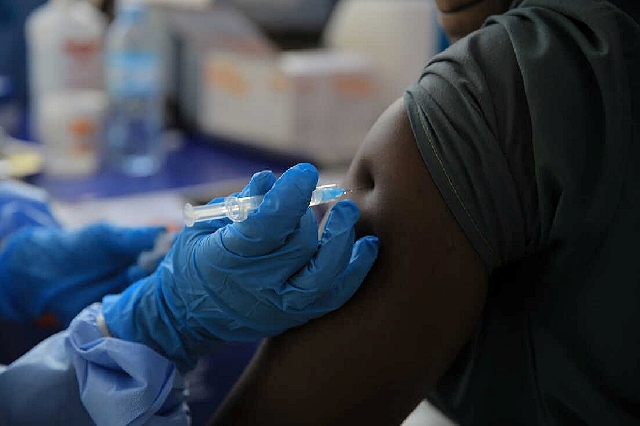
At the expanded Upper East Regional Committee of the Ghana AIDS Commission (ReCCOM) meeting held on September 29, 2026, Sulemana Majeed, Regional TB/HIV Coordinator for the Ghana Health Service/NACP, painted a sobering but hopeful picture of Ghana’s ongoing struggle with HIV. Majeed explained that since Ghana stopped conducting the HIV Prevalence Survey in 2014/2015 due to funding cuts, national HIV data has relied heavily on statistical modeling and estimates rather than direct surveys. Using the NAOMI model, the country now estimates that about 337,435 people are living with HIV, with 10% of infections among children. “Most of our HIV cases are in adults, but the risk of mother-to-child transmission remains a concern,” Majeed noted. He revealed a worrying trend: new infections are concentrated among people aged 20–44, Ghana’s most productive age group. In 2025 alone, the country recorded nearly 13,951 new HIV infections and 12,000 AIDS-related deaths. “New infections among young adults threaten our future workforce and demand urgent intervention,” he said. Majeed also highlighted gender disparities: while more women live with HIV, men are more likely to die from AIDS-related complications, often because they seek care late, when the disease is advanced. Ghana has not yet achieved the global 95-95-95 targets (95% of people living with HIV diagnosed, 95% of those on treatment, 95% virally suppressed) for epidemic control. As of 2025, only 70% knew their status, 81% were on treatment, and 92% of those on treatment had achieved viral suppression. Projections suggest that without significant improvements, Ghana will fall short of the 2030 goal to control the epidemic. By then, the country hopes to reduce new infections to around 6,500 annually and AIDS-related deaths to about 4,000–5,000. But to get there, ART (antiretroviral therapy) coverage must rise from the current 58% of adults to 95%. According to him, regionally, Upper East is among those with lower prevalence, but some districts have seen unexpected spikes in new cases, often linked to migratory labor patterns and mining activities. Majeed warned that 12 out of the region’s 15 districts need close monitoring. He also identified ongoing challenges with data quality, double reporting, and incomplete records, but reported ongoing efforts to improve data accuracy and support staff. However, he believe Ghana must ramp up efforts to find, treat, and retain people living with HIV, especially in the most affected age groups, to avert thousands of preventable deaths. “If we want to achieve epidemic control by 2030 and save lives, our response must be faster, stronger, and more focused than ever,” he concluded. Source: Apexnewsgh.com