
The Attorney-General Challenges Court’s Decision in Hanan Abdul-Wahab Case

In a dramatic turn of events in the trial of former National Food and Buffer Stock Company CEO, Hanan Abdul-Wahab, and his wife, Faiza Sediu Wuni, the Attorney-General has stepped in to contest a recent ruling by the Court of Appeal. The case, which has captured public attention, took a new twist after the Court of Appeal, led by Justice Noble Nkrumah and supported by Justices Lydia Osei Marfo and George Boadi, ordered a stay of proceedings in the ongoing trial. This decision came after legal arguments presented by Godfred Dame on behalf of Hanan Abdul-Wahab. The panel agreed that Dame’s application raised exceptional circumstances, particularly highlighting the critical role of a charge sheet in criminal trials and the necessity of addressing any challenge to it swiftly and thoroughly. However, the Attorney-General found the ruling unsatisfactory and has filed an appeal to overturn it. In the appeal, the Attorney-General contends that the Court of Appeal made an error in granting the stay and in characterizing challenges to a charge sheet as exceptional circumstances. The prosecution is seeking several remedies, including an order to quash the Court of Appeal’s decision and a directive for the High Court to resume the trial without further delay. As the legal battle continues, the outcome of the Attorney-General’s appeal will determine the next chapter in this high-profile case. Source: Apexnewsgh.com
Government Issues New Directives to Protect Workers in Contract Mining Transition

A new chapter is unfolding in Ghana’s mining sector as the government unveils a set of robust policy directives designed to protect workers’ rights and welfare during the nation’s transition from owner mining to contract mining. The Ministry of Lands and Natural Resources, in a press release dated October 21, 2026, announced the measures as part of a wider effort to ensure the effective implementation of Ghana’s contract mining policy. The directives make it clear: indigenous Ghanaian companies will now take the lead on contract mining for surface operations, while underground mining contracts will require a partnership model in which Ghanaian-owned companies must hold at least a 50% stake. This provision has already found its way into the 6th Edition of the Local Procurement List, effective January 1, 2025, under the Minerals and Mining (Local Content and Local Participation) Regulations, 2020 (LI 2431). Most multinational mining companies, the ministry noted, have already brought their operations into compliance. Yet the transition has not been without concern. The Ghana Mineworkers’ Union, along with human resource experts and other stakeholders, raised important questions about how the policy shift might affect workers’ salaries, wages, and overall conditions of service. In response, the Ministry of Lands and Natural Resources and the Minerals Commission engaged in consultations with union leaders, industry experts, and other relevant groups. Through these discussions, the regulatory and policy intent behind contract mining was clarified. Crucially, the government reaffirmed its commitment that no worker would be worse off because of these changes. According to the directive, every Ghanaian contract mining worker must receive salaries, wages, allowances, benefits, and incentives equivalent to what was paid to owner mining workers for comparable roles before the transition. To back this up, the government has instructed the Minerals Commission to ensure no worker engaged by a mining contractor or service provider suffers any reduction in pay, benefits, or working conditions as a result of the new arrangements. The Commission has also been tasked with harmonising salaries, wages, and service conditions across the mining industry value chain, and to categorise eligible contractors based on their capacity to provide mining-related services. These new safeguards complement existing regulatory requirements and do not restrict the Minerals Commission from taking further lawful steps to advance the objectives of the Minerals and Mining (Local Content and Local Participation) Regulations, 2020 (LI 2431). The Commission faces a deadline of November 30, 2026, to finalise the necessary processes and submit all required documentation for approval. The Ministry’s message is unequivocal: there will be zero tolerance for unfair labour practices, cartelisation, bid rigging, fronting, or any other behaviour that undermines local content objectives or harms Ghanaian workers. “The Government remains resolute in ensuring fairness, transparency, genuine Ghanaian participation and the protection of workers across the mining industry value chain,” the statement concluded. Source: Apexnewsgh.com
Ministry of Health Rolls Out Robust Measures to Shield Ghana from Ebola Threat
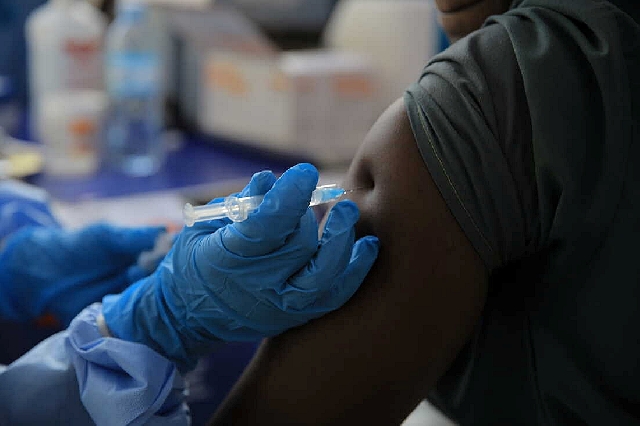
The Ministry of Health, under the leadership of Kwabena Mintah Akandoh, has moved quickly as news of Ebola outbreaks in Kenya, Nigeria, and other African countries sends ripples of concern across Ghana. With Nigeria just a border away, the threat feels especially close to home. To keep the deadly virus at bay, the Ministry has unveiled a comprehensive strategy to protect the nation. In a press release signed by Minister Akandoh, Ghanaians learned of a series of enhanced preventive measures. Working hand-in-hand with key authorities, the Ministry is ramping up surveillance at all points of entry, including the implementation of stronger screening protocols at airports. Travelers arriving in Ghana are now met with heightened health checks and clear instructions on what to do if symptoms arise. But the Ministry isn’t stopping at the borders. Minister Akandoh shared that simulation exercises are being carried out at the Accra International Airport and the Ghana Infectious Disease Centre. These drills, he explained, are designed to stress-test Ghana’s readiness to handle suspected Ebola cases. Health officials are also closely monitoring visitors from high-risk areas throughout their stay in the country, in strict adherence to public health protocols. The preparedness extends to Ghana’s laboratories as well. The Ministry is updating Standard Operating Procedures and ensuring that healthcare workers across the nation are sensitised and trained to spot, respond to, and manage potential Ebola cases swiftly and appropriately. Public education is taking center stage. Travellers at the Accra International Airport receive vital information about Ebola prevention, symptoms, and the steps to take if illness develops. The goal, as Minister Akandoh emphasized, is to strengthen the country’s capacity to prevent, detect, and respond rapidly to any potential Ebola threat. The Minister also took the opportunity to educate the public about the disease itself. “Ebola spreads through direct contact with the blood or body fluids of an infected person, or contaminated materials. It is not airborne,” he clarified. Symptoms of Ebola can appear anywhere from 2 to 21 days after exposure, with the average onset between 8 and 10 days. Early signs include high fever, severe headache, extreme fatigue, sore throat, and chills, followed by more severe symptoms such as unexplained bleeding and confusion. “Anyone who falls ill and experiences these symptoms after traveling to an affected area, or after contact with a suspected or confirmed case, should seek immediate medical attention and share their travel history with health workers,” the Minister advised. Travellers from affected countries will be monitored for 21 days to ensure their health and the safety of those around them. Finally, the Ministry urged everyone to practice good hand hygiene, avoid contact with anyone showing signs of unexplained illness, and not to spread unverified information. Instead, they encouraged citizens to rely on official channels for updates and guidance as Ghana stands united against the threat of Ebola. The Ministry of Heath led by Kwabena Mintah Akandoh has outlined measures to prevent any occurence of the deadly Ebola in Ghana. These measures are being implemented after reports of Ebola cases in Kenya, Nigeria and other African countries which, to the Ghanaian populace, comes close to Ghana especially when Nigeria remains one of the closest neighbouring countries. In a press release signed by the Minister, the Health Ministry in collaboration with the relevant authorities is ensuring an “enhanced surveillance at points of entry including strengthened airport screening measures”. Hon. Mintah Akandoh further disclosed the measures to include “simulation exercises at the Accra International Airport and the Ghana Infectious Disease Centre to assess and improve readiness to respond to suspected cases. Follow-up with travellers from high-risk areas throughout their stay in Ghana, in line with public health protocols. Strengthen laboratory preparedness, including updating Standard Operating Procedures” and sensitise healthcare workers to “enhance awareness, preparedness, and appropriate management of suspected cases”. Furthermore, public education and risk communication at the Accra International Airport is being provided to travellers with “relevant information on Ebola prevention and the actions to take if symptoms develop”. These measures, the Minister noted, are aimed at strengthening Ghana’s capacity to “prevent, detect, and respond to any potential Ebola case”. He also conscientised the general public to carefully note the signs and symptoms of this lethal disease, stating that “Ebola spreads through direct contact with the blood or body fluids of an infected person, or with contaminated materials. It is not airborne”. “Ebola virus disease symptoms typically start 2 to 21 days (average 8 to 10 days) after exposure. These include high-grade fever, severe headache, extreme fatigue, sore throat, chills and later unexplained bleeding and confusion.” He cautioned “anyone who falls ill and has any of the above symptoms after travelling to an affected area, or after contact with a suspected or confirmed case, should seek prompt medical care and disclose their travel history to health workers”. Also, “travellers from affected areas would have their health monitored for 21 days”. The Health Ministry urged the public to “practise good hand hygiene and avoid contact with anyone showing unexplained fever, vomiting, diarrhoea or bleeding” and “do not spread unverified information. Follow official updates from health authorities”. Read full statement below: PRESS RELEASE Ebola Update- Enhanced Surveillance and Response Measures Following Ebola Outbreaks in the Democratic Republic of the Congo, Kenya and Nigeria The Ministry of Health, with its relevant agencies and partners, wishes to update the public on measures Ghana is implementing in response to the ongoing Ebola outbreak in the Democratic Republic of the Congo (DRC) and the subsequent report of cases in Kenya and Nigeria. On 6 October 2026, Kenyan authorities reported an imported case of Ebola caused by the Bundibugyo virus from the DRC. As of 17 October 2026, authorities reported six additional cases, all linked to the initial case, including among healthcare workers. On 20th October, Nigerian authorities also reported a confirmed case of Ebola in the Federal Capital Territory. Although Ghana has not reported any Ebola case, the Ministry of Health, through the Ghana Health Service and other agencies and partners, is