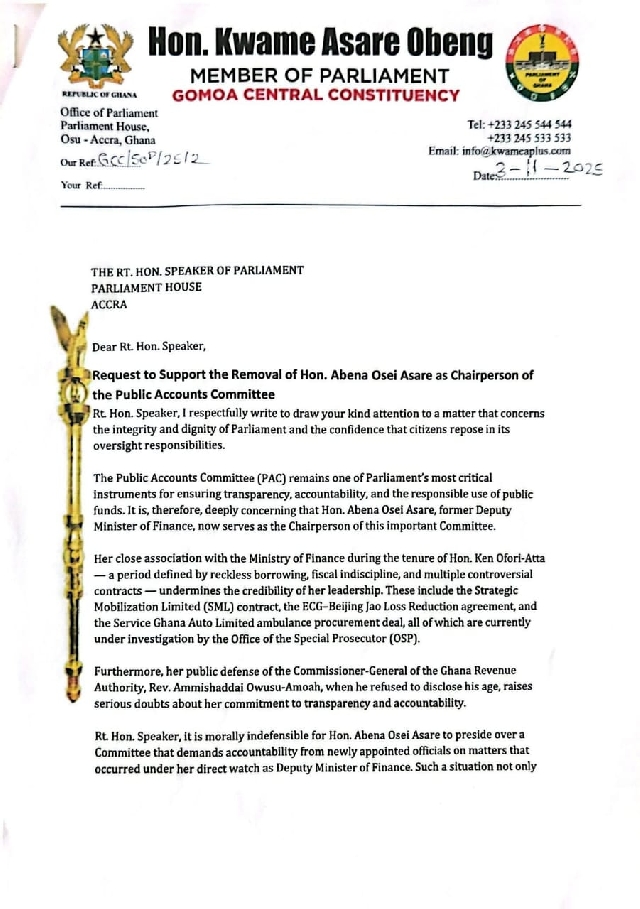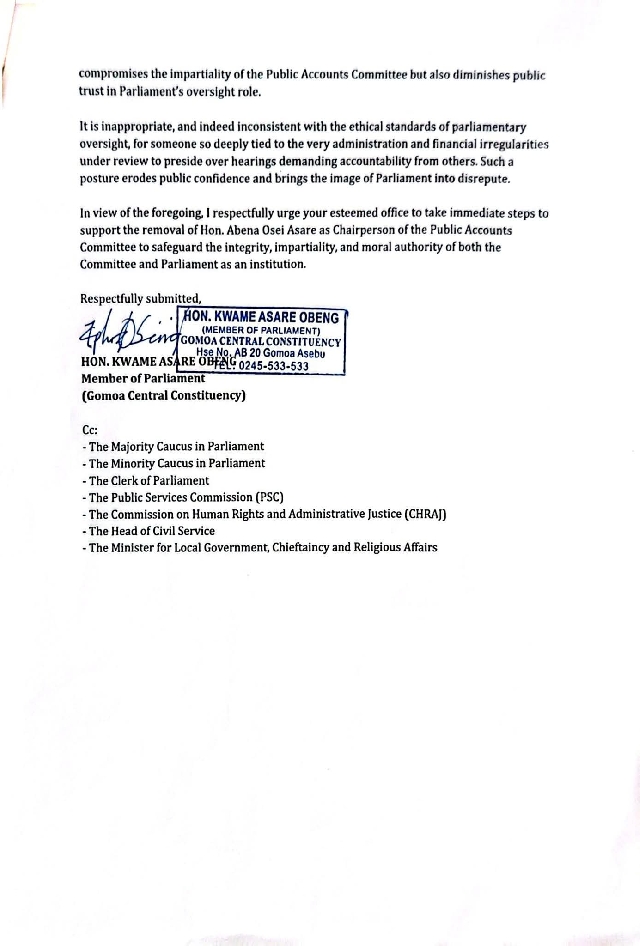
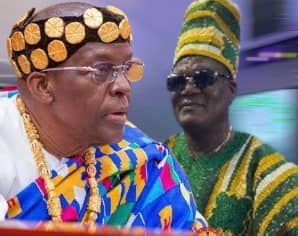





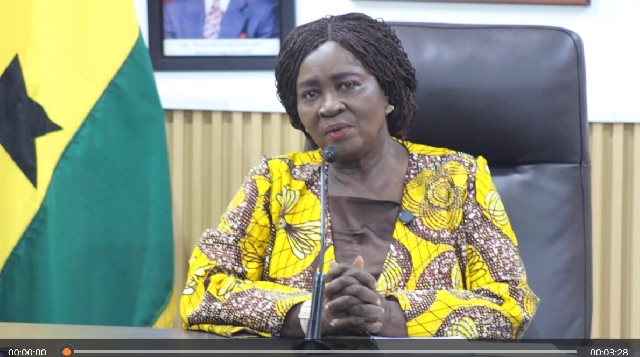

A fresh wave of controversy has hit Ghana’s Parliament as Kwame Obeng-Asare, popularly known as A-Plus and the MP for Gomoa Central, formally petitioned the Speaker of Parliament, Alban Bagbin, to support the removal of Abena Osei Asare as Chairperson of the Public Accounts Committee (PAC).
In his petition, A-Plus argued that Ms. Osei Asare’s continued leadership threatens the integrity and dignity of Parliament, especially given her previous role as Deputy Minister of Finance. “It is important to note, and Ghanaians must be fully aware, that all the matters currently before the Public Accounts Committee occurred under the leadership of Abena Osei Asare when she served as Deputy Minister of Finance. She cannot now turn around to demand answers from newly appointed officials on issues that happened under her own watch,” A-Plus stated on Facebook.
He further described her position as “not just hypocrisy — it is an insult to the intelligence of the Ghanaian people,” adding, “We must not allow those who presided over financial irregularities to sit in judgment over them.”
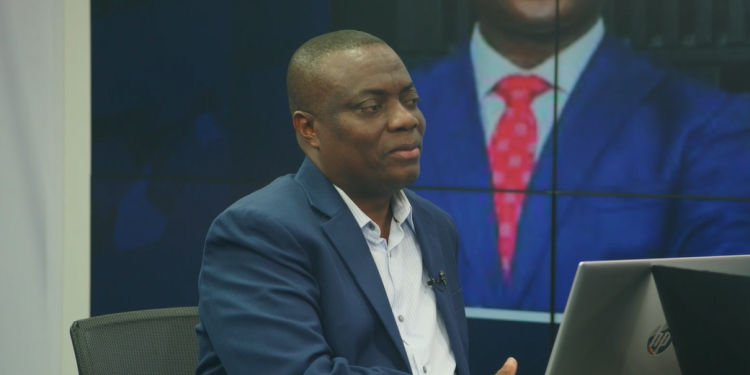
A-Plus’s petition has sparked a swift reaction from fellow lawmakers. Davis Opoku, the MP for Mpraeso, publicly challenged A-Plus’s assertions, describing them as “deeply misguided, both in law and in principle.” Quoting A-Plus’s post on Facebook, Opoku insisted that the integrity of the Public Accounts Committee remains intact with Ms. Osei Asare as chair. He cited the Constitution and parliamentary Standing Orders, explaining that committee chairpersons are selected through a transparent process led by the Committee of Selection and approved by the full House.
Opoku emphasized that the PAC’s mandate, as set out in Article 187(5) of the Constitution and Order 229 of the Standing Orders, is to examine Auditor-General’s reports and ensure accountability in the use of public funds. He pointed out that “government is a continuum,” and current officials appear before the committee as representatives of state institutions, not as perpetrators of past irregularities.
He further clarified that the Standing Orders already provide mechanisms to ensure impartial oversight, such as having the Ranking Member preside when the chairperson’s party is in government. “Accountability in Parliament is not personal; it is institutional. Our democracy depends on protecting that principle,” Opoku concluded.
The petition and ensuing debate have highlighted the tension within Parliament over issues of oversight, accountability, and the separation between personal and institutional responsibility.
See the popular activist’s formal petition below: