

Beware the Scammers: Ministry of the Interior Sounds Alarm Over Fake Recruitment Payment Demands
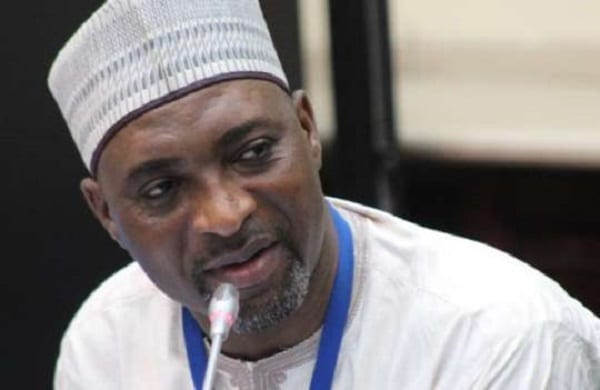
A warning is ringing loud and clear from the Ministry of the Interior, and it is one that every recruitment applicant in Ghana must hear. As the ongoing screening process continues to attract thousands of hopeful candidates, the Ministry has stepped forward with an urgent caution: no applicant will ever be asked to send money directly to a mobile money number as part of the official process. Anyone demanding otherwise, the Ministry says firmly, is a fraudster. The warning, contained in a statement released on Monday, March 23, comes in response to a growing wave of fraudulent messages targeting applicants, messages falsely claiming that payment is required for medical screening. The Ministry was categorical: such demands have no place in the official recruitment process. “We have not yet sent out any SMS notifications regarding the medical screening phase,” the Ministry clarified, drawing a clear line between what is real and what is not. So when should applicants expect to hear from the Ministry? Official SMS notifications will only be dispatched between March 29 and March 31, 2026, ahead of a nationwide screening exercise scheduled to begin on Tuesday, April 7, 2026. Any message arriving before that window, or from an unverified source, should be treated with immediate suspicion. To help applicants separate the genuine from the fraudulent, the Ministry revealed a key detail: all legitimate SMS notifications will come exclusively from the authorised sender ID, CSERP. If a message does not bear that identity, applicants are advised not to act on it. There is also a reliable way to confirm one’s status through the official recruitment portal. Shortlisted candidates will notice their portal status shift from “Qualified” to “MEDICAL SCREENING” once official notifications have been sent. That change on the portal, and only that change, should prompt any further action, including payments, which must be made strictly through the secure web checkout system on the portal itself. The Ministry could not have been clearer in its closing message: no payment should ever be made outside the official platform. For those who encounter suspicious activity or believe they have been targeted by fraudsters, the Ministry has provided a dedicated email channel to report such incidents — recruitment@mint.gov.ghOpens a new window. In a time when scammers prey on the hopes of job seekers, the Ministry’s message is a timely reminder: stay alert, verify every message, and trust only the official process. Your future should not be stolen by a fraudulent text. Source: Apexnewsgh.com
Ghana’s Black Stars Fundraising Campaign Kicks Off With a Roaring $10 Million on Day One

It was a night charged with national pride and purpose. Ghana’s Black Stars fundraising campaign made a thunderous entrance, pulling in approximately $10 million on the very first day of its launch, a figure that has set the tone for what organisers hope will be a historic drive toward a $30 million goal. The announcement came from Deputy Finance Minister and Chairman of the Fundraising Committee, Thomas Nyarko Ampem, who could barely conceal his excitement as he addressed the nation following the high-profile launch event. “The fundraising target is $30 million, and if you listen to the pledges and donations, on day one of the launch, we got about $10 million,” he said. “We are going to put together other events, and we believe that the contributions that are coming in from the short code as well.” The launch drew a constellation of Ghana’s most influential figures. President John Dramani Mahama graced the occasion alongside Sports Minister Kofi Adams and Ghana Football Association President Kurt Okraku, signalling the weight of government and football administration behind the initiative. The atmosphere buzzed with energy as the sports, entertainment, and business sectors rallied behind the cause. Legends of Ghanaian football were also in the room. Former Black Stars captain Stephen Appiah, ex-internationals Fatawu Dauda and Mohammed Polo stood shoulder to shoulder with music heavyweights Stonebwoy, Shatta Wale, and Nacee, a powerful reminder that supporting the Black Stars is not just a sporting affair, but a deeply cultural one. The funds raised will go toward preparing the national team for upcoming international competitions, including four international friendly matches ahead of major tournaments. But beyond the logistics of football, the campaign carries a deeply personal message for ordinary Ghanaians. Nyarko Ampem revealed that part of the initiative is designed to give everyday citizens a direct stake in the team’s journey. “We are using some of this also to randomly select some Ghanaians to go and support the players,” he explained. “Ghanaians who are interested, the code is *899#. With just two or three steps, you stand a chance of representing Ghana to support the Black Stars at the World Cup.” It is a gesture that speaks to the soul of Ghanaian culture, a people who have always worn their national identity with fierce pride, from the rhythms of highlife and afrobeats echoing across the country to the passionate roar of fans who live and breathe football. The Black Stars are not merely a team; they are a symbol of unity, resilience, and collective ambition. With $20 million still to go, organisers are confident. Additional fundraising events are set to be rolled out in the coming weeks, and the momentum from day one suggests that Ghana is more than ready to answer the call. The story of the Black Stars’ next chapter is being written, and every Ghanaian has been handed a pen. Source: Apexnewsgh.com
GUTA President Blasts Parliament Over Foreign Business Dominance, Warns Politicians Will Feel the Pinch After Office
The President of the Ghana Union of Traders Association (GUTA) has delivered a stinging rebuke to Ghana’s political class, holding both sides of Parliament responsible for what he describes as a systemic failure to protect local businesses from being crowded out by foreign enterprises. Clement Boateng made no effort to soften his message as he addressed members of the Minority Caucus, laying the blame squarely at the feet of successive political administrations across party lines. His central charge: that lawmakers, through inaction and weak oversight, have allowed foreign investors, particularly from China, to entrench themselves in sectors of the economy that were historically the preserve of Ghanaian entrepreneurs. The sectors Boateng identified paint a broad and troubling picture. Retail trade, construction, mining, finance, telecommunications, and small-scale commerce, areas once dominated by indigenous business owners, have, in his view, increasingly fallen under the influence of foreign players. The consequence, he argued, has been the gradual marginalisation of local entrepreneurs who find themselves unable to compete on an uneven playing field. Nowhere has this been more damaging, Boateng suggested, than in the mining sector, where the surge in foreign activity has not only displaced Ghanaians economically but has also wreaked havoc on the environment. He pointed specifically to the contamination of vital water bodies, a crisis that has drawn widespread public concern and underscored the real human cost of unchecked foreign involvement in the industry. The GUTA President also turned his attention to the regulatory frameworks that should, in theory, offer some protection. He singled out the Ghana Investment Promotion Centre Act, which contains provisions safeguarding local participation in certain sectors, but argued that the law exists largely on paper. Weak enforcement, he contended, has rendered these protections meaningless in practice, a failure he attributed to a lack of political will. Perhaps his sharpest warning, however, was directed personally at the lawmakers in the room. Boateng reminded them that many of them are active business people themselves, and cautioned that once they exit public office and return fully to private enterprise, they will be forced to confront the very same challenges they are currently doing so little to address. It was, in effect, a warning that the consequences of their inaction would one day come home to roost. Source: Apexnewsgh.com
Tema Microlight Crash: Lawmakers Demand Transparent Probe, Stronger Aviation Safety Standards
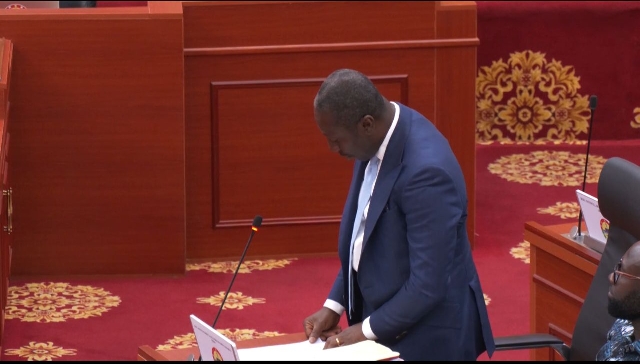
The fatal microlight aircraft crash in Tema that claimed the lives of two brothers has sparked urgent calls from both sides of Parliament, with lawmakers demanding accountability, transparency, and sweeping reforms to aviation safety standards. Leading the charge from the Minority side, Minority Leader Alexander Afenyo-Markin has called for a thorough, transparent, and time-bound investigation into the crash, and has made clear that the findings must not be buried in bureaucratic silence. The Effutu Member of Parliament is insisting that the results of the probe be made public, that aviation safety protocols be comprehensively reviewed and strengthened, and that the bereaved families receive adequate support as they come to terms with their devastating loss. Beyond the immediate tragedy, Afenyo-Markin raised a broader and troubling question: how was a private aircraft permitted to operate over a densely populated area in the first place? His concern points to what he sees as a worrying pattern, noting the recent uptick in aircraft-related incidents and questioning whether existing oversight mechanisms are fit for purpose. On the other side of the aisle, Majority Chief Whip Rockson-Nelson Dafeamekpor echoed the gravity of the moment as he presented a statement on the tragedy. While sharing in the grief over the loss of the two brothers, Dafeamekpor directed his message squarely at those responsible for operating microlight aircraft, urging them to strictly observe maintenance and safety standards to ensure that such a devastating incident is never repeated. Dafeamekpor also called on the Ghana Air Force to step up its engagement with private aircraft owners, stressing the need for a collaborative approach to safety that protects not only pilots but the communities over which these aircraft fly. Both lawmakers agreed on one thing: the incident has left a deep wound, on the bereaved family, and on all those touched by the tragedy. Whether their calls translate into meaningful reform now rests with the relevant authorities. Source: Apexnewsgh.com
NIA Rolls Out Strict New Data Protection Guidelines for Agencies Accessing National Identity Register
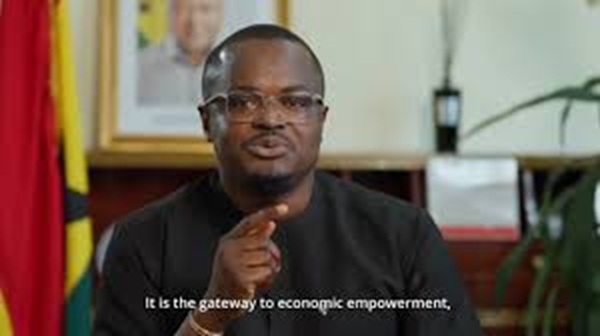
Ghana’s National Identification Authority (NIA) has taken a decisive step to tighten control over how personal data is handled across the country, rolling out new guidelines governing the security, storage, and retention of information drawn from the National Identity Register (NIR), effective March 19, 2026. The directive, which targets user agencies, institutions that access the national database in the course of their operations, marks a significant move by the Authority to close gaps in data protection and hold organisations to a higher standard of accountability when dealing with sensitive personal information. The NIA’s authority to issue such guidelines is firmly grounded in law. The new requirements are anchored in the National Identity Register Act, 2008 (Act 750) and its amendment, the National Identity Register (Amendment) Act, 2017 (Act 950), both of which vest the Authority with the mandate to regulate how personal data from the NIR is managed across institutions. At the core of the guidelines is a clear principle: personal data must be securely stored and retained only for as long as it is genuinely needed. Beyond that, the NIA is pushing for a culture shift, one that places responsible data management at the heart of how user agencies operate. The guidelines are also designed to significantly reduce the risk of unauthorised access, misuse, or loss of personal information, while bringing Ghana’s data handling practices in line with both domestic legislation and internationally recognised standards on information security. The timing of the directive reflects a broader strategic push by the NIA to shore up public trust in Ghana’s national identification system. In an era where data breaches and privacy concerns are increasingly in the spotlight globally, the Authority appears determined to ensure that the NIR, which holds some of the most sensitive personal information of Ghanaian citizens, is treated with the highest level of care. User agencies have been put on notice: compliance with the new requirements is not optional. The NIA has signalled that it will be intensifying its oversight of how personal information from the National Identity Register is handled, leaving little room for institutions to fall short of the standards now expected of them. Source: Apexnewsgh.com
MTN Ghana Launches Game Changing Sim Swap Self-Service – Customers Swap Anytime, Anywhere
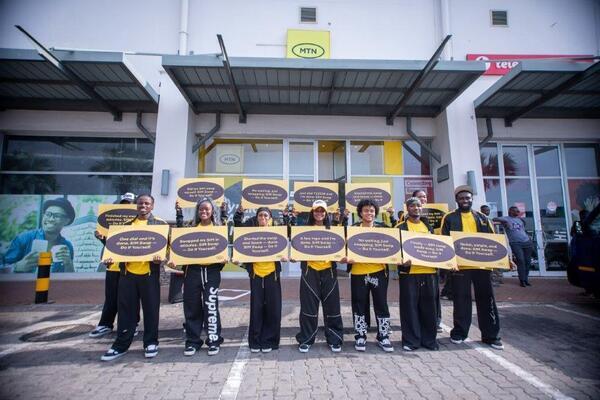
In its commitment to delivering convenient, secure and innovative digital solutions for customers, MTN Ghana has launched Sim Swap Self-Service. This innovative solution empowers customers to replace their SIM cards whenever and wherever they may be, eliminating the need to visit a physical service centre for assistance. The launch was held simultaneously across six locations, Accra, Kasoa, Koforidua, Kumasi, Ho and Tamale, demonstrating MTN’s commitment to digital transformation and enhancing customer experience. Speaking at the event, Jemima Kotei Walsh, the Chief Customer Experience Officer of MTN Ghana, shared the vision behind the new self-service SIM swap initiative. She underscored MTN’s dedication to harnessing technology for customer empowerment, describing the launch as a milestone that would reshape how customers interact with their mobile services. She explained that, for years, SIM swaps meant a trip to a service center or an online request that required assistance. Now, however, MTN Ghana is proud to enable customers to complete this vital service on their own, conveniently, securely and wherever they happen to be. “The need for SIM swaps has always been high, with MTN Ghana handling roughly 250,000 of such requests each month across its service centers. The self-service will ease these burdens by reducing lines, waiting times and giving customers more control and flexibility over their accounts. Before the full rollout, a pilot program had already demonstrated the value of the initiative with more than 18,000 customers successfully swapping their SIMs independently or with very little help at MTN branches. This success was more than just numbers, it was proof of digital empowerment and a shining example of customer-driven innovation in action,” she added. Beatrice Hemen, Director of Consumer Affairs at the National Communications Authority (NCA), praised the new solution, emphasizing that telecom users frequently report SIM swap concerns. “The Authority consistently receives a significant number of SIM swap-related complaints. Empowering customers to handle the process themselves marks a major step forward,” she commented. She added that the initiative will give customers greater choice and help shape Ghana’s telecommunications ecosystem. Commenting on the innovative Sim Swap Self-Service, the Chief Executive Officer of MTN Ghana, Mr. Stephen Blewett, stated that MTN continues to drive forward its vision for a dynamic digital future and remains dedicated to developing innovative solutions that consistently exceed customer expectations and enhance their daily experiences. The SIM Swap Service offers a range of advantages for customers. Users can conveniently swap their SIM cards at any time, saving valuable time and effort. Whether a device is lost, stolen, or damaged, the service allows for quick replacement, even for individuals located outside Ghana. It ensures rapid restoration of mobile services with little interruption, provides robust security through digital authentication and empowers customers to manage their accounts independently, eliminating reliance on service center staff. Security is a fundamental aspect of this innovation. The self-service SIM swap platform incorporates state-of-the-art biometric facial recognition, guaranteeing that only the legitimate owner can carry out the swap. This technology significantly reduces the risk of fraud and shields customers from threats posed by forged or compromised identification cards. Attendees witnessed a live walkthrough of the self-service SIM swap, demonstrating how users can complete the process seamlessly through MTN’s digital platforms, either via the myMTN App or by USSD dialling *1333#. This digital approach replaces traditional manual checks with a secure biometric facial-recognition scan that verifies the user against their registered SIM information, ensuring both ease and security. The event wrapped up with a lively, coordinated display featuring placards that illustrated each step of the SIM swap process, visually emphasizing how straightforward and effortless the new service is for customers. Source: Apexnewsgh.com
Ghana Gears Up for World Shea Expo with Strategic Meeting Between Presidency, ILO and Industry Players

With the World Shea Expo on the horizon, Ghana is leaving nothing to chance. Peter Boamah Otokunor, Director of Agribusiness Development at the Office of the President, has convened a high-level strategic meeting with representatives from the International Labour Organisation (ILO) and Savanna Golden Tree Limited, signalling the government’s intent to make a strong impression on the global shea stage this year. The meeting served as both a planning session and a broader strategic conversation, bringing key stakeholders together to align on preparatory activities for the expo while mapping out Ghana’s wider ambitions for positioning its shea sector as a powerhouse in the international market. At the heart of the discussions was a shared recognition of the shea industry’s untapped economic potential. Participants examined how the sector could be harnessed more effectively to generate sustainable employment and contribute meaningfully to national development, goals that have taken on added urgency as Ghana looks to diversify its economic base and create opportunities in rural communities where shea production is most concentrated. Dr. Otokunor was emphatic on one point: Ghana cannot unlock the full value of its shea industry by working in isolation. He stressed the critical importance of deepening partnerships with international organisations and private sector actors, arguing that such collaborations are essential to expanding market access and driving greater value addition within the sector, moving beyond raw shea exports toward more processed, higher-value products that keep more wealth within the country. All eyes are now on the World Shea Expo, which is expected to be a defining moment for Ghana’s shea industry. The event will offer a prominent platform to showcase the country’s shea potential to a global audience, attract fresh investment, and open new trade doors for local producers who form the backbone of the sector. Source: Apexnewsgh.com
History Will Judge Nations That Oppose Ghana’s UN Slavery Resolution, PALU Warns
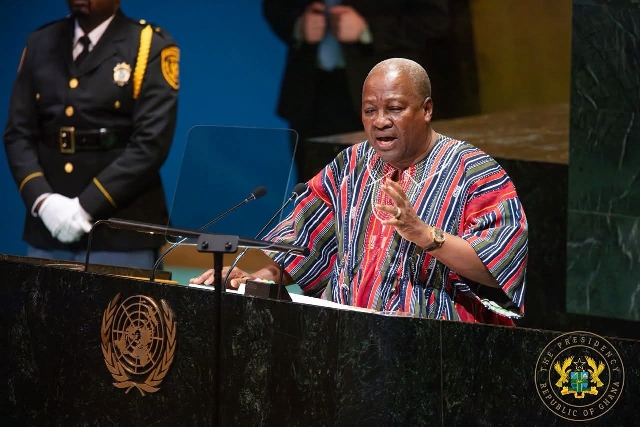
The Pan African Lawyers Union (PALU) has drawn a sharp line in the sand; nations that choose to abstain or vote against Ghana’s landmark UN resolution on the transatlantic trafficking and enslavement of Africans will be remembered poorly by history. The warning, delivered in a strongly worded statement dated March 18, 2026, signals growing continental resolve behind a resolution that has quickly become one of the most consequential diplomatic pushes of the year. The resolution, championed by President John Dramani Mahama, seeks to secure formal recognition at the United Nations of the transatlantic slave trade as the gravest crime against humanity ever committed, a designation its proponents say is long overdue. PALU’s statement made clear that this is not a debate about historical semantics. The organisation argued forcefully that the transatlantic slave trade was far more than a dark chapter in history, it was, in its words, a “foundational rupture” that permanently altered the course of human civilisation. The scale of the atrocity, its duration across centuries, and its deeply systemic nature set it apart, PALU contended, as an “absolute crime” whose consequences continue to reverberate across generations of African and diaspora communities to this day. Central to PALU’s argument is the economic legacy of enslavement. The organisation pointed to the enormous wealth generated through the forced labour of millions of Africans, wealth that, it argued, lay the very foundations of today’s global infrastructure and fundamentally transformed political, legal, and economic systems the world over. To ignore this, PALU suggested, is to wilfully misread history. Anticipating potential pushback at the UN, the organisation was careful to frame the resolution not as an attempt to rank or compare historical atrocities, but as an act of truth-telling, one that is indispensable to any genuine pursuit of justice, accountability, and reconciliation. For African nations and diaspora communities still navigating the socio-economic and cultural scars of enslavement, such recognition carries profound significance. PALU’s message to the international community was unambiguous: the adoption of this resolution is both a moral and historical imperative, and a rare opportunity to advance healing and forge authentic global solidarity. Those who stand in the way, the organisation cautioned, do so at the cost of their place on the right side of history. Source: Apexnewsgh.com
Minority Demands Immediate Scrapping of GHS1 Fuel Levy, Cites Worsening Cost of Living
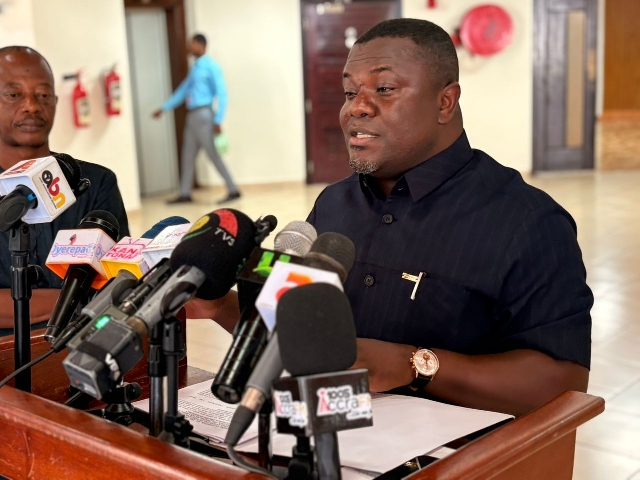
Pressure is mounting on the government to scrap the GHS1 fuel levy, as the Minority in Parliament calls for its immediate abolition, arguing that the charge is deepening the financial strain on Ghanaians already struggling under the weight of soaring living costs. The demand was made by Collins Adomako-Mensah, Deputy Ranking Member on Parliament’s Energy Committee, who voiced the Minority’s concerns to journalists on the sidelines of parliamentary proceedings. His remarks came at a particularly sensitive moment, fuel prices had just risen again, driven by escalating geopolitical tensions involving the United States, Israel, and Iran, compounded by disruptions stemming from the closure of the Strait of Hormuz. For many Ghanaians, the timing could not have been worse. Adomako-Mensah acknowledged that the levy was not introduced without purpose. Enshrined in the Energy Sector Levy Amendment Act 2025, it was designed to support fuel procurement and help the country chip away at longstanding debts in the energy sector. But he was unequivocal: the economic realities of today make its continued existence unjustifiable. Beyond the immediate call to scrap the levy, the Minority is setting its sights on a broader fight. Adomako-Mensah revealed plans to push for a sweeping review of all taxes embedded in petroleum pricing, a move aimed at identifying and eliminating charges that unnecessarily inflate costs at the pump for ordinary consumers. The Minority’s stance is poised to sharpen an already heated debate in Parliament over fuel taxation, as the government finds itself caught between the need to protect revenue streams and mounting public frustration over the relentless rise in the cost of living. Source: Apexnewsgh.com
Mahama Urges Tenants to Report Landlords Flouting Rent Advance Laws
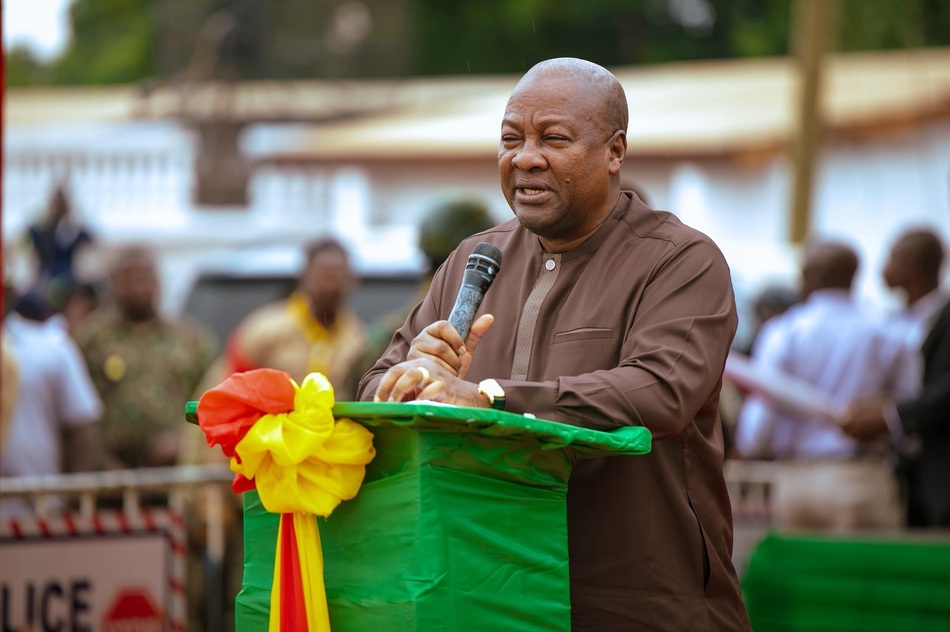
President John Dramani Mahama has urged tenants across Ghana to hold landlords accountable by reporting those who demand rent advances beyond the legally permitted limit, as the government intensifies efforts to protect renters from exploitation in the housing sector. The President made the call during a meeting with Organised Labour at the Presidency, where he underscored the urgent need to enforce existing housing regulations and shield tenants from unlawful financial demands. Mahama acknowledged the mounting pressure that housing costs are placing on Ghanaian households, warning that affordable accommodation is rapidly slipping out of reach for a growing number of citizens. He linked the surge in excessive rent demands to the country’s persistent housing deficit, arguing that the shortfall in available housing has emboldened some landlords to impose illegal charges on desperate renters. The President reminded the public that the law expressly bars rent advances of more than six months, yet enforcement of this provision remains largely ineffective, a situation he partly attributed to the reluctance of both tenants and landlords to pursue grievances through the rent courts. As a way forward, President Mahama proposed convening a national housing dialogue bringing together government, the private sector, and labour groups to craft a robust social housing policy. He stressed that only a well-coordinated, multi-stakeholder approach can meaningfully resolve the housing crisis and guarantee fair, accessible accommodation for every Ghanaian. Source: Apexnewsgh.com