


Ghana’s Electronic Toll System Set for Q4 2026 Launch as Parliament Moves to Plug Revenue Gap
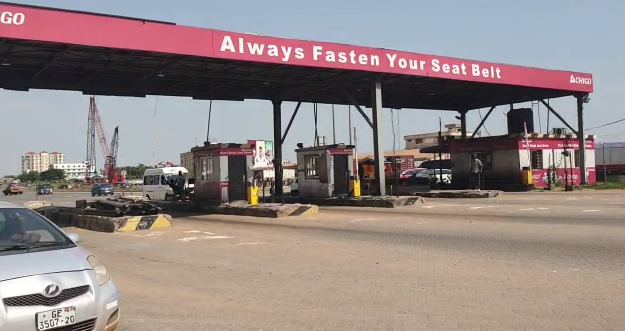
Ghana is on the verge of turning a significant page in its road infrastructure story. The Roads and Transport Committee of Parliament has confirmed that the country’s long-awaited electronic road toll system will be up and running by the fourth quarter of 2026, a development that promises to restore a vital stream of funding for road maintenance and development. The announcement came on Thursday, March 26, 2026, in Accra, where Isaac Adjei Mensah, Chairman of the Committee and Member of Parliament for Wassa East, addressed the Parliamentary Press Corps. His remarks came in direct response to concerns raised earlier in the week by the Minority Caucus, which had questioned the pace at which the toll system was being rolled out. “All feasibility studies and preparatory processes will soon be finalised,” Mr. Adjei Mensah said, projecting confidence that the implementation timeline was firmly on track. But the Chairman did not stop at reassurance; he went on the offensive. Pushing back sharply against the Minority’s criticism, he argued that those who abolished the toll system in the first place had little standing to question the speed of its restoration. “The Minority has no moral justification to criticise the pace of this policy,” he said pointedly. His remarks carried the weight of hard numbers. Before the tolls were scrapped under the previous administration, they were generating approximately GH¢60 million every month for the state — a substantial and consistent revenue flow that vanished overnight with their abolition. The resulting gap, Mr Adjei Mensah stressed, had left Ghana’s road maintenance infrastructure starved of funding, with deteriorating roads and stalled projects bearing the consequences. “The abolition of the tolls led to substantial revenue losses,” he said, framing the electronic system not as a new policy experiment, but as a necessary correction — one designed to close the gap and rebuild the country’s capacity to maintain and expand its road network. The electronic format, he explained, is a deliberate upgrade. It will bring efficiency and transparency to the revenue collection process, replacing the vulnerabilities of manual toll collection with a modern, accountable system. “This system will ensure efficiency in collection while restoring a reliable revenue stream for road infrastructure development,” the Chairman said. Beyond the toll system, the Committee used the occasion to address a broader range of infrastructure concerns. On the government’s “Big Push” initiative, Mr. Adjei Mensah moved to clarify questions surrounding contract awards, noting that only 44 percent of the 400 contracts under the programme were awarded through sole sourcing, with the majority going through competitive bidding processes. The session also touched on several other critical projects and policy directions, among them, progress on the Boankra Inland Port, the status of the Mpakadan Railway System, government plans to restructure the Road Fund into a Road Maintenance Trust Fund, and the partial payment of GH¢107 billion in outstanding road arrears. Taken together, the disclosures painted a picture of an administration working to untangle years of infrastructure debt while laying the groundwork for more sustainable, transparent, and efficient systems. With Q4 2026 now firmly in view, Ghana’s roads and the funds needed to keep them in shape may soon be on a more reliable footing. Source: Apexnewsgh.com
Ghana’s Gold Gets a New Story: Naana Jane Launches Heritage Village to Champion Local Jewellery Industry
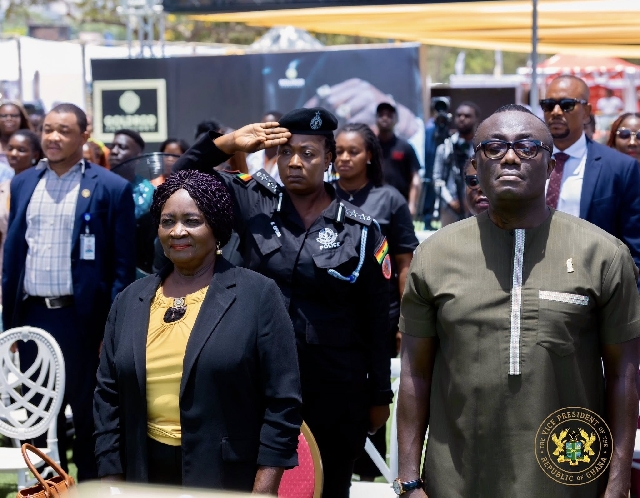
Vice President Naana Jane Opoku-Agyemang stepped forward to officially launch the Heritage Village initiative, a bold platform dedicated to showcasing and promoting locally manufactured gold jewellery and breathing new life into Ghana’s value-added industry. The initiative, the brainchild of legal practitioner Gertrude Emefa Donkor under her brand Goldbod Jewellery, arrives at a time when conversations about Ghana’s economic future are louder than ever. At its core, Heritage Village is a call to action, a challenge to the nation to stop sending its gold away in its raw form and start telling a richer, more rewarding story with it. Speaking at the launch, Vice President Opoku-Agyemang made clear that the path to Ghana’s transformation runs directly through its ability to produce, not just extract. She underscored the critical importance of empowering local artisans, nurturing the country’s creative sector, and building industries that add value at home rather than abroad. For the Vice President, this is not a peripheral conversation; it is central to Ghana’s economic identity. She noted that the country’s future prosperity depends on its willingness to move beyond the mine and invest in innovation, craftsmanship, and production. The timing of the three-day event was no accident. Deliberately scheduled to coincide with Ghana Month, Heritage Village framed gold not merely as a commodity buried beneath the earth, but as a living symbol of national pride, cultural heritage, and untapped economic opportunity. It was a statement that Ghana’s gold belongs not just in the ground or in foreign markets, but in the hands of Ghanaian artisans and on the global stage as a finished, high-value product. Prof. Opoku-Agyemang took a moment to commend the organisers for their vision and courage, for contributing meaningfully to the national dialogue on industrial growth and for creating a platform where young entrepreneurs could find their footing, scale their businesses, and compete beyond Ghana’s borders. As the event drew attention from artisans, industry players, and policymakers alike, the Vice President expressed genuine optimism about what Heritage Village represents and what it could become. She envisioned it as a catalyst, an initiative capable of inspiring a new generation of innovators, uplifting local craftspeople, and playing a defining role in advancing Ghana’s industrialisation agenda. In launching Heritage Village, Vice President Naana Jane Opoku-Agyemang sent a clear and resonant message: Ghana’s gold is more than a resource; it is a legacy waiting to be shaped, polished, and proudly worn by the world. Source: Apexnewsgh.com
Mahama Champions Transparency and Accountability in Bold Governance Overhaul
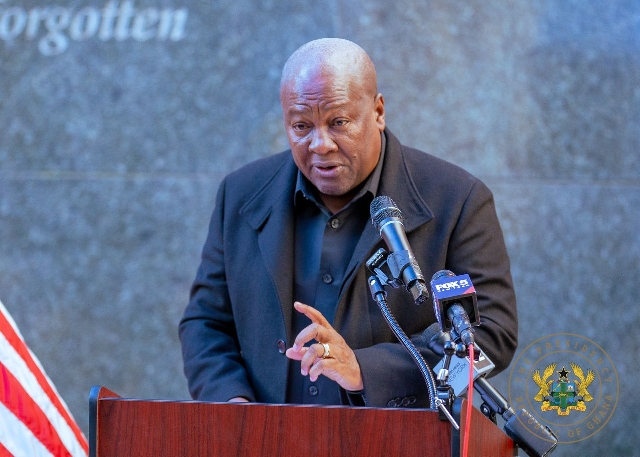
From the heart of Philadelphia, President John Dramani Mahama stood before a gathering of Ghanaians in the diaspora and delivered a message that resonated far beyond the walls of the meeting hall, a promise to transform how Ghana is governed. With conviction in his voice and urgency in his words, the President laid out a sweeping agenda of reforms designed to root out corruption, restore public trust, and redefine what it means to hold public office in Ghana. “We are committed to building a government that Ghanaians can trust — a government that is accountable, transparent, and fully responsible to the people,” President Mahama declared. At the center of this agenda are two landmark initiatives: a new national anti-corruption strategy and the Public Office Accountability Bill. Both, the President stressed, are being fast-tracked for implementation, a signal that his administration is not content with promises alone, but is moving with deliberate speed toward action. The anti-corruption strategy, as President Mahama described it, is not a routine policy document. It is a direct assault on systemic graft, a comprehensive framework built to detect, prevent, and prosecute corruption at every level of government. Beyond enforcement, it aims to cultivate a culture of ethical conduct among public officials, reinforcing the idea that integrity is not optional but foundational. Complementing this is the Public Office Accountability Bill, which will enshrine in law the standards expected of those who serve in public roles. It will create binding legal frameworks to hold officials answerable for misconduct, drawing a clear line between public service and personal impunity. “Public office is a public trust,” the President said firmly. “If you choose to serve the people, you must be prepared to be held accountable. These reforms are about ensuring that trust is never violated.” For Mahama, these are not merely regulatory measures, they are transformative tools, the bedrock upon which Ghana’s development must be built. He painted a vision of a nation where public resources are managed with care, where leadership is guided by conscience, and where institutions are strong enough to stand on their own. “Our people deserve a government that works efficiently, responsibly, and transparently,” he said. “With these initiatives, we are ensuring that the systems managing our resources are accountable, and that leadership is guided by integrity and service to the nation.” The Philadelphia engagement also carried a deeper symbolism. By taking this message to Ghanaians abroad, President Mahama acknowledged the diaspora not merely as spectators of Ghana’s story, but as active partners in writing it. He described them as vital contributors to the country’s socio-economic growth, a community whose investment, ideas, and influence are woven into the fabric of national development. As the President concluded his address, his words carried the weight of both a challenge and a commitment. “These reforms are central to Ghana’s progress,” he said. “They are about protecting our democracy, empowering our institutions, and ensuring that public service remains a noble calling, guided by the highest standards of integrity.” In Philadelphia, far from Accra, President Mahama made one thing unmistakably clear, the work of rebuilding Ghana’s public trust has already begun. Source: Apexnewsgh.com
Ghana’s Digital Fortress: How the Bank of Ghana Just Rewrote the Rules of Financial Security
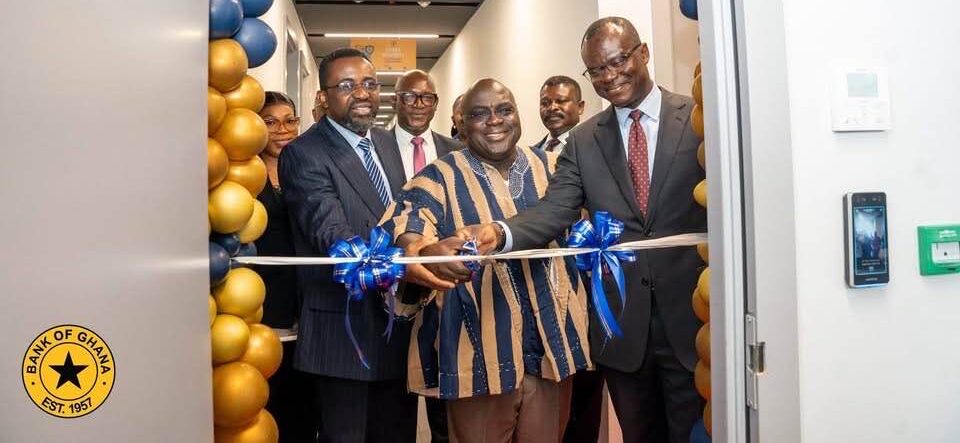
In an era where the battlefield for national security has shifted from physical borders to fiber-optic cables, Ghana has just fortified its most critical asset: its financial heartbeat. The date was Wednesday, March 25, 2026. In the heart of Accra, at the storied Bank Square, a ribbon was cut, not over a road, a bridge, or a hospital, but over something far less visible and far more consequential. The commissioning of the Bank of Ghana’s Security Operations Centre (SOC) did not make the skyline any taller, but it made the nation immeasurably safer. With Chief of Staff Hon. Julius Debrah standing alongside Governor Dr. Johnson Pandit Asiama and First Deputy Governor Dr. Zakari Mumuni, Ghana quietly announced to the world that it was done waiting for a cyberattack to happen before deciding how to respond. That era was over. Ghana’s economy is digitizing at a breathtaking pace. Mobile money interoperability has woven millions of unbanked citizens into the formal financial system. Fintech startups are rewriting how businesses borrow, save, and transact. Every new digital connection, every new platform, every new line of code is a door, and for cybercriminals, every door is an opportunity. Hackers no longer need to breach a physical vault. They do not need guns, getaway cars, or inside men. All they need is a line of malicious code and a moment of vulnerability. In today’s financial landscape, billions can be siphoned in seconds, and the victims, ordinary Ghanaians, may not even know it has happened until the damage is done. The SOC is the Bank of Ghana’s direct answer to this evolving threat. Acting as a centralized nerve center for the entire financial ecosystem, the facility does not merely scan for common viruses or routine intrusions. It hunts, proactively, relentlessly, for sophisticated, state-sponsored threats and coordinated financial fraud, intercepting danger before it ever reaches the balance sheets of the people it is sworn to protect. What makes this milestone truly remarkable, however, is not the hardware. It is the philosophy behind it. First Deputy Governor Dr. Zakari Mumuni captured the spirit of the moment when he framed the SOC not simply as a new tool, but as a fundamental shift in how Ghana thinks about financial resilience. The old model, building walls and hoping they hold, is no longer sufficient. The new model is about speed, intelligence, and anticipation. “The question in modern banking is no longer if a threat will occur, but when,” a technical expert at the launch noted. “The SOC ensures that when that ‘when’ happens, the response is measured in milliseconds, not days.” At its core, the SOC operates on three powerful pillars. The first is Threat Intelligence Sharing, a real-time “neighborhood watch” for the banking sector, where a threat detected at one financial institution is immediately flagged and neutralized across the entire network, preventing a single breach from cascading into a systemic crisis. The second is round-the-clock vigilance, with a dedicated team of elite cyber-analysts working in shifts, eyes never leaving the screens, guarding the integrity of the Cedi through every hour of every day. The third, and perhaps most forward-looking, is proactive defense, the deployment of artificial intelligence and machine learning to identify and close vulnerabilities in the financial architecture before a single criminal mind can find and exploit them. For Hon. Julius Debrah and the leadership at the Bank of Ghana, this investment reaches beyond technology. It is, at its core, about trust. In a competitive global economy, capital is not loyal. Investors, businesses, and international financial institutions go where they feel safe, where the systems are strong, the oversight is credible, and the risks are managed. By establishing one of the most advanced Security Operations Centres in the sub-region, Ghana is not merely protecting its banks. It is making a bold declaration of intent: that it intends to be the most secure, the most stable, and the most trusted financial hub in West Africa. As the ribbon fell at Bank Square on that Wednesday morning, the message reverberated far beyond the walls of the ceremony. Ghana’s digital gates are now manned by a sentry that never sleeps, never blinks, and never stands down. In the high-stakes arena of global finance, where fortunes can be made or lost in the blink of a cursor, the Bank of Ghana has drawn a firm and unambiguous line, the nation’s wealth will remain exactly where it belongs: protected, stable, and secure. Source: Apexnewsgh.com
“Comply or Lose Your License”: Lands Minister Puts Mining Companies on Notice During Talensi Tour
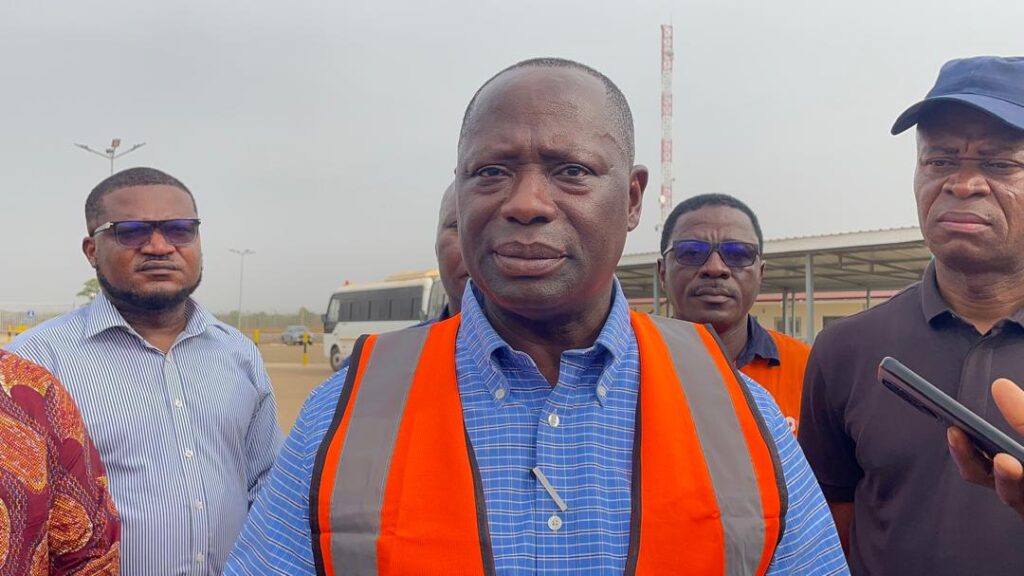
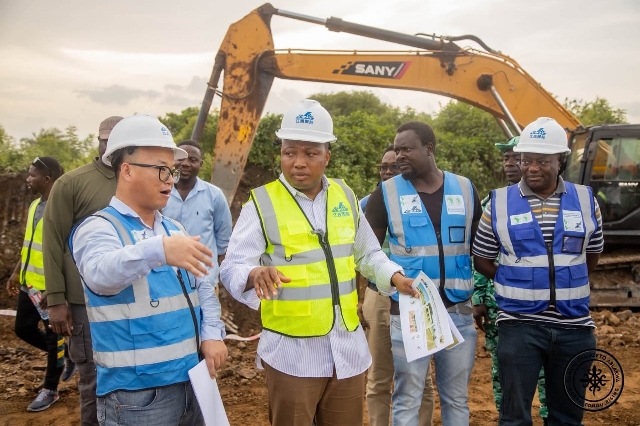
Ghana’s Minister for Lands and Natural Resources, Hon. Emmanuel Armah-Kofi Buah, has issued a stern warning to mining companies operating in the Talensi District of the Upper East Region, comply with environmental regulations or face license revocation. The warning came during a high-profile working tour of the region, where the minister met with traditional rulers, regional officials, and representatives of licensed mining companies to push for responsible mining practices and stronger benefits for local communities. The minister’s visit kicked off in Bolgatanga with a briefing at the Regional Coordinating Council, where Hon. Buah outlined the government’s priorities: formalizing small-scale mining, accelerating land title processing, and reinforcing environmental protection. He challenged Lands Commission staff to eliminate bureaucratic delays and improve record-keeping, ensuring that ordinary residents can secure their land rights without unnecessary hurdles. From Bolgatanga, the minister traveled to the Talensi District, where he first paid a courtesy call on the paramount chief of the Talensi Traditional Area, Nab Kugbilsong Nanlebegtang, seeking his blessing before proceeding with the tour. This gesture underscored the government’s commitment to working hand-in-hand with traditional authorities. The royal welcome, however, came with an urgent plea. The paramount chief and his council raised serious concerns about the growing menace of illegal mining, locally known as galamsey, which they described as a “cancer” ravaging the district. According to the chief, the consequences are far-reaching: environmental disruption, health risks, economic losses, and deepening social conflict. “Its activities have severe consequences in environmental disruptions, health risks, economic losses, and social conflict,” the chief stated plainly. “We therefore seek effective action to eliminate or minimize the cancer from the area,” he added, calling on the minister to move beyond words and deliver decisive intervention. In response to the chiefs’ concerns, Hon. Buah announced plans to expand the Community Mining Scheme in the Talensi District, a government initiative designed to provide legal, well-regulated mining sites equipped with proper training so that miners can operate safely and sustainably. He assured the traditional authorities of strong, ongoing collaboration between his ministry and local leadership to safeguard both the environment and the livelihoods of residents. The minister’s tour then took him to two of the district’s major licensed gold mining operations, Cardinal Namdini Mining Limited (CNML) and Earl International Group Ghana. At each site, Hon. Buah conducted on-the-ground inspections of operational areas, environmental safeguards, and worker safety measures. His message to both companies was unambiguous: compliance is not optional. He reminded the companies that the government holds the power to revoke mining licenses, and he was not shy about invoking it. “If any company fails to comply with the regulations on environmental grounds, their licenses will be revoked,” the minister declared. Both companies’ management teams responded by presenting their reclamation plans, community development projects, and environmental sustainability commitments, pledging to work closely with the Ministry, the Environmental Protection Agency (EPA), and other relevant stakeholders to uphold the highest standards. Wrapping up the tour, Minister Buah expressed gratitude to the chiefs and people of the Upper East Region for their cooperation and reaffirmed the ministry’s dedication to partnering with communities and mining firms alike, striking the delicate balance between economic opportunity and environmental stewardship. Regional officials welcomed the visit, noting that it would help align local actions with national policy and bring renewed momentum to responsible mining governance in the area. The minister’s tour sends a clear signal: in Ghana’s push to grow its mining sector, environmental accountability is no longer negotiable. Source: Apexnewsgh.com
Nkwanta Violence: IGP Deploys Armoured Vehicles as Five Bodies Recovered
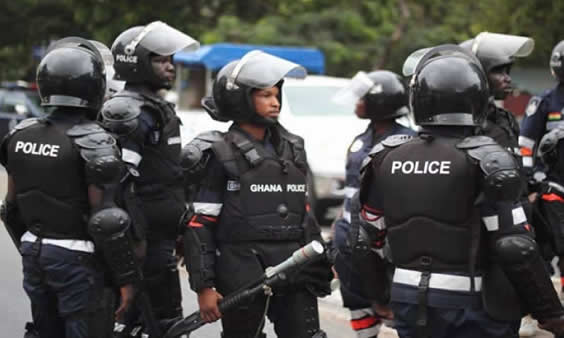
The Inspector-General of Police (IGP), Christian Tetteh Yohuno has deployed additional security personnel and armoured vehicles to Nkwanta in the Oti Region following renewed violent attacks in the area. The Inspector-General of Police, Christian Tetteh Yohuno, moved swiftly on Wednesday night, ordering the deployment of two armoured vehicles and officers from the National Police Operations unit to the Nkwanta South Municipality in the Oti Region, following a fresh wave of violent attacks that sent shockwaves through the area. The deployment, confirmed in a statement issued by the Oti Regional Police Headquarters in Dambai on Thursday, March 26, was a direct response to the deteriorating security situation on the ground. According to the Police, the IGP’s decisive overnight intervention has since helped restore calm, with authorities indicating that the situation is currently under control. A joint team comprising personnel from the Police, Military, Bureau of National Intelligence (BNI), Defence Intelligence, and the Ghana National Fire Service recovered five bodies in the aftermath of the attacks. The victims, three males and two females, were found at two separate locations, a grim testament to the scale of the violence that had gripped the community. Investigations have now been launched to establish the full circumstances of the incident and to identify and prosecute those responsible. In the meantime, the Police are appealing for the cooperation of residents. Authorities are urging people in Nkwanta and surrounding communities to remain calm and to share any information that could assist the ongoing investigations. The statement, signed by Deputy Superintendent John Nchor, also carried a pointed warning against the spread of misinformation, cautioning that false information and inflammatory actions risk undoing the fragile calm that security forces have worked to restore. The deployment of armoured vehicles to Nkwanta signals the seriousness with which the IGP is treating the situation. For residents of the Oti Region, the hope now is that the presence of reinforced security will hold, and that answers about what happened and who is responsible will not be long in coming. Source: Apexnewsgh.com
Sam Jonah Exposes Political Capture of Ghana’s Insurance Sector
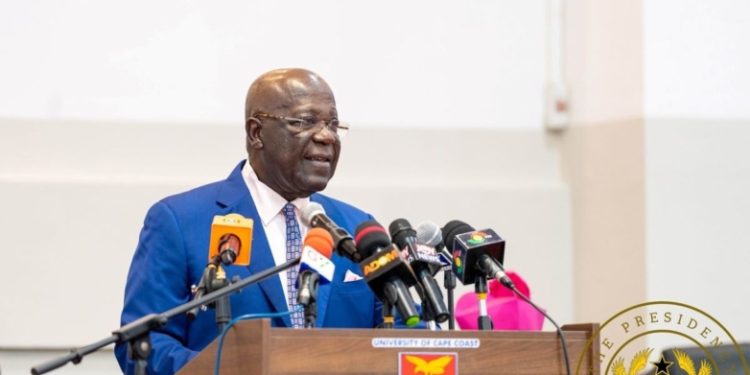
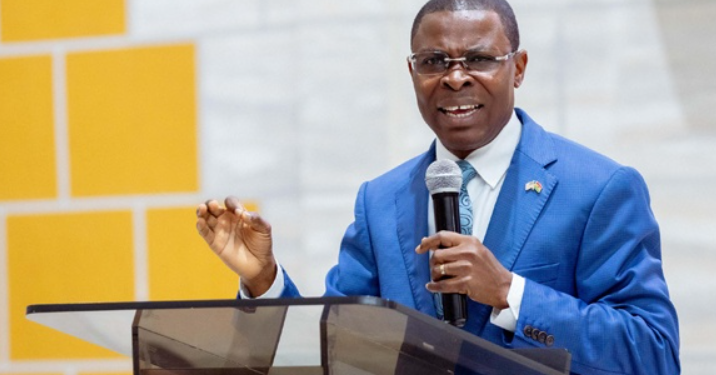
Leading business executive Sir Sam Jonah has issued a strong warning over what he describes as growing and systemic political interference in Ghana’s insurance sector, cautioning that it threatens the industry’s integrity and public trust. When Sir Sam Jonah took the podium at the 11th Annual Conference of the Insurance Brokers Association of Ghana in the Eastern Region, the room quickly understood this would be no routine address. Ghana’s most prominent business statesman had arrived with a diagnosis, and it was not a comfortable one. At the centre of his remarks was a problem he described as no longer isolated or occasional, but deeply embedded in the fabric of how insurance business is conducted in Ghana. Political interference, he warned, has moved from the margins of the industry to its very core, and the consequences are being felt across the entire sector. “There’s a growing and deeply troubling pattern of political and socioeconomic interference in the conduct of insurance business in Ghana,” he told delegates, his words carrying the weight of someone who had watched the problem grow over many years. What was once an occasional disruption, he said, has metastasised into something far more dangerous. “What was once an occasional disruption has become something more systemic, more embedded, more dangerous.” Sir Sam Jonah laid out the mechanics of this interference with striking clarity. Contracts, he revealed, are no longer being awarded based on performance or merit. Political direction, not professional assessment, is increasingly driving decisions. Insurance portfolios, particularly those belonging to state enterprises, are being handed out through personal connections and political leverage rather than competitive tender or professional selection. “Insurance portfolios are moved not through competitive tender or professional selection, but through personal access and political leverage,” he said. The distortions do not stop there. Brokers and insurers, he noted, are being pressured to accept placements they openly admit they cannot manage, taking on risks beyond their capacity simply because the instruction comes from above. And on pricing, he pulled no punches, warning that premiums are being loaded fraudulently, with no genuine risk assessment, serving purely as a vehicle for extracting money. But perhaps his most pointed remarks were reserved for the human cost of these practices. When the system fails, and he suggested it inevitably will, it is not the politically connected who bear the consequences. “When things go wrong… it is not the politically connected individuals who bear the cost. It is the taxpayer… who pays… and receives nothing in return.” He called it plainly what it is: betrayal. Beyond the financial damage, Sir Sam Jonah warned that political interference is corroding something harder to rebuild, public trust. When access matters more than competence, and connections outrank qualifications, the very institution of insurance is hollowed out from within. “It damages the institutions of insurance itself. It erodes public trust… and signals that competence is irrelevant, and that access is everything,” he said. He was careful, however, to draw a clear distinction. His concern is not with politically exposed persons participating in the industry, that, he said, is their right. What he insists on is that participation must be governed by the same professional standards that apply to everyone else. “The placement of insurance must be subject to professional standards, open competition, proper actuarial assessments, and the primacy of the policyholder’s interest,” he stated firmly. And lest anyone mistake these as aspirational ideals, Sir Sam Jonah made his position unambiguous. “These are not aspirations,” he said. “These are non-negotiable requirements.” Source: Apexnewsgh.com
GEXIM@10: Ghana Braced for Oil and Gold Price Swings, BoG Governor Assures
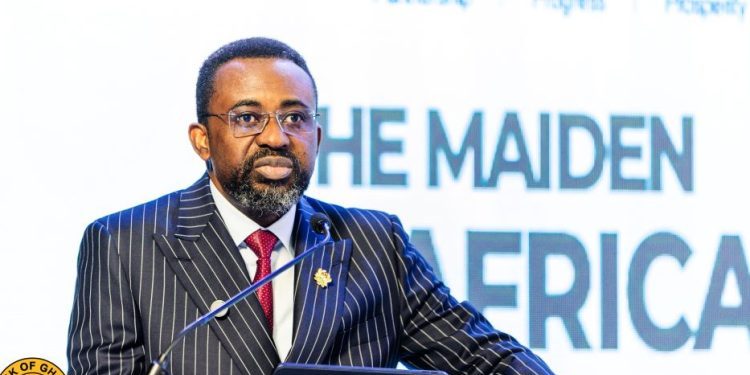
Dr. Johnson Asiama has highlighted Ghana’s preparedness to withstand global commodity shocks, emphasizing the critical role of reserves in safeguarding economic stability. Addressing delegates at the 10th Anniversary International Conference of the Ghana Export-Import Bank in Accra on Wednesday, March 25, Bank of Ghana Governor Dr. Johnson Asiama delivered a measured but candid assessment of the country’s economic vulnerabilities and the defences being built against them. At the heart of his remarks was a familiar challenge: Ghana’s fortunes remain deeply tied to the unpredictable rhythms of global commodity markets. Oil and gold, the twin pillars of the country’s export earnings, are subject to forces largely beyond its control, and Dr. Asiama made no attempt to downplay that reality. “Ghana is exposed to fluctuations in global commodity prices, particularly oil and gold, which make up a significant portion of our export earnings,” he acknowledged. But the Governor was equally clear that exposure does not mean vulnerability. The strategy, he explained, has been deliberate and forward-looking, centred on building reserves robust enough to absorb external shocks and keep the economy on an even keel when global markets turn hostile. “Our strategy is to ensure that we are prepared, building reserves that can absorb shocks and sustain the economy through uncertain times,” he said. “This level of reserves gives us some distance to navigate potential crises, but we must remain vigilant.” That note of vigilance was not incidental. Dr. Asiama went on to flag a scenario that keeps policymakers up at night — the prospect of simultaneous shocks hitting multiple commodity sectors at once. Ghana’s buffer strategy partly relies on one sector compensating for weakness in another, but that calculation has its limits. “We are hopeful that one sector, like gold, may offset the impact from another, such as oil. However, prolonged volatility could challenge our ability to maintain economic gains,” he cautioned. It was a frank admission that even a well-prepared economy has a ceiling on how much pressure it can absorb, and a reminder that the work of building resilience is never truly finished. The Governor’s address came at a symbolically fitting moment. The Ghana Export-Import Bank’s decade-long journey has unfolded against a backdrop of global economic uncertainty, and Dr. Asiama’s remarks reinforced a broader message: that prudent fiscal and monetary planning is not merely good practice, it is Ghana’s first and most important line of defence in a world where commodity shocks can arrive without warning and linger without mercy. Source: Apexnewsgh.com
IES Sounds Alarm: Ghana’s Power Sector Drifting Into Dangerous Territory
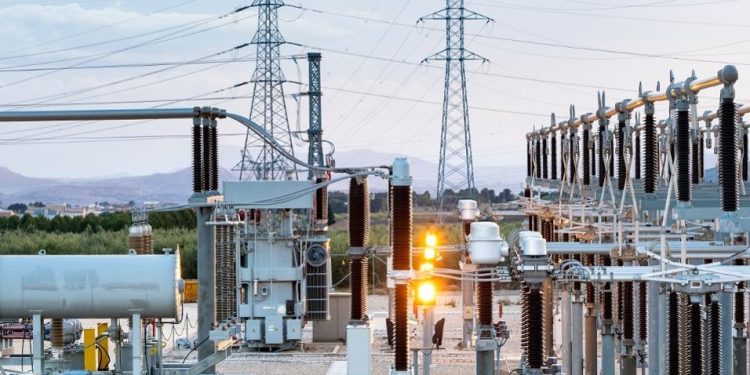
Ghana’s power sector is edging into a “higher-risk zone” as rising electricity demand continues to outstrip critical investments in transmission infrastructure. Ghana’s power sector is drifting into dangerous territory, and the alarm is growing louder. As electricity demand climbs on the back of stronger economic activity and rising household consumption, the infrastructure meant to carry that power across the country is struggling to keep pace. The result, analysts warn, is a system under mounting stress, and one that may not hold if urgent action is not taken. That is the sobering assessment of the Institute for Energy Security (IES), whose latest analysis paints a picture of a grid buckling under the weight of its own growth. Peak demand has now surpassed 4,280 MW, a figure that reflects a busier, more energetic economy, but the transmission network has not grown with it. “The system is increasingly characterised by congested transmission corridors, rising technical losses, overloaded infrastructure, and ageing, obsolete equipment,” the IES analysis noted, warning that these combined pressures “pose a direct threat to grid stability, system reliability, and the efficiency of power delivery.” In plain terms: Ghana’s power system is entering a higher-risk zone, and without timely intervention, supply shortfalls, especially during peak demand periods, are no longer a distant possibility. The economic stakes could hardly be higher. A power sector riddled with inefficiencies drives up operational costs for businesses, erodes industrial productivity, and slows economic growth. For a country with ambitious development targets, an unreliable grid is not just an inconvenience; it is a structural liability. The IES is not merely sounding the alarm. It is also offering a roadmap out. The think tank is calling on government, regulators, and development partners to treat transmission network reinforcement as a matter of national strategic importance. The proposals it has put forward are wide-ranging and technically specific, but they share a common thread: the grid needs to be modernised, expanded, and made more resilient, now, not later. At the heart of the recommendations is the need to upgrade existing transmission infrastructure with high-capacity conductors to ease system overloading and reduce technical losses. Alongside this, the IES is pushing for the development of additional high-voltage transmission circuits to boost bulk power transfer across the grid and shore up supply to major load centres, particularly when demand peaks. Reinforcing key transmission corridors is also on the list, to create alternative power flow paths and reduce the risk of single-point failures that could cascade into wider outages. Investments in reactive power compensation, the think tank adds, would improve voltage stability and support the integration of renewable energy sources, an increasingly important consideration as Ghana looks to diversify its energy mix. The replacement of ageing transformers and substation equipment, the IES argues, has become non-negotiable. These are the bottlenecks quietly undermining system reliability, and clearing them is essential to meeting modern technical standards. Expanding transformation capacity at critical nodes would not only accommodate growing demand but also build in the redundancy needed for a more stable supply. Reducing both technical and commercial losses across the network is equally critical, improving transmission efficiency and making power delivery more cost-effective for consumers and operators alike. Finally, the IES points to the untapped potential of stronger regional interconnection. Boosting cross-border electricity trade would not only improve Ghana’s competitiveness in the West African power market but also open the door to generating revenue through electricity exports. The message from the Institute is unambiguous: the decisions made today about transmission infrastructure will shape the reliability and competitiveness of Ghana’s power sector for decades to come. “Decisive action is not optional,” the IES stated. “It is imperative.” Source: Apexnewsgh.com
Galamsey Fight: NAIMOS Cries Out for Vehicles, Funds to Sustain Operations
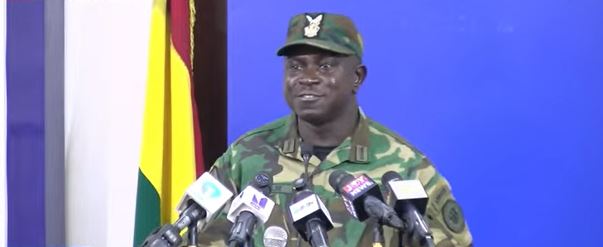
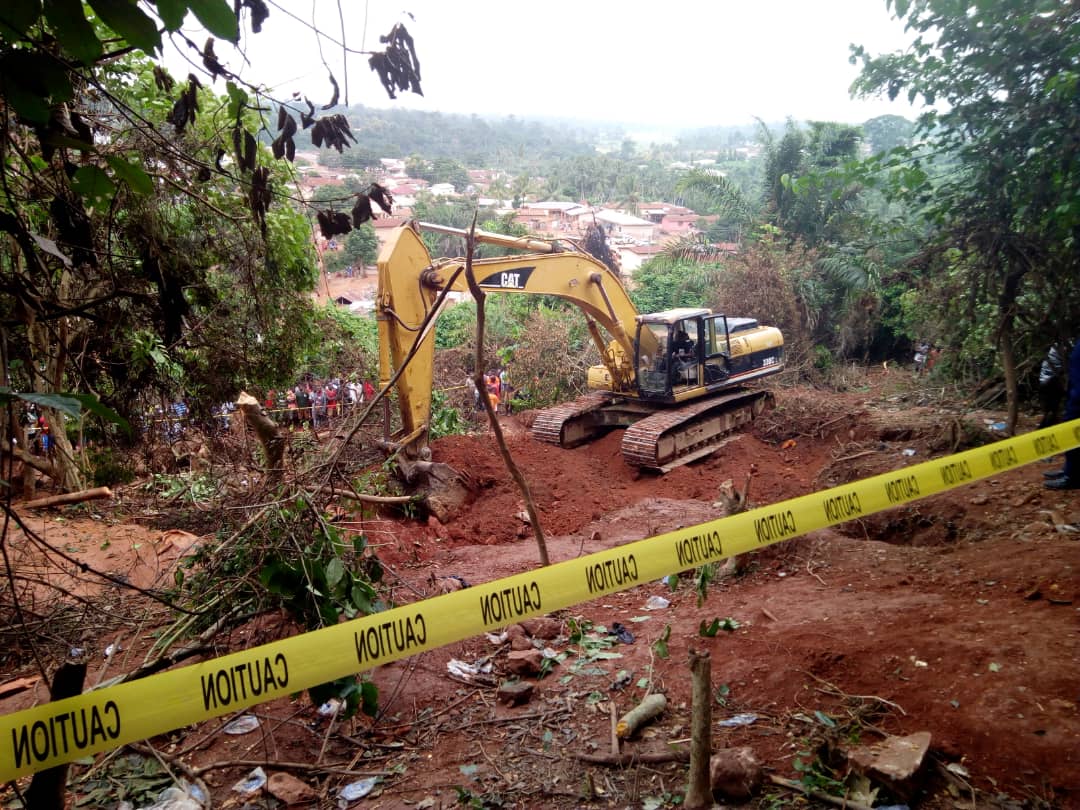
The National Anti-Illegal Mining Operations Secretariat has called for increased logistical and financial support to strengthen its operations against illegal mining. The men and women fighting Ghana’s galamsey menace need more than resolve; they need resources. That was the candid message from Col. Dominic Buah, Director of Operations at the National Anti-Illegal Mining Operations Secretariat (NAIMOS), as he addressed journalists at the Secretariat’s Editors’ Forum and Quarterly Press Briefing on Wednesday, March 25. Standing before the gathering, Col. Buah did not mince words. The fight against illegal mining, he made clear, is being waged with one hand tied behind its back. Operational vehicles are in short supply, funds are stretched thin, and the tools needed to sustain the campaign in the field are simply not enough. “We need vehicles, we need money, we need all the resources,” he said plainly. His appeal was directed not only at the government but at the private sector and civil society as well. Col. Buah urged corporate organisations and non-governmental bodies to step in and fill the gap, offering a straightforward incentive: public recognition. “Corporate bodies who want to support, why not? We will acknowledge you and then make it known to the whole nation,” he said, framing contributions as both a patriotic duty and an opportunity for goodwill. But the briefing was not all about stretched budgets and resource gaps. Col. Buah had a sharper message for a different audience, the illegal miners themselves. NAIMOS’s operations in the field have not gone unchallenged. In several mining communities, anti-galamsey task force members have met with resistance, raising serious concerns about the safety of personnel on the ground. Col. Buah addressed this directly and without ambiguity. He warned that his operatives would not stand down in the face of armed confrontation. The Secretariat’s personnel, he stressed, are trained, equipped, and prepared to defend themselves, and anyone who tests that readiness will face the full consequences. “We will not stand and watch anyone use weapons against us. We are better trained in weapons and therefore warn that anybody who dares, NAIMOS will deal with them ruthlessly,” he declared. He pressed the point further, leaving no room for misinterpretation: “It is a problem we are trying to address, and we have the right to self-defence, and let no galamseyer miss that. If you go to the field with weapons and you try to fire them, a lot more will be at you.” The message from NAIMOS on Wednesday was twofold: a hand extended to potential partners and a firm warning to those who would stand in the way of the law. The Secretariat is asking for help, but it is also making clear it will not be intimidated. Source: Apexnewsgh.com