


Friends of Prosper Renovated Nyariga Doone Girls Primary School From Scratch to Finish — Mr. John Akaribo School Founder
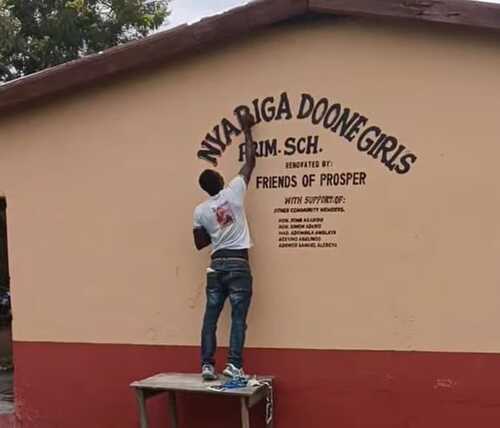
The founder of Nyariga Doone Girls Primary School, Mr. John Akaribo, has categorically confirmed that the recent renovation of the school was fully undertaken and sponsored by Friends of Prosper, with support from Dr. Prosper Ayinbila Awuni. Mr. Akaribo made the confirmation during an exclusive engagement with Apexnewsgh, following the need to establish the actual individuals and organisation responsible for the renovation of the school. According to him, the school was established in 1998 as a girls-only institution, with the aim of providing educational opportunities specifically for girls in the community. He explained that, over the years, the school infrastructure had deteriorated significantly, prompting the school authorities to seek assistance for its rehabilitation. Mr. Akaribo disclosed that his other school, together with the head of the school, had previously written to the Member of Parliament for the area, Isaac Adongo, seeking support to rebuild and renovate the school. He said it was in response to the concerns raised about the deteriorating state of the school that Friends of Prosper intervened. “Friends of Prosper came and heeded to our cry. They came and realised that there was a need to renovate the school, which was about 26 years old,” Mr. Akaribo said. He explained that although the initial expectation was for the organisation to undertake minor works such as plastering and patching, an assessment of the school’s condition convinced the sponsors to undertake a complete facelift. “They thought they could have just done some plastering and patching and other things, but they realised that they needed to give it a complete facelift, and they came and did that,” he stated. According to the founder, the renovation included the removal and replacement of the school’s old and deteriorating roof, which had been in use for decades. He stressed that Friends of Prosper provided the personnel and resources required to execute the project, including carpenters, masons and painters. “They brought their own carpenters, their own mason and their own painters. Everything was sponsored by Friends of Prosper,” he confirmed. Mr. Akaribo further clarified that the community did not finance the renovation works. He said his personal contribution was mainly to facilitate access to water and electricity for the workers during the execution of the project. “I was the one they called. They came and did everything. My role was to ensure that I got water for them and electricity for them,” he explained. Mr. Akaribo, who described himself as a pensioner, said he did not have the financial capacity to undertake the renovation himself. He therefore reiterated that the project was executed entirely by Friends of Prosper, with support from Dr. Prosper Ayinbila Awuni. “Yes, that is correct. Friends of Prosper came and executed the project,” he categorically confirmed. He added that members of Friends of Prosper were at the school to officially inscribe their name on the renovated facility to acknowledge their contribution. The clarification by the school’s founder is expected to settle questions regarding the identity of the organisation and individuals responsible for the renovation of the Nyariga Doone Girls Primary School. However, as part of the investigation, Apexnewsgh further contacted Anyane, the carpenter contracted to undertake the reroofing of the school. He confirmed that he was contacted by Friends of Prosper to inspect the school and prepare an estimate for the roofing works. According to Anyane, after submitting his estimate, he was provided with money two days later to purchase the required roofing materials. He explained that his initial assessment indicated that about 10 sheets of zinc roofing material would be required. However, when he was preparing to commence the work, he discovered that the existing roofing wood had become weak and was no longer strong enough to support the new roof. Anyane said he immediately contacted Friends of Prosper and informed them about the condition of the existing roofing structure. According to him, Friends of Prosper responded by making additional funds available for him to purchase new roofing wood to ensure that the roofing work was properly executed. He further told Apexnewsgh that following the completion of his work, Dr. Prosper Ayinbila Awuni personally paid him his workmanship. Another independent confirmation came from Nyaba, the mason contracted to undertake the cement-related works at the Nyariga Doone Girls Primary School. Nyaba also confirmed to Apexnewsgh that the renovation project was undertaken by Dr. Prosper Ayinbila Awuni with support from Friends of Prosper. His account independently corroborates the earlier confirmation given by the school’s founder, Mr. John Akaribo, who had categorically stated that Friends of Prosper responded to the school’s appeal for assistance and undertook the renovation. The testimonies from the school’s founder, the carpenter and the mason therefore provide separate accounts pointing to Friends of Prosper, with support from Dr. Prosper Awuni, as the financiers and organisers behind the recently completed renovation works at the Nyariga Doone Girls Primary School. Apexnewsgh’s investigation remains focused on establishing the facts surrounding the project and ensuring that credit for the intervention is accurately attributed to those who contributed to its successful completion. The investigation was conducted to set the record straight following a social media debate initiated by one Nayikuu, who claimed that he was responsible for the recent renovation of the Nyariga Doone Girls Primary School. However, accounts provided by the individuals engaged by Apexnewsgh during the investigation indicate that the renovation was undertaken by Dr. Prosper Awuni, with support from Friends of Prosper. The testimonies from the school’s founder and the artisans who directly worked on the project independently corroborated this account. Source: Apexnewsgh.com
Importers and Exporters Warn of Business Exodus Amid Port Congestion Crisis
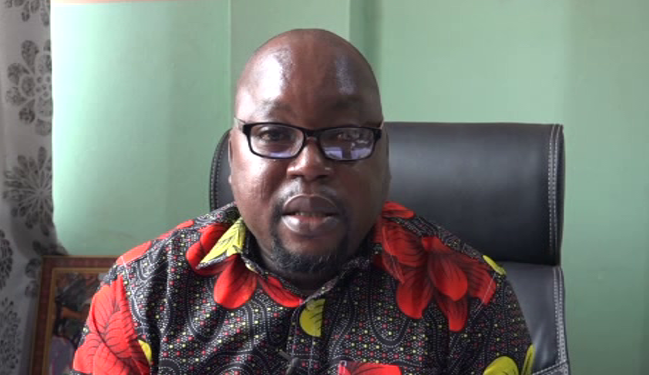
The Importers and Exporters Association of Ghana (IEAG) has sounded the alarm over worsening congestion at the nation’s ports, urging the government to take swift action or risk losing vital import business to neighbouring countries, most notably Côte d’Ivoire. At a press conference in Accra on Monday, September 14, 2026, IEAG Executive Secretary Samson Asaki Awingobit painted a stark picture of delays and uncertainties in cargo clearance, warning that Ghana’s trade competitiveness hangs in the balance. He revealed that some importers are already exploring alternative routes through the Port of Abidjan due to the persistent challenges at Ghanaian ports. “IEAG is already receiving indications that some importers are exploring the possibility of routing their cargo through the Port of Abidjan in Côte d’Ivoire because of the delays and uncertainties associated with clearing cargo through Ghana’s ports,” Awingobit stated, highlighting the urgency of the situation. He cautioned that once importers and exporters establish reliable alternative supply chains, reclaiming that business for Ghana could prove difficult, with long-term consequences for the country’s economy. To avert a crisis, IEAG is calling on the Chief of Staff at the Presidency to urgently convene a high-level meeting with key ministers, including Finance, Trade, Agribusiness and Industry, and Transport, as well as port authorities and regulatory agencies. The Association insists that an immediate action plan is needed to decongest the ports and streamline cargo clearance processes. IEAG also highlighted several factors exacerbating the congestion, such as excessive routing of containers for physical examination, breakdowns in coordinated inspections, increasing regulatory fees and charges, and lengthy truck turnaround times. To address these systemic issues, the Association proposed introducing measurable performance targets for port operations, setting maximum turnaround times for examinations, valuation disputes, regulatory inspections, truck processing, and cargo release. With the December peak trading season approaching, IEAG warned that without decisive intervention, Ghana could face even more severe congestion and the lasting challenge of winning back importers who have shifted their business to competing ports in the region. Source: Apexnewsgh.com
Finance Minister Pledges Full Funding for Accra-Kumasi Expressway by December 2026
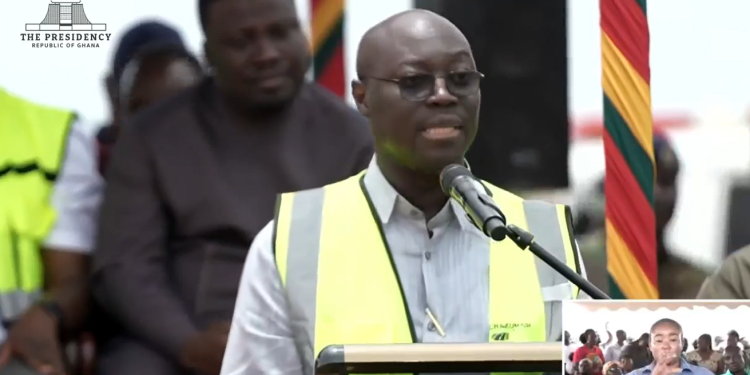
At a pivotal ceremony marking the handover of the 175.6-kilometre right-of-way for the Accra-Kumasi Expressway, Finance Minister Dr. Cassiel Ato Forson delivered welcome news: the full amount required for the ambitious expressway project will be ready by December 2026. Addressing officials and stakeholders on Monday, September 14, Dr. Ato Forson underscored the government’s unwavering commitment to securing all necessary resources. He revealed that the government had made significant arrangements to mobilise funding domestically, ensuring the project would proceed smoothly without financial roadblocks. Crucially, Dr. Forson assured the nation that the government would not resort to external borrowing to finance the expressway. “This handover clears the way for an expressway that will cut travel time and transport cost, improve road safety and set a new standard for our infrastructure delivery. As your Minister for Finance, I want to use this opportunity to assure the nation that the entire amount needed for the construction of this expressway will be ready by December 2026. For the avoidance of doubt, we will not borrow a Pesewa for this construction,” he declared. The announcement sets the stage for the next phase of the 198.7-kilometre expressway, a transformative road project expected to bolster connectivity between Ghana’s southern and central regions. The expressway promises to improve the flow of people and goods between Accra and Kumasi, reduce travel times and costs, and alleviate pressure on existing roads. Equipped with modern infrastructure, the project is also expected to significantly enhance road safety and meet rising traffic demands along one of the nation’s most important transport corridors. Dr. Ato Forson’s assurance of full domestic funding signals a new era in Ghana’s approach to infrastructure—one focused on sustainability and fiscal responsibility. Source: Apexnewsgh.com
Petrol, Diesel and LPG Prices Set to Rise from September 16
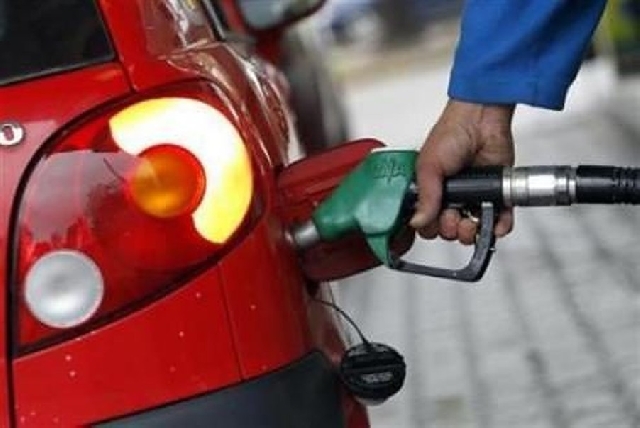
Consumers across Ghana are expected to pay more for petroleum products from Wednesday, September 16, 2026, following an increase in the minimum price floors for petrol, diesel and Liquefied Petroleum Gas (LPG) by the National Petroleum Authority (NPA). According to the NPA’s latest price floor data for the second pricing window of September, the minimum price for petrol has been set at GH¢16.00 per litre, while diesel will have a minimum price of GH¢16.77 per litre. The minimum price for LPG has also been increased to GH¢10.97 per kilogramme. The latest figures represent increases across all three petroleum products compared with the price floors announced for the first pricing window of September. The petrol price floor has increased by GH¢1.47 per litre, from GH¢14.53 to GH¢16.00, while diesel has risen by GH¢1.17, from GH¢15.60 to GH¢16.77. LPG, meanwhile, has recorded a marginal increase of GH¢0.12 per kilogramme, moving from GH¢10.85 to GH¢10.97. However, the NPA’s minimum price floors do not necessarily represent the final prices consumers will pay at filling stations. Under the Petroleum Product Pricing Guidelines, Oil Marketing Companies (OMCs) and LPG Marketing Companies are required to comply with the prescribed minimum price floors for the applicable pricing window. The floor prices, however, exclude premiums charged by International Oil Trading Companies, operating margins of Bulk Import, Distribution and Export Companies, as well as marketers’ and dealers’ margins. These components are determined independently by the respective companies in accordance with the pricing guidelines. COPEC Projects Further Increases The latest development has heightened expectations of higher pump prices from Wednesday. The Chamber of Petroleum Consumers (COPEC) is projecting a 4.24 percent increase in petrol prices and a sharper 10.23 percent rise in diesel prices during the second pricing window. Under COPEC’s projections, diesel could sell at approximately GH¢19.07 per litre, while petrol could reach about GH¢16.26 per litre. LPG is also projected to rise to around GH¢15.32 per kilogramme. COPEC Calls for Extension of Fuel Subsidy In response to the expected increases, COPEC has appealed to the government to extend its fuel subsidy intervention to cushion consumers from the impact of rising petroleum prices. The group is proposing a GH¢1 per litre relief on petrol, while calling for the existing GH¢2 per litre relief on diesel to be maintained until international petroleum benchmarks return to more normal levels. The expected increases are being attributed largely to rising international crude oil and refined petroleum product prices, amid heightened tensions in the Middle East and concerns over potential disruptions to global supply. Ghana’s reliance on imported refined petroleum products means domestic fuel prices remain highly sensitive to movements in international oil prices and exchange-rate conditions. A sustained rise in global petroleum prices could have wider economic implications, potentially increasing transportation and logistics costs, production expenses and pressure on household budgets. The latest NPA price floors therefore set the stage for another challenging pricing window for consumers and businesses beginning September 16. Source: Apexnewsgh.com
President Mahama to Honour 48 Engineers Regiment for Early Completion of Accra-Kumasi Expressway Clearing
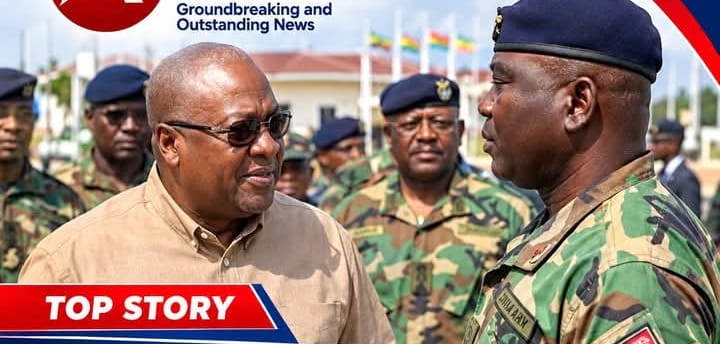
President John Dramani Mahama has revealed plans to confer a prestigious national honour on the 48 Engineers Regiment for their exemplary work in clearing the route for the much-anticipated Accra-Kumasi Expressway, ahead of schedule. On Monday, September 14, 2026, the government officially received the 175.6-kilometre cleared route from the military, marking a crucial milestone in preparations for the expressway’s construction. Addressing the handover ceremony, President Mahama lauded the regiment for completing the ambitious clearing exercise in just 19 weeks, a full week earlier than the 20 weeks originally planned. “In 20 weeks, I’m pleased to announce to the whole country Ghana that our armed forces have accomplished this mission. One week ahead of schedule, they did it in 19 weeks,” President Mahama told the gathering, his voice filled with admiration. The newly cleared path stretches from Ablekuma in the Greater Accra Region to Sewua in the Ashanti Region, carving through dense forests and traversing rivers and streams. President Mahama highlighted the scale of the achievement: “From Ablekuma in Greater Accra to Sewua in Ashanti Region, within 19 weeks, 175.6 kilometres of road passing through virgin forests, crossing rivers and streams, our Ghana Armed Forces can today announce to all of us as they say in military jargon, mission accomplished.” As a mark of recognition, the President announced, “I have given instructions that at the next national honours, which we shall do to mark the 70th anniversary of independence of the Republic of Ghana, the engineers regiment of the Ghana Armed Forces shall receive an Order of the Companion of the Volta.” The early completion of the clearing phase paves the way for the next stage of the Accra-Kumasi Expressway project. The planned expressway will eventually span 198.7 kilometres, providing a modern six-lane connection between Ghana’s capital and its second-largest city, an upgrade expected to boost economic activity and ease movement between the regions. With this recognition, the 48 Engineers Regiment stands as a symbol of dedication and efficiency, setting the tone for the transformative infrastructure project that lies ahead. Source: Apexnewsgh.com
Surge in Support: Dr. Ato Forson Overtakes Rivals in NDC’s 2028 Flagbearer Poll
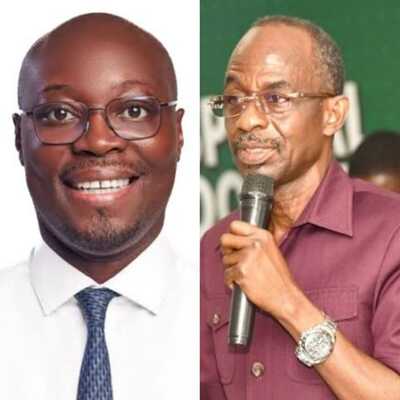
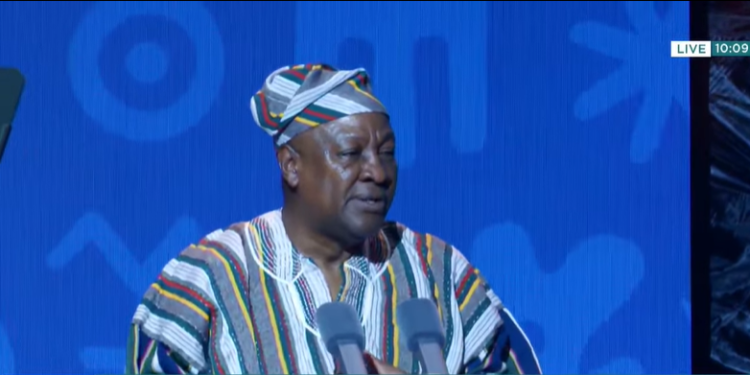
The Minister for Finance, Dr. Cassiel Ato Forson, has surged ahead in the race to lead the National Democratic Congress (NDC) into the 2028 presidential election. According to the latest poll conducted by Global InfoAnalytics, Dr. Ato Forson has experienced a remarkable 10-percentage-point leap in delegate support, rising from 22% in July to 32% in September. The story of this political momentum began to unfold when the Executive Director of Global InfoAnalytics, Mussa Dankwah, took to Facebook on Monday, September 14, 2026, to share the newest polling figures. The data revealed a significant shift in the NDC’s internal dynamics, with Dr. Forson now holding a commanding nine-point lead over his closest rival, NDC National Chairman Johnson Asiedu Nketia. In stark contrast to Dr. Forson’s rise, Asiedu Nketia’s support has slipped from 27% in July to 23% in September, a four-point drop that has altered the landscape of the contest. Despite Dr. Forson’s impressive gains, the poll highlighted that the race is far from settled. A substantial 28% of delegates remain undecided, though this is a slight decrease from the 30% recorded two months prior. The uncertainty among delegates suggests that while Dr. Forson enjoys new momentum, the outcome could still be swayed in the coming months. Further down the list, the Minister of Education, Haruna Iddrisu, saw his support dip by a point to 5%. Vice President Professor Naana Jane Opoku-Agyemang and Chief of Staff Julius Debrah each garnered 4%, reflecting modest declines from 7% and 5% respectively. Professor Joshua Alabi improved slightly to 2%, while Eric Opoku, the Minister for Food and Agriculture, remained steady at 1%. The poll, which surveyed 3,615 NDC delegates between September 11 and 13, 2026, boasted a 99% confidence level and a margin of error of ±2.17 percentage points. Analysts say these numbers reveal more than just a shift in percentages, they point to a changing tide within the NDC. Dr. Ato Forson stands out as the only leading contender to record a double-digit increase in support, signaling a potential realignment of power as the party looks ahead to 2028. As the dust settles on these latest figures, the focus now turns to how each contender will work to consolidate their support among the still-undecided delegates. With the race for the NDC’s flagbearer wide open, the coming months promise to be pivotal in shaping the party’s future. Source: Apexnewsgh.com
Operation Water Shield Launched to Protect Ghana’s Rivers from Illegal Mining

The National Anti-Illegal Mining Operations Secretariat (NAIMOS) has launched Operation Water Shield, a far-reaching national enforcement campaign designed to safeguard Ghana’s major rivers, watersheds, and other vital water resources from the destructive impacts of illegal mining. Unlike previous one-off raids, Operation Water Shield marks a shift to a sustained, intelligence-led strategy that targets priority river systems, especially those close to downstream communities and water-treatment facilities. The campaign, announced in a statement on Friday, September 11, 2026, will focus on heavily threatened rivers such as the Birim, Ankobra, Tano, Bia, Pra, and Offin, along with affected stretches of the Black and White Volta systems. Strategic source areas and upper catchments critical to downstream water quality will also be given priority. NAIMOS emphasised that the operation will be carried out in partnership with relevant security and state agencies, aiming to protect river sources, deny illegal miners access to riverbanks and waterways, dismantle logistics and financial networks enabling illegal mining, and restore degraded water bodies. Sustained monitoring will be established to prevent reoccupation of cleared areas. “Enforcement under Operation WATER SHIELD will be firm, sustained and uncompromising, within the law,” the Secretariat announced. Illegal miners operating on riverbanks and waterways should expect disruptions to their activities, with equipment such as excavators, changfan machines, Source: Apexnewsgh.com
Roads Minister Calls for Innovative Funding and Private Sector Role to Bridge Ghana’s Transport Gap

Minister for Roads and Highways, Governs Kwame Agbodza, has called for fresh approaches to financing and delivering Ghana’s transport infrastructure, urging a greater role for the private sector to help close the country’s widening infrastructure gap. Speaking at the 2026 Transport Sector Review Conference in Ho, Volta Region, Mr. Agbodza argued that traditional public financing was no longer sufficient to develop and maintain the roads, bridges, and other critical transport links Ghana needs. The conference, held under the theme “Financing and Delivery of Resilient Transport Infrastructure and Services: A Big Push for Sustainable Economic Transformation,” gathered policymakers, development partners, private-sector representatives, transport unions, academia, and industry experts to chart the sector’s future. According to the minister, Ghana must mobilise additional resources, improve spending efficiency, strengthen asset management, and build an environment that attracts private capital. “The government would explore innovative and predictable financing mechanisms to ensure sustainable funding for infrastructure development and maintenance,” he said. Mr. Agbodza stressed that transport infrastructure should be seen as vital economic connectors, not just physical assets—enabling people, businesses, farmers, and communities to play their part in national growth. “This is why the government has placed the Big Push infrastructure programme at the centre of its development agenda,” he said. Launched in September 2025, the Big Push programme represents a bold national investment drive aimed at plugging infrastructure gaps and supporting economic transformation. Achieving its goals, Mr. Agbodza noted, will require effective financing, efficient project execution, and responsible asset management. The Minister also urged engineers and technical professionals to devise simpler, more cost-effective designs that do not sacrifice quality, durability, or safety. “Engineering solutions should take into consideration Ghana’s financial realities while ensuring that infrastructure remained fit for purpose and capable of serving the needs of communities over the long term,” he emphasised. Mr. Agbodza further called for managers of major transport facilities to prioritise safety and accessibility. He advocated for clear emergency exit signage and proper lighting, especially to aid travellers with visual impairments, stating, “Improving accessibility and safety should form an integral part of infrastructure planning rather than being treated as an afterthought.” He concluded by highlighting the necessity of strong collaboration among government, technical institutions, private-sector actors, and other stakeholders to mobilise the resources and expertise needed to transform Ghana’s transport sector. Source: Apexnewsgh.com
Education Minister Challenges Minority Leader on Claims of Crisis in School Placements

Education Minister Haruna Iddrisu has pushed back against claims by Minority Leader Alexander Afenyo-Markin that Ghana’s education sector is facing a crisis over school placements. Speaking on TV3’s “New Day” morning programme, as monitored by Gordon Sackitey, Mr. Iddrisu acknowledged that the government is indeed under significant pressure to respond to the concerns of students and parents, particularly in relation to the placement process. However, he cautioned against labelling the situation as a crisis, arguing that similar challenges have persisted under previous administrations. “Inadequate, for example, I’m struggling with placements. I am. As Minister, I would accept that we have come under overwhelming pressure to respond and be responsive to the needs of Ghanaian students and parents. But it does not mean we should exaggerate it as a crisis,” Mr. Iddrisu stated. A former Minority Leader himself, Mr. Iddrisu also addressed the current Minority leadership, emphasizing that the office carries significant responsibility and requires careful communication and consultation. He commended Mr. Afenyo-Markin’s performance but urged him to consult more widely and work collaboratively with his team. “The Honourable Osahen Alexander Afenyo-Markin is doing well but on a few enterprises of the Minority leadership, he needs to be doing more consultation and work with a team,” he said. Mr. Iddrisu further questioned whether the challenges being described as a crisis were new to Ghana’s education system, asking, “So when the Honourable Afenyo says crisis, did the crisis start one and a half years ago or…? He should provide answers.” Defending Ghana’s democratic credentials, the Minister described the country as a beacon of hope in Africa and stressed the importance of protecting its democratic ethos. He reiterated that the Office of the Minority Leader should be guided by facts and truth, stating, “The Office of the Minority Leader is a very important office. So when you are not sure, don’t speak.” The exchange comes amid renewed political debate over ongoing challenges in the education sector, especially the placement of students into Senior High Schools. Source: Apexnewsgh.com
Ghana Launches Operation WATER SHIELD to Target Illegal Mining Financiers and Equipment Suppliers

The National Anti-Illegal Mining Operations Secretariat (NAIMOS) has unveiled a bold new strategy in the fight against illegal mining, announcing plans to target not just miners, but also the financiers, facilitators, and equipment suppliers fueling the destructive activity known locally as galamsey. In a statement launching Operation WATER SHIELD, NAIMOS outlined a national enforcement campaign aimed at safeguarding Ghana’s major rivers, watersheds, and critical water resources from the ravages of illegal mining. Unlike previous efforts that primarily focused on miners and mining sites, this campaign will pursue the wider criminal and financial networks sustaining galamsey operations. The campaign will increase scrutiny on those who facilitate illegal mining, unauthorized manufacturers of chanfang machines, and individuals or companies that rent or supply excavators, water pumps, and other machinery used in the illicit trade. Enforcement, NAIMOS pledged, will be “firm, sustained and uncompromising, within the law.” Illegal miners working on riverbanks and water bodies should expect their operations to be disrupted, with any seized equipment immobilized or dealt with according to the law. Excavators, chanfang machines, water pumps, and dredging equipment will remain prime targets. Operation WATER SHIELD will focus on some of Ghana’s most threatened river systems, including the Birim, Ankobra, Tano, Bia, Pra, and Offin Rivers, as well as critically impacted sections of the Black and White Volta systems. Strategic source areas and upper catchments, which play a crucial role in downstream water quality, will also receive priority attention. NAIMOS described the campaign as a shift from isolated enforcement actions to a sustained, intelligence-led approach that targets both the source and downstream impact zones of illegal mining. The operation will be conducted in collaboration with security and state agencies to deny illegal miners access to riverbanks and waterways, dismantle their logistics and financing structures, and support the restoration of degraded water bodies. Ultimately, the Secretariat’s goal is to “substantially degrade and contain illegal mining within protected watersheds,” restrict the movement of heavy equipment into sensitive river systems, and disrupt the networks that enable illegal mining to persist. Source: Apexnewsgh.com