



Seven Dead, 21 Injured in Tragic Accident on Hwideim-Acherensua Highway

A devastating road crash on the Hwideim-Acherensua Highway in the Ahafo Region has claimed the lives of seven people and left 21 others injured. The accident occurred on Tuesday, September 8, 2026, involving a Mercedes-Benz Sprinter bus (registration GT-9931-09) and a Kia Picanto (registration BA-731-20). According to a statement from the Ghana National Fire Service shared on Facebook, preliminary investigations revealed that the Sprinter bus suffered a tyre burst while traveling along the highway. The driver lost control, causing the vehicle to somersault and collide with the oncoming Kia Picanto. Firefighters from the Hwideim District Fire Station responded swiftly to the scene, rescuing the victims from the wreckage of both vehicles. The injured were immediately transported to the St Elizabeth Hospital in Hwideim for urgent medical attention. Authorities are continuing investigations to determine the full circumstances surrounding the tragic incident. Source: Apexnewsgh.com
Parents in Binduri District Demand Answers as WAEC Fails to Account for BECE Maths Answer Sheets

Parents in the Binduri District of Ghana’s Upper East Region are voicing growing concerns after the West African Examinations Council (WAEC) failed to account for the Mathematics objective answer sheets of 165 candidates who sat for the 2026 Basic Education Certificate Examination (BECE). The missing answer sheets, belonging to students from six schools, Benguri Junior High School (JHS), Christian Academy, Yaligun JHS, Amazing Grace JHS, Good Friends International JHS, and Gumyoko JHS, have sparked fears that the affected candidates could miss out on placement in Senior High School (SHS). The SHS placement process is already underway, intensifying anxiety among parents and students alike. Aruk Gabriel, a parent whose child is among those affected, explained to Citi News that parents initially believed the delay in releasing results was a routine matter that would be resolved in time for SHS placement. However, after following up with education authorities in Bolgatanga, they learned that the Mathematics objective answer sheets could not be found. “Now, are they saying that our children should wait? Should they not go to school until they find the papers, mark them and release the results so that we know whether they will get placement? By then, it will be too late,” Mr. Gabriel lamented. The uncertainty surrounding the missing answer sheets has left 165 candidates and their families in limbo. Parents are now urging the Ministry of Education and WAEC to take immediate action to locate the answer sheets, mark them, and release the results before the SHS placement process concludes. The affected families warn that any further delays could unfairly hinder the educational prospects of their children, and are calling for urgent intervention to resolve the crisis. Source: Apexnewsgh.com
Minority Demands Full Documentary Evidence on South Africa Evacuation Expenditure

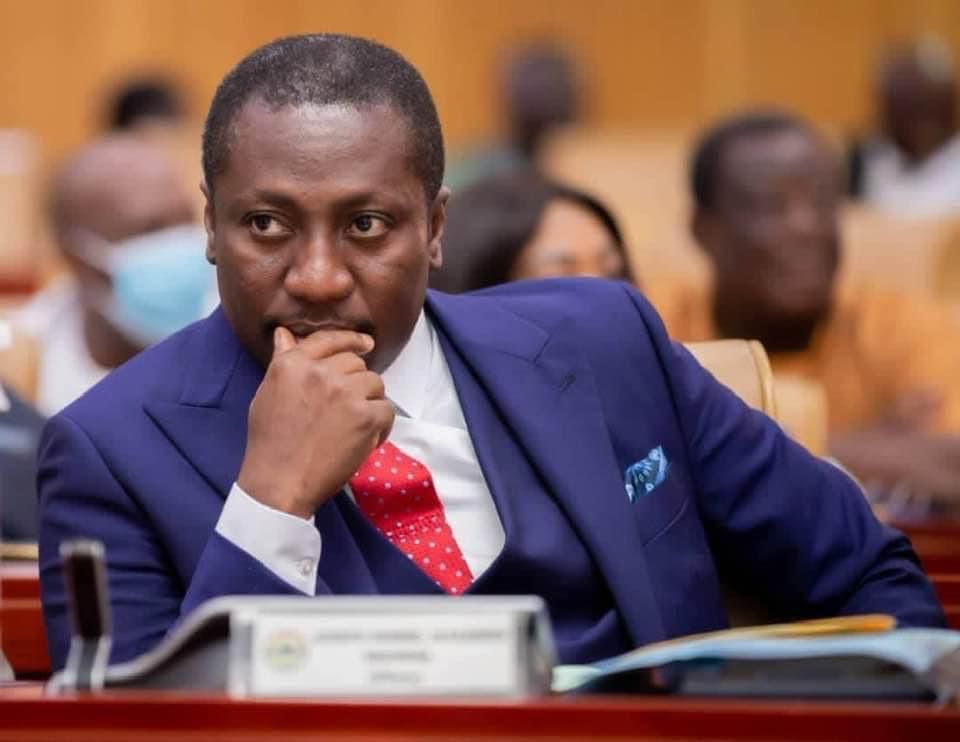
The Minority in Parliament has intensified its demand for the government to provide comprehensive documentation detailing the costs incurred during the voluntary evacuation of Ghanaians from South Africa amid recent xenophobic attacks. The renewed call comes after a September 7 briefing by the Minister for Foreign Affairs, Samuel Okudzeto Ablakwa, who revealed that the government spent GH¢49.7 million to evacuate 1,964 Ghanaians from South Africa. While the Minority welcomed the disclosure, they insist that the minister’s statement must be substantiated with verifiable records that would allow Parliament and the public to independently confirm the expenditure. Deputy Ranking Member on Parliament’s Foreign Affairs Committee, Nana Asafo Adjei Ayeh, had previously filed a Right to Information (RTI) request seeking details of the evacuation, including full expense records and information on the individuals and organisations that contributed to the exercise. Addressing the press on Thursday, September 10, Asafo Adjei Ayeh clarified that the Minority is not seeking any private information about evacuees but is calling for documents necessary to verify the government’s financial account. “Nobody is asking government to publish passport, medical diagnosis, bank account numbers or other unnecessary private information. We are asking for enough documentary information to verify the public account,” he explained. The Minority supports the government’s decision to assist citizens wishing to return home and acknowledged the Foreign Affairs Minister’s disclosure as a positive step. However, they argue that public figures announced at a press conference are not sufficient for proper verification. According to Asafo Adjei Ayeh, the government’s claims that the operation is complete, all liabilities settled, 1,964 people evacuated, and GH¢49,721,786 spent must be supported by relevant financial and operational records. “If the books are closed, then let’s open the books. Let the travel ledger reconcile with the payment ledger. Let the first phase manifest reconcile with the final first phase number. Let every commercial batch reconcile with the ticket and invoice,” he urged. He added, “We do not need accusations where documents can provide answers. We do not need speculation where accounts can be established.” The Minority is therefore calling on the government to make a full documentary account of the evacuation operation available, arguing that such transparency would boost public confidence and demonstrate responsible use of public funds. Source: Apexnewsgh.com
President Mahama Flags Low Compliance with Governance Standards Among Public Entities
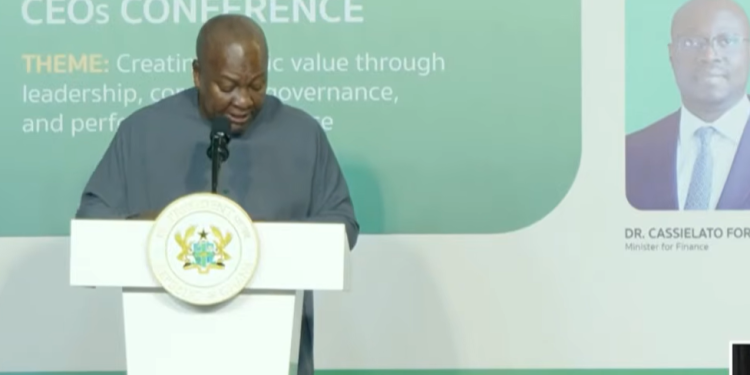
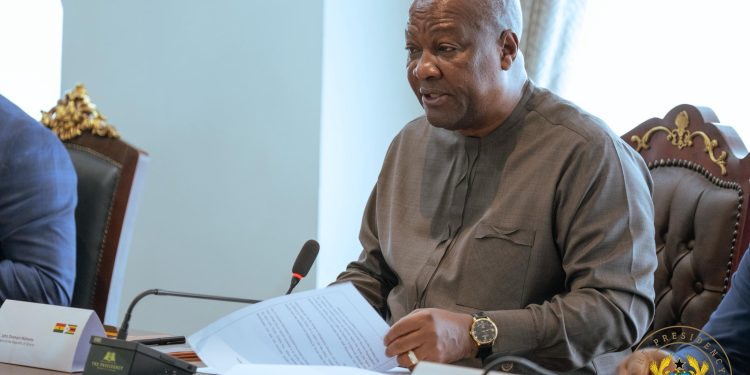
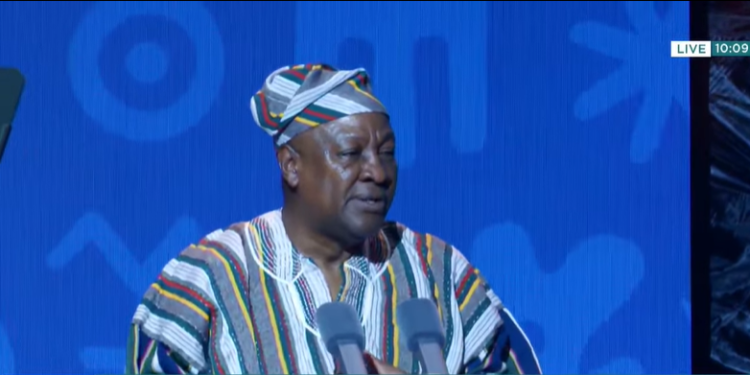
President John Dramani Mahama has expressed serious concerns about the low level of compliance with key governance and accountability requirements among public entities in Ghana. Speaking at the SIGA Governing Boards and CEOs Conference 2026 on Thursday, September 10, the President revealed that only 72 out of the 148 Chief Executive Officers (CEOs) expected to sign performance contracts had done so since his administration took office. While acknowledging improvements in the governance and management of public institutions, President Mahama warned that these positive changes should not be mistaken for the resolution of all governance issues. He pointed out that several entities were still falling short on crucial statutory and administrative obligations, particularly in the submission of audited financial statements, performance contracts, quarterly reports, annual general meetings, and employment data. “We must not confuse improvement with complete success. Only 61 entities submitted their audited financial statements by the statutory deadline of April 30. A significant number of entities either submitted after the deadline or still relied on management and draft accounts,” President Mahama noted. He further highlighted that, in addition to the low number of signed performance contracts, only 71 entities had submitted their quarterly reports, and just 37 out of 177 had held their required annual general or stakeholder meetings. Employment data submissions also declined, dropping from 142 entities in 2024 to 137 in 2025. “These compliance gaps are unacceptable,” President Mahama stressed, urging all public entities to meet their governance and reporting obligations to improve transparency and accountability in the management of state resources. Source: Apexnewsgh.com
President Mahama Warns SOE Boards Against Conflict of Interest and Mismanagement
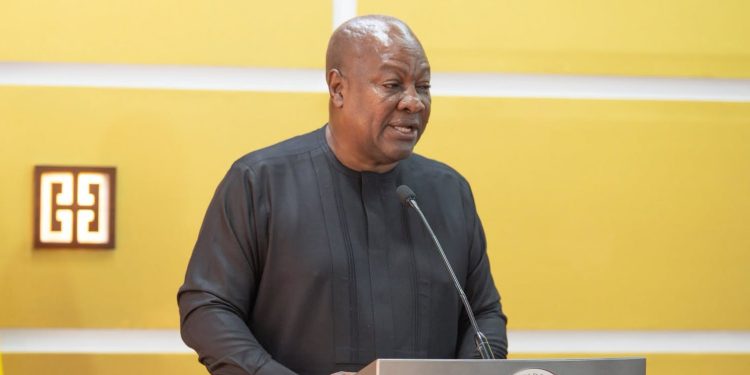
President John Dramani Mahama has delivered a stern warning to members of his administration and governing boards of State-Owned Enterprises (SOEs), cautioning them against conflicts of interest, abuse of office, and the improper management of state resources. Addressing the SIGA Governing Boards and CEOs Conference 2026 on Thursday, September 10, President Mahama emphasized the critical need for integrity, transparency, and accountability among public officials entrusted with managing state institutions and assets. He reminded government appointees and board members of their duty to protect the public interest, insisting that decisions made under their authority should be able to withstand public and official scrutiny. “Ladies and gentlemen, this administration will not tolerate conflict of interest or abuse of office. Procurement must be lawful and follow the guidelines; it must be competitive and transparent,” President Mahama declared. He further stressed that recruitment and promotions should be based strictly on merit, and that contracts, investments, and asset disposals must demonstrate clear value for money. The President made it clear that governing boards must take personal responsibility for state assets in their care—including land, buildings, equipment, and investments. He warned that unauthorized disposal or mismanagement of state assets would not be treated as a minor administrative lapse, but as a serious breach of trust against the people of Ghana. “The government will continue to demand accountability from those entrusted with managing public institutions and resources,” President Mahama stated. The conference brought together governing board members and Chief Executive Officers of SOEs to discuss best practices in governance, accountability, performance, and the effective management of public institutions. Source: Apexnewsgh.com
Ghana Seeks Deeper Partnerships with China for Value-Driven, Sustainable Mining Future
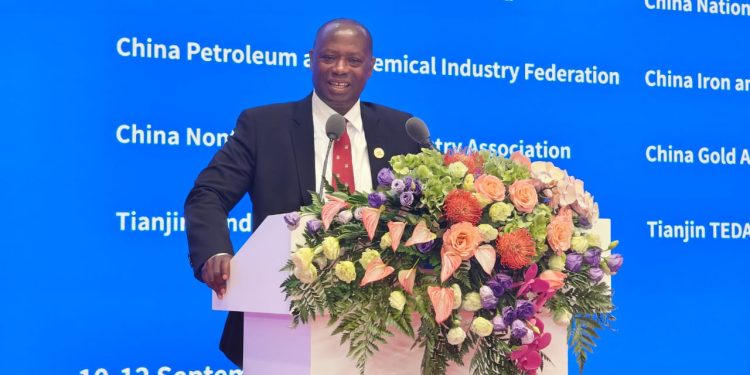
Ghana is charting a new path in its mining sector, calling for stronger partnerships with China and global stakeholders to unlock greater value from its mineral resources. The message was delivered by the Minister for Lands and Natural Resources, Emmanuel Armah-Kofi Buah, at the opening of the 28th China Mining Conference and Exhibition 2026 in Tianjin, China. No longer content with exporting raw minerals, Ghana is seeking cooperation in mineral processing, technology transfer, skills development, and infrastructure to fuel job creation and economic growth. “Our minerals must do more than generate export receipts. They must support value addition, industrial development, skills, jobs and opportunities for our young people,” the Minister emphasized. He stressed that the next chapter of Ghana’s mining industry must prioritize industries, skills, technology, jobs, and stronger communities alongside extraction. To this end, the government is reviewing its minerals and mining framework, formalizing artisanal and small-scale mining, and enhancing transparency and responsible oversight across the gold value chain. Ghana already boasts significant Chinese investments in mining, including Chifeng Gold Group, Shandong Gold, and Zijin Mining. But Mr. Armah-Kofi Buah said future partnerships should go beyond extraction to embrace mineral processing, infrastructure, local supply chains, and skills development. Environmental sustainability also took center stage, with the Minister highlighting measures to combat illegal mining (galamsey), such as the National Anti-Illegal Mining Operations Secretariat (NAIMOS) and the Responsible Cooperative Mining and Skills Development Programme (rCOMSDEP). He appealed for deeper cooperation with China in environmental management, land reclamation, and restoration of mined areas: “A river is not simply an environmental statistic. It is drinking water. It is farming. It is the livelihood of a community. It is an inheritance held in trust for a child not yet born.” Pushing for intelligent mining, Mr. Armah-Kofi Buah outlined Ghana’s efforts to modernize its geological data and digitalize the gold supply chain. He underscored the importance of accurate geological information for attracting investment and ensuring fair negotiations, calling for greater technical exchanges and mining-specific training for Ghanaians. Looking ahead, the Minister said Ghana is focused on refining more gold, advancing an integrated aluminium industry, developing iron ore resources for domestic steel production, and positioning critical minerals for new industries and technologies. This vision will be showcased during Ghana Mining Day at the conference under the theme, “Building Ghana’s Next Frontier: Geology, Value Addition and Investment Partnership.” He invited Chinese and global investors to explore mutually beneficial opportunities, stating, “We have the resources. China has deep experience in capital, technology, processing, infrastructure and industrial development. Between us lies an opportunity to build commercially sound partnerships in which Ghana creates more value at home, investors succeed, communities share in prosperity and both countries emerge stronger.” China’s Vice Premier, He Lifeng, responded by expressing China’s readiness to support developing economies with funding, technology, and fair benefit-sharing through open and transparent partnerships. The 28th China Mining Conference and Exhibition runs in Tianjin from September 10 to 12, 2026, under the theme, “Win-Win Cooperation, Green and Intelligent.” Source: Apexnewsgh.com
NCPTA Warns Parents: Don’t Pay Unauthorized Fees for SHS Prospectus Items

The National Council of Parents-Teachers Associations, Ghana (NCPTA), has sounded a strong warning to parents of first-year Senior High School (SHS) students: do not pay GHS1,617 to EduPack PGL for prospectus items. This follows reports that EduPack PGL, also known as Prospectus Ghana Limited, has been urging parents to pay for a package, including a metal trunk, plastic chop box, Macintosh mattress, and pillow, for collection on SHS campuses. The company allegedly circulated messages via SMS, WhatsApp, and other channels, and is accused of invoking the name of the Ghana Education Service (GES) to legitimize their offer. In a statement issued on Wednesday, September 9, 2026, the NCPTA clarified that the Ghana Education Service had not approved this arrangement, stating, “GES Management has NOT sanctioned, directed or authorized any parent to engage EduPack PGL.” The association instructed parents clearly: “DON’T PAY! We instruct all Ghanaian parents NOT TO PAY ANY MONEY OR BUY ANY ITEM FROM EDUPACK PGL.” The NCPTA emphasized that parents have the right to buy prospectus items from the open market, as has always been the practice. “Every parent retains the full and unqualified liberty to purchase prospectus items on the open market,” the statement added. The association also raised concerns about the attempt to force parents to buy items from a single source at a fixed price on school premises, calling it “illegal commercialization of school admission.” While commending the GES for distancing itself from the practice, the NCPTA called for even stronger action. They urged the GES to use its legal and administrative powers to warn and sanction any school heads who permit such sales, and to consider taking legal action against EduPack PGL and any entity allegedly misusing the GES logo to defraud parents. “Punish the real culprit so others will learn,” the NCPTA stated. Parents were also advised to stay alert and report any such incidents to the NCPTA Secretariat and the GES. The statement was signed by the General Secretary of the NCPTA, Gapson Kofi Raphael. Source: Apexnewsgh.com
Three Companies Advance to Next Stage in Ghana’s 5G Spectrum Race
Ghana’s journey toward 5G connectivity took a major step forward as the National Communications Authority (NCA) announced that three companies have advanced to the next phase of the country’s 5G spectrum licensing process. The companies approved to proceed are Scancom Plc (MTN Ghana), Ghana Telecommunications Company Limited (Telecel Ghana), and Goal Telecommunications Ltd. The NCA disclosed that it had received four applications for the highly anticipated 5G spectrum licences, covering the 700 MHz, 2.3 GHz, and 3 GHz frequency bands. The submission deadline was 5 PM on August 27, 2026. Of the four contenders, Infrava Ltd was the only applicant not to make the cut. The selection process involved a rigorous Eligibility Review and Technical Qualification Assessment, where applicants were evaluated based on technical and qualification submissions contained in what the NCA described as Envelope A. In a statement released on Wednesday, September 9, the NCA confirmed, “Of the four applications received by the submission deadline of 5 PM on August 27, 2026, three applicants have qualified to proceed to the next stage of the selection process.” All applicants have been notified of the results, and reasons for disqualification were provided where relevant. The three successful companies will now move on to Stage 3 of the selection process, which will determine their final ranking and allocation of spectrum. The NCA clarified that “only the Qualified Applicants will proceed to Stage 3 of the selection process. Accordingly, the Envelope B submitted by the Non-qualified Applicant will not be opened.” As the process moves forward, the NCA will separately inform the qualified companies about the date, time, and venue for the opening and ranking of their Best Price Offers. The competition for Ghana’s 5G future is heating up, with only the strongest contenders left in the race. Source: Apexnewsgh.com
Port Congestion, New Fees, and a Surge in Containers: The Story of Ghana’s Shipping Challenge

The atmosphere at Ghana’s ports has never been more charged. Shipping companies and their agents have received a clear directive from the government: begin collecting the approved GH¢720 Container Administrative Charge immediately, no exceptions. This hard stance was revealed by Transport Minister Joseph Bukari Nikpe during an interview on Channel One TV’s The Point of View. His position followed a recent court ruling that dismissed an attempt to block the implementation of the new fee. “Before we will agree, they will have to be collecting or charging the GH¢720 as we communicated to them before we can sit together with them,” Minister Nikpe stated, emphasizing that compliance with the directive is a prerequisite for any further negotiations. The GH¢720 charge, he clarified, is the regulatory ceiling for the Container Administrative Charge applied to all import and export containers, calculated per Twenty-Foot Equivalent Unit (TEU). Despite the firm approach, the government is keeping the door open for dialogue. Minister Nikpe assured shipping companies that discussions could resume, but only after they have started applying the fee as stipulated by the authorities. Meanwhile, a new challenge has emerged: an unprecedented surge in container traffic at Ghana’s ports. According to Minister Nikpe, container volumes have shot up by almost 100 percent, a level not seen in the past twenty years. This dramatic increase has led to significant congestion, especially at the Meridian Port Services (MPS) Terminal in Tema. The congestion has caused delays in cargo clearance and put immense pressure on available terminal space. To address the bottlenecks, the government is taking action on several fronts. Efforts are underway to remove containers that have overstayed at the port, and shipping lines are being urged to evacuate empty containers that continue to occupy valuable space. In a bid to ease the pressure, the Railway Development Authority has been enlisted to temporarily move some of the containers to alternate terminals. Additionally, the Ghana Ports and Harbours Authority has been instructed to acquire two more cranes to speed up cargo handling and reduce delays. As the shipping industry adapts to these new realities, all eyes are on the government and port authorities to see if these interventions will restore smooth operations and keep Ghana’s trade flowing. Source: Apexnewsgh.com
The New Patriotic Party (NPP) Demands Answers: 30-Day Ultimatum for Rural Telephony Report

In a move that has stirred Ghana’s tech and political circles, the New Patriotic Party (NPP) has issued a 30-day ultimatum to the Ministry of Communication, Digital Technology and Innovations. The party wants the Ministry to publish a comprehensive status report on the Ghana Rural Telephony and Digital Inclusion Project, a flagship initiative meant to bridge the digital divide in underserved communities. The demand, spearheaded by the NPP’s Policy Committee on Communications and Digitalization, was made public following a high-level briefing by Communication Minister Samuel Nartey George. The Minister had outlined the government’s plan to upgrade rural telephony sites to at least 4G, but the NPP insists that more transparency is needed on the current state of the project. According to a statement signed by Kojo Oppong Nkrumah, Chairman of the NPP Policy Co-ordination Committee, the party is seeking detailed data: How many sites have been constructed, connected, and are fully operational? How many have been built but remain out of service? The NPP argues that these answers are critical to understanding the real progress made. Rejecting claims that rural connectivity had been neglected in the previous decade, the NPP stated that, contrary to the Minister’s characterization, “the records show significant investments were made under the Akufo-Addo/Bawumia administration.” The Ghana Rural Telephony and Digital Inclusion Project, they pointed out, was launched in 2020 with a €155 million facility from the China EXIM Bank, aiming to build 2,016 sites and connect 3-4 million people. By the end of the last NPP administration in January 2025, the party claims, 1,961 sites had been constructed, with equipment procured for 400 more. But since the change in government, the NPP alleges, progress has stalled. “No new rural telephony site was constructed in 2025 despite the availability of equipment,” the statement read. Even more troubling, the NPP says that many previously operational sites are now offline. The party also pushed back against suggestions that 46 sites could not be connected because they are in hard-to-reach areas. “A satellite hub at the Kofi Annan Centre of Excellence in ICT had already been upgraded to provide backhaul services,” the NPP said. They argue that the issue is not technical, but a matter of administrative delays and commercial arrangements that have yet to be finalized. While the NPP welcomed government plans to upgrade rural infrastructure to 4G, they cautioned against leaving existing sites disconnected or allowing service to lapse. Their demands are clear: The Ministry and the Ghana Investment Fund for Electronic Communications (GIFEC) must publish a deployment schedule for the remaining sites, report on the operational status of the satellite hub, and share a detailed plan, including costs and timelines, for the 4G upgrade. The party also wants Parliament’s Select Committee on Communications to be briefed with verifiable data, not just public statements or claims. Source: Apexnewsgh.com