










Since 2020, the Bui Power Authority (BPA) has been on a mission to transform Ghana’s energy landscape, harnessing the sun’s power to diversify the nation’s electricity generation. Within just a few years, the Authority has developed about 200 megawatts-peak (MWp) of solar photovoltaic (PV) installations within its traditional operational area, marking a major leap in Ghana’s renewable energy drive.
The story of BPA’s solar transformation took a significant turn when Parliament amended the Authority’s enabling Act. This fresh mandate empowered BPA to move beyond its hydropower roots and embrace green and clean energy resources. Under this expanded mission, BPA rolled out a phased approach to solar development.
In 2021, BPA commissioned its first 50MWp solar plant, alongside a pioneering 1MWp floating solar installation on the Black Volta River. The floating system was a bold experiment: could solar panels on water reliably generate and deliver power? The answer was a resounding yes. The success of this pilot led to a further 4MWp being added to the floating project in 2023, bringing the total floating capacity to 5MWp. Additional ground-mounted solar capacity brought BPA’s operational area total to an impressive 200MWp by 2025.
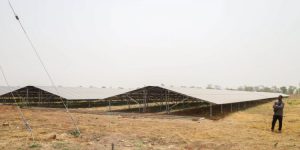
But BPA’s ambitions didn’t stop there. For the first time, the Authority ventured beyond its usual territory to deliver the 50MWp Galgu solar plant in the Yendi Municipality of the Northern Region. Costing around US$50 million and executed in partnership with Ghanaian company First Sky Limited under an EPC+F arrangement, the project marked a new chapter for BPA. First Sky not only financed the project but also handled planning, installation, and construction. The investment is set to be recouped through payments for the electricity generated over five to seven years.
Senior External Relations Officer, Mawuli Fui Kwadzovia, highlighted the long-term benefits of the solar push during an appearance on the Citi Breakfast Show. He explained that, while solar installations require significant upfront investment, their operating costs are much lower than those of thermal plants, as they aren’t reliant on continuous fuel purchases. In the long run, solar and hydropower offer both economic and environmental advantages.
The Galgu plant is expected to boost electricity supply in Yendi and communities along the Eastern Corridor, while also extending BPA’s renewable footprint further across Ghana. The newest capacity additions are set to be commissioned into the national grid soon, further strengthening Ghana’s energy resilience and supporting the country’s clean energy transition.
BPA Solar Capacity at a Glance:
- Solar PV within operational area (since 2020): ≈ 200 MWp
- of which floating PV on the Black Volta: 5 MWp
- Galgu, Yendi Municipality (first project outside operational area): 50 MWp
- Combined BPA solar portfolio: ≈ 250 MWp
Source: Apexnewsgh.com