
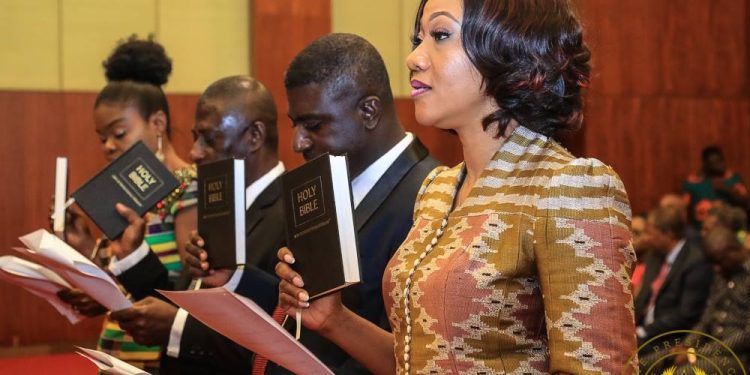
South Korean court sentences ex-President Yoon Suk Yeol to life for insurrection
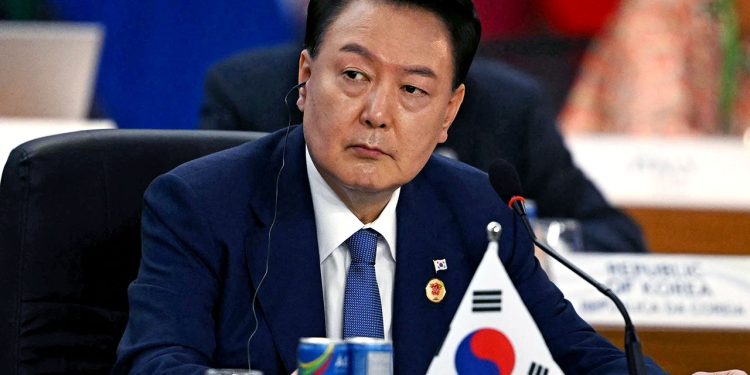
A South Korean court has found former President Yoon Suk Yeol guilty of orchestrating an insurrection, sentencing him to life in prison for his failed attempt to impose military rule in December 2024. The 65-year-old’s order, which lasted just six hours, brought the government to a standstill and significantly weakened his political party, contributing to its loss in the subsequent elections. “The attempt to subvert the constitutional order cannot go unpunished,” the presiding judge said during the verdict announcement. The incident has left a lasting mark on South Korean politics and society. Crowds of Yoon’s supporters gathered outside the court in protest, reflecting the deep divisions his actions have caused across the nation. Yoon is already serving prison time for another conviction related to the same failed martial law order and still faces two additional trials. Source: BBC
Ghana and Zambia Sign Landmark Visa Waiver Agreement to Boost Bilateral Ties
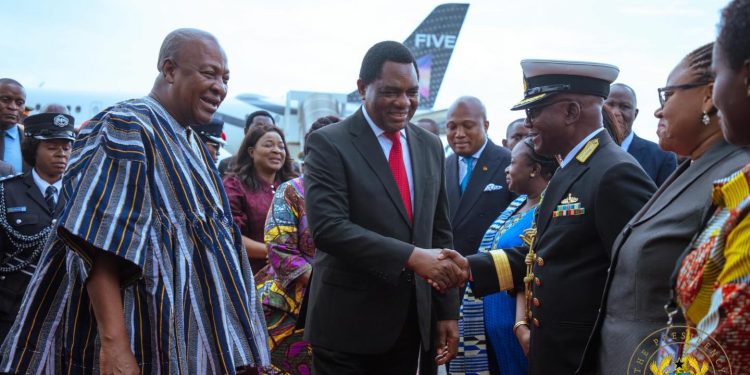
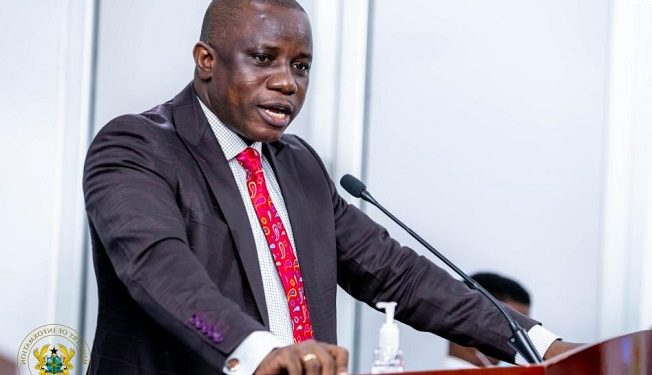
In a historic move to deepen ties and promote seamless mobility, the governments of Ghana and Zambia have signed a landmark visa waiver agreement, allowing citizens of both countries to travel freely without the need for visas. The announcement came during President John Dramani Mahama’s recent three-day state visit to Zambia, where he was welcomed by President Hakainde Hichilema at the Kenneth Kaunda International Airport on February 4. The development was disclosed to the press by Ghana’s Minister for Foreign Affairs, Samuel Okudzeto Ablakwa, who described the visa waiver as one of the most significant outcomes of the high-level visit. Mr. Ablakwa emphasized that the new policy is poised to enhance trade, tourism, investment, and cultural exchange between the two nations, removing long-standing bureaucratic barriers for travelers, including students, businesspeople, professionals, and tourists. According to the Foreign Affairs Minister, the visa-free arrangement was a key directive personally issued by President Mahama as a top priority for the visit. “We are prioritising your smooth mobility, and one of the major outcomes of this state visit is that, for the first time in the history of Ghana-Zambia relations, we are going to have a free visa between our two countries, so you no longer have to stress about visas,” Mr. Ablakwa said. He added that the President had made it clear that the agreement was a non-negotiable condition for the diplomatic trip. The visa waiver agreement signals a new era of cooperation, expected to foster closer diplomatic, economic, and people-to-people relations between Ghana and Zambia. As both countries look to the future, the removal of travel restrictions is set to unlock new opportunities and strengthen the bonds between their citizens. Source: Apexnewsgh.com
UK seeks ‘sophisticated’ partnership with China on growth, security
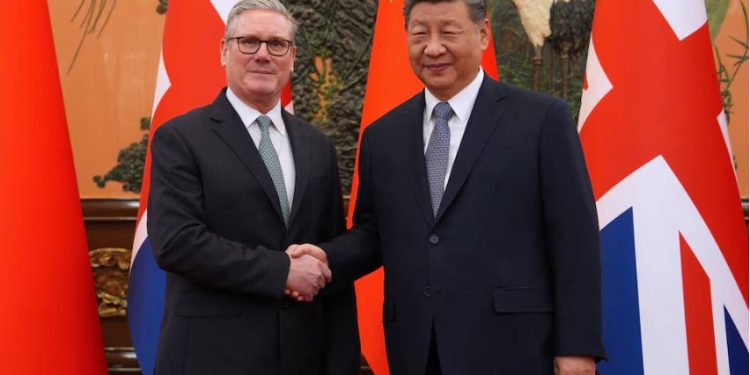
British Prime Minister Keir Starmer, on Thursday, January 29, signalled a shift in UK–China relations, expressing his desire to build what he described as a “sophisticated relationship” with Beijing to support economic growth and strengthen global security. The comments came during the most significant day of Starmer’s four-day visit to China, the first by a British prime minister in eight years, marked by an 80-minute summit with Chinese President Xi Jinping at the Great Hall of the People, followed by a working lunch. Starmer is also scheduled to meet Premier Li Qiang. Starmer, whose centre-left Labour government has faced pressure to deliver on its economic growth agenda, has prioritised improving ties with the world’s second-largest economy, despite persistent concerns over espionage and human rights. “China is a vital player on the global stage, and it’s vital that we build a more sophisticated relationship where we can identify opportunities to collaborate, but of course also allow a meaningful dialogue on areas where we disagree,” Starmer told President Xi at the start of their meeting. President Xi said relations between the two countries had experienced “twists and turns” that served neither side’s interests, adding that China was ready to pursue a long-term strategic partnership with Britain. “We can deliver a result that can withstand the test of history,” Xi said, flanked by senior Chinese officials. Starmer’s engagement with Beijing comes amid renewed diplomatic activity between China and Western nations, as governments seek to hedge against uncertainty in relations with the United States under President Donald Trump. Trump’s intermittent threats of trade tariffs and remarks about asserting control over Greenland, an autonomous territory of Denmark, have unsettled long-standing allies, including Britain. The UK prime minister’s visit follows closely after Canadian Prime Minister Mark Carney’s trip to China, during which Ottawa signed an economic agreement aimed at reducing trade barriers, an outcome that drew criticism from Washington. Kerry Brown, a professor of Chinese studies at King’s College London, said several agreements between Britain and China were expected to be announced as a signal of improving relations. Starmer is accompanied by more than 50 business leaders, underlining his push for tangible economic gains from the visit. Source: Reuters
Nigeria’s Ruling Party Climate Network Backs APC Chairmanship Candidate for Bwari in Abuja Elections
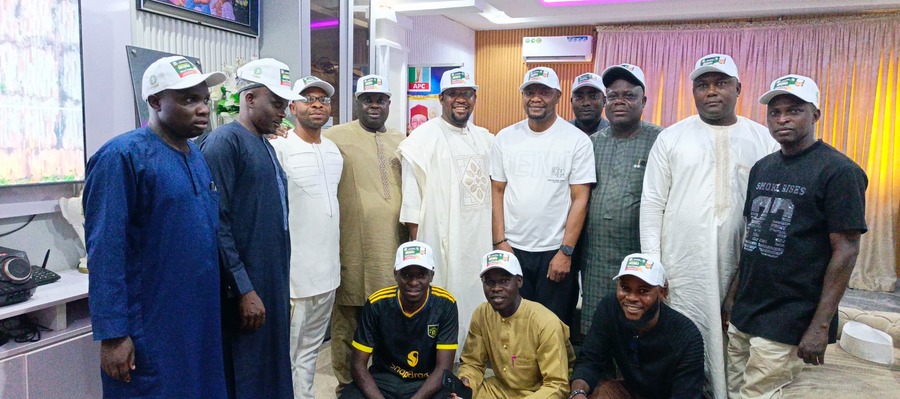
The APC Climate Change Network (ACCN), a support group aligned with Nigeria’s ruling All Progressives Congress (APC), has pledged its support to Hon. Haruna Shekwolo Ushafa, the party’s chairmanship candidate for the upcoming Federal Capital Territory (FCT) Area Councils elections in Bwari. Members of the network paid a courtesy visit to Ushafa at his residence in Ushafa, Bwari, on Tuesday, underscoring their commitment to backing his campaign with grassroots mobilization and climate-focused advocacy. Speaking during the visit, ACCN National Coordinator, Citizen Greg Odogwu, said the group was “strongly behind” Ushafa and would support his campaign through the distribution of flyers and the promotion of environmental sustainability principles throughout and beyond the election period. Odogwu described the candidate as “Sustainable Shekwolo,” citing his experience, leadership style, and track record as indicators of his capacity to build climate resilience in Bwari Area Council if elected. “His pedigree, experience, and body language show that he understands the issues and has what it takes to make Bwari climate-resilient,” Odogwu said. In response, Ushafa acknowledged the growing impact of climate change and emphasized the need for urgent action at the grassroots level. He said his team recognizes climate change as a real and pressing challenge, particularly for rural communities whose livelihoods depend heavily on agriculture. “There are many things that must be done to make our Area Council resilient and to improve the lives of our people, especially rural farmers,” Ushafa said. “We can adopt climate-smart agriculture and upgrade agricultural facilities, which will automatically improve livelihoods.” He also highlighted the economic costs of climate change, pointing to erosion and infrastructure degradation as major challenges facing the area council. “When erosion caused by climate change is not controlled, it accelerates the deterioration of roads,” Ushafa noted. “As a result, we incur significant economic losses as an Area Council. We look forward to working closely with your network.” Also speaking at the event, the ACCN Coordinator for Bwari, Hon. Charles Nwokedi, reaffirmed the group’s support for Ushafa, noting that the network has a presence across all wards in Bwari Area Council. “We are solidly behind you,” Nwokedi said. “With our structures across the wards, we are on standby to support your campaign efforts.” The FCT Area Councils elections are expected to be closely watched, with climate resilience and sustainable development emerging as key themes in local governance debates. Background: APC Climate Change Network The APC Climate Change Network is an organized cadre of party members and climate advocates within the APC, formed to elevate environmental issues and climate action within the party’s agenda and outreach strategy. The network describes itself as a coalition of “climate champions” drawn from wards, local governments, and states across Nigeria, aiming to promote awareness of climate change, carbon literacy, and green transitions among party members and constituents. It supports the party’s alignment with national climate policies and the federal government’s climate action and energy transition goals. Since its convening in 2022, the ACCN has engaged in initiatives such as advocating for sector-specific climate action plans within the APC, organizing climate policy dialogues, and endorsing candidates whose platforms emphasize sustainable development. Source: Apexnewsgh.com
Outrage as Nigerian Government Plans $9 Million Lobbying Contract Amid Southeast Crisis

Allegations of corruption have surfaced in Nigeria following revelations that the government, through the office of the National Security Advisor, is preparing to pay a staggering $9 million to a U.S. lobbying firm in an effort to improve its image in Washington. This move comes amidst a turbulent period of violence and insecurity in Nigeria’s southeast, as well as mounting frustration over the government’s handling of the crisis. Insiders allege that the Nigerian government is justifying this hefty lobbying expenditure by claiming it is a response to the Indigenous People of Biafra (IPOB) hiring its own lobbyist in the United States. However, investigations reveal a stark disparity: while IPOB reportedly paid less than $70,000 for its lobbying efforts, the government’s proposed contract is more than one hundred times larger. Furthermore, evidence suggests that Nigeria began negotiations with its chosen lobbyists before IPOB hired theirs, undermining official claims and fueling suspicions of dishonesty. Questions have also been raised about the contract’s structure. The $9 million deal is being funneled through a law firm in Kaduna, rather than being handled directly by the government’s own Ministry of Justice, which possesses the necessary legal expertise. Critics argue that this arrangement opens the door for further financial impropriety, speculating that the law firm itself could receive more than $10 million, money that could be diverted for personal gain by officials involved. Observers and activists have condemned the plan, describing it as evidence of entrenched corruption reminiscent of past regimes. Many are left wondering why such enormous sums are being spent on foreign lobbying when these resources could instead be used to address the root causes of unrest in southeastern Nigeria. Suggestions for local solutions, such as compensation for victims, amnesty, or dialogue with community leaders, have been sidelined in favor of costly image management campaigns abroad. The situation has caused widespread disillusionment. As Nigeria faces continued violence and hardship, citizens are demanding greater accountability and a redirection of funds toward genuine peace-building initiatives. The controversy over the lobbying contract has become a stark symbol of broader frustrations with government priorities and persistent allegations of corruption at the highest levels. Source: Apexnewsgh.com
Sudan’s government returns to capital after nearly 3 years of war
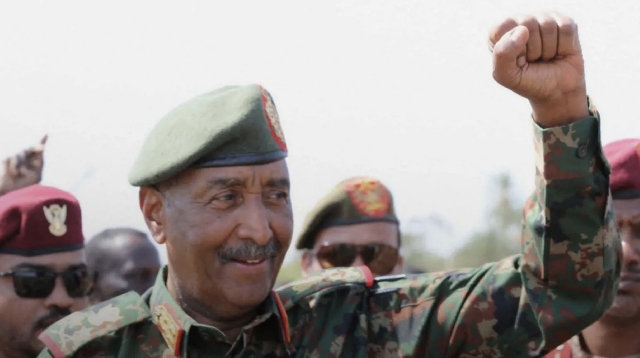
Sudan’s military-led government has returned to the country’s capital after nearly three years of operating from its wartime base in the eastern city of Port Sudan. Sudan’s Prime Minister Kamil Idris told reporters on Sunday that the “government of hope” was officially back in Khartoum and would begin efforts to improve services for the city’s beleaguered residents. The military was forced out by the paramilitary Rapid Support Forces (RSF) when civil war erupted between the two sides in 2023. The army recaptured it in a significant breakthrough last March. Khartoum has been recovering from years of fighting. Roughly five million fled the city at the height of the conflict, according to the UN. Those unwilling or unable to leave described a brutal RSF occupation, which included mass looting and fighters taking over civilian homes. Huge swathes of the city lie in ruins. In October, UN official Ugochi Daniels reported that basic services were “barely functioning”. On Sunday, Idris said the government would work on improving electricity, water, healthcare and education in Khartoum. He also declared that 2026 would be a “year of peace” for Sudan, where at least 150,000 people have died since the war erupt. The UN has described the situation as the world’s worst humanitarian crisis and around 12 million people have been forced from their homes. The war began after the head of the army, General Abdel Fattah-al Burhan fell out with his deputy and RSF leader General Mohamed Hamdan Dagalo, leading to a vicious struggle for power. Both the RSF and the Sudanese military have been accused of committing atrocities throughout the conflict. International efforts to broker peace have failed and both sides are backed by foreign powers who have poured weapons into the country. The United Arab Emirates (UAE) has come under particular scrutiny recently over allegations of supporting the RSF, which it strongly denies. Source: bbc.com
Ghana Condemns Guinea-Bissau Military Coup, Calls for Restoration of Democracy
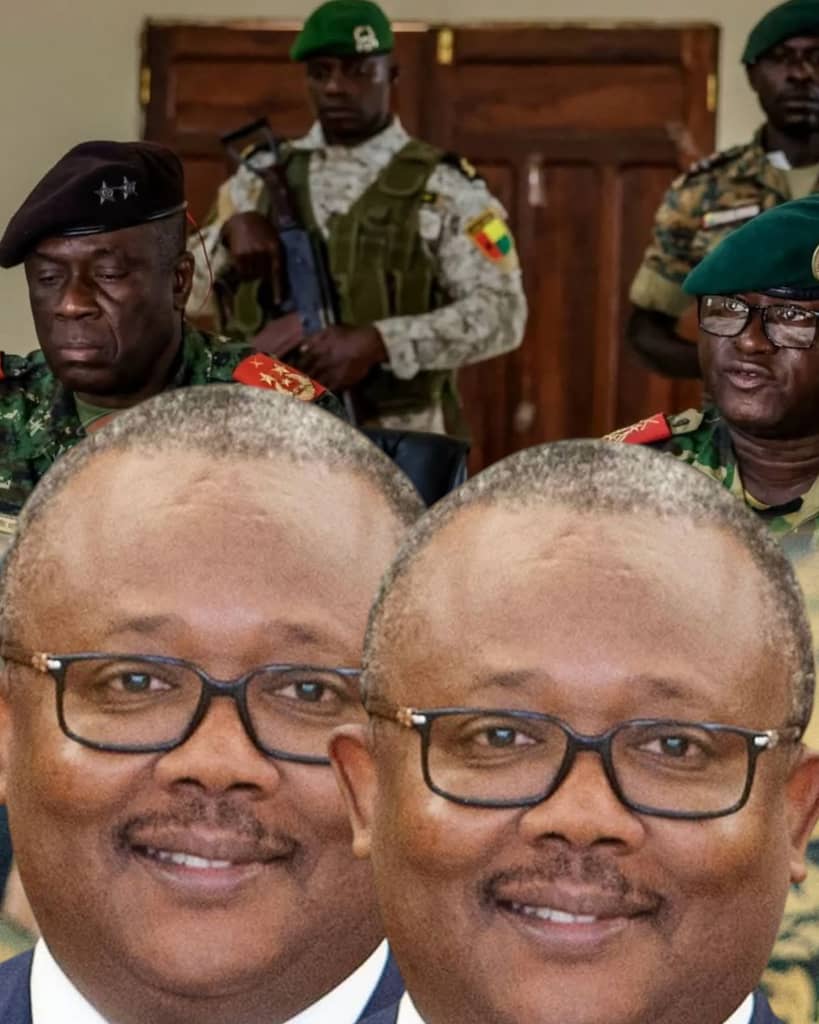
The Government of Ghana has issued a firm denunciation of the recent military coup in Guinea-Bissau, labelling it an unacceptable breach of constitutional order and a threat to democratic stability in West Africa. In a statement released by the Ministry of Foreign Affairs on Wednesday, Ghana expressed deep concern over the actions taken by members of the Guinea-Bissau military, who interrupted the country’s democratic process just days after peaceful presidential and legislative elections on 23 November 2025. The official announcement of results had been set for 27 November. Describing the military takeover as a “direct assault on democratic governance,” Ghana’s government insisted that the move undermines the will of the people and the legitimacy of the electoral process. Ghana called for the immediate and unconditional return to constitutional rule, urging all parties to respect democratic principles and to address any electoral grievances through lawful and transparent means. The statement also called for guarantees of safety for all citizens, foreign nationals, and particularly for officials with the ECOWAS Election Observation Mission deployed in Guinea-Bissau. Their security and safe passage, Ghana stressed, must be assured. Appealing for calm, the government urged the people of Guinea-Bissau to refrain from actions that could escalate tensions. Ghana reaffirmed its steadfast support for ECOWAS and the African Union as they coordinate a regional response in line with established protocols on democracy, good governance, and constitutional order. Source: Apexnewsgh.com
Presidency Reveals DSS and Military Negotiated Directly with Bandits to Secure Release of Eruku Church Hostages
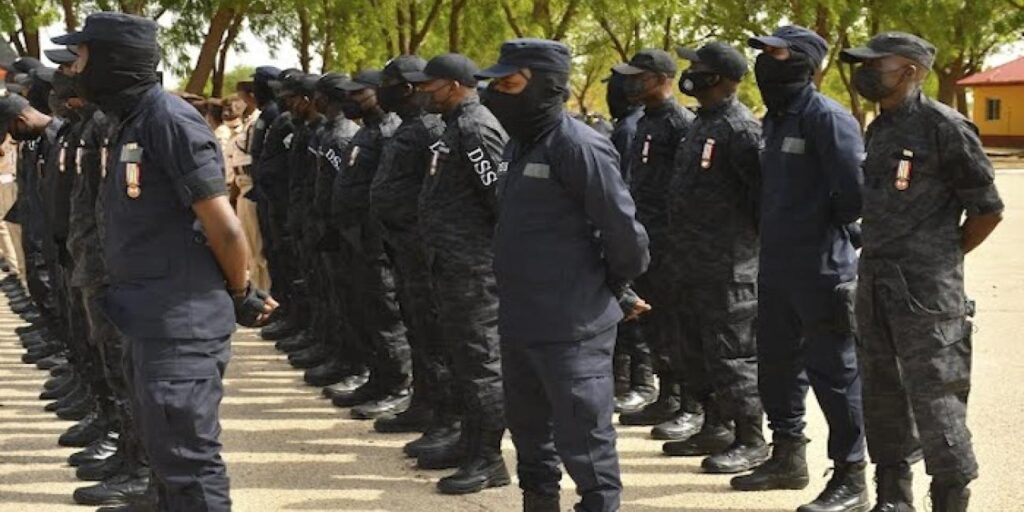
The Bola Tinubu administration has confirmed that Nigeria’s Department of State Services (DSS) and the military made direct contact with the armed bandits responsible for abducting 38 worshippers from a church in Eruku, Kwara State, leading to the victims’ safe release. Bayo Onanuga, Special Adviser to the President on Information and Strategy, shared details of the operation during an interview on Arise Television. He explained that security agencies reached out to the kidnappers with a firm demand for the immediate and unconditional release of the captives. “After the incident happened, the DSS and the military were involved in the rescue efforts. They got in contact with the bandits to release those people unharmed, and finally, on Sunday, they were able to get them out,” Onanuga stated. According to Onanuga, the bandits complied due to their awareness of the grave consequences of defying government orders. He further noted that while security forces have advanced methods to track armed groups, operational caution is often exercised to prevent endangering hostages, who are frequently used as human shields. Pressed on the absence of a direct military confrontation, Onanuga emphasized that the government’s overriding priority was the safe return of the abducted worshippers. “The first thing the government must do is get those people freed. That objective has been achieved. The next level of action is for the security agencies, and I don’t want to pre-empt them,” he said. All 38 abducted individuals were reportedly rescued alive, though officials have withheld further details about the operation or subsequent steps against the perpetrators. The high-profile Eruku abduction has heightened public anxiety over insecurity in Kwara South and nearby regions, fueling calls for enhanced intelligence and improved community protection. Source: Apexnewsgh.com
Bandits Unleash Chaos in Isapa: Pregnant Woman, Children Among Those Abducted in Kwara State
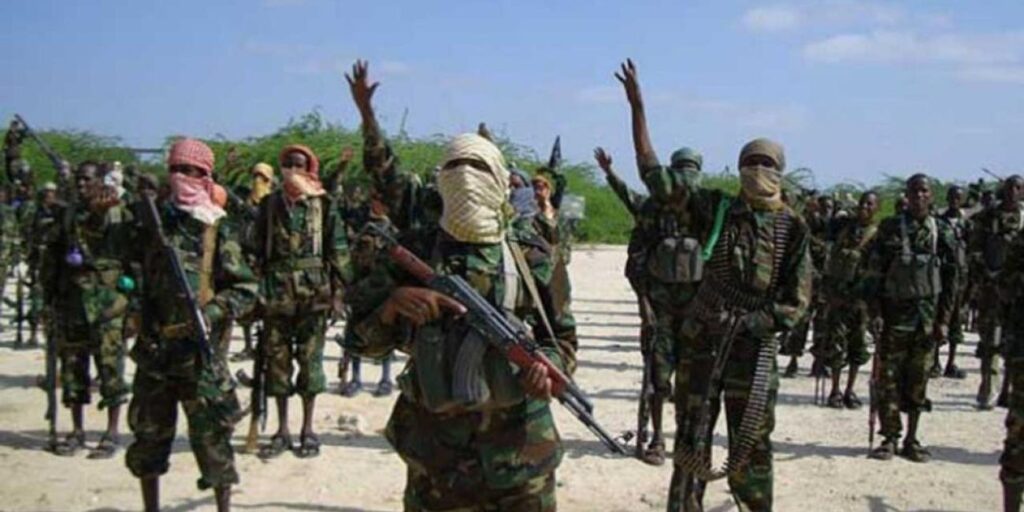
On a quiet Monday evening in Isapa, Ekiti Local Government Area of Kwara State, the sound of gunfire shattered the calm. Around 6pm on November 24, 2025, a group of 20 to 30 armed bandits descended upon the rural community, their arrival marked by a stampede of cattle and the chilling echo of sporadic shots fired into the air and at homes. The violence was swift and targeted. An elderly woman was wounded by a stray bullet, while panic swept through the town as families scrambled for cover. When the chaos subsided, the full scale of the attack came into view: eleven residents had been abducted, including seven members of a single family. Among those taken were a pregnant woman, two nursing mothers, and several children. The victims, now missing, have been named by local sources as Talatu Kabiru, Magaji, Kande, Hadiza, Mariam, Saima, Habibat (a housewife), Fatima Yusufu (a housewife), Sarah Sunday (pregnant woman), Lami Fidelis (a nursing mother), and Haja Na Allah. The gunmen’s path through Isapa was evident in the bullet holes left behind on walls and doors. Expended AK-47 shells littered the streets after the assailants melted away into the night. This latest abduction comes on the heels of another harrowing incident in nearby Eruku, where terrorists stormed a Christ Apostolic Church branch, opening fire on worshippers and killing three people before abducting others, including the pastor. Eyewitnesses in Eruku recounted how the attackers burst into a church meeting, sent congregants fleeing for their lives, and marched their captives into the bush at gunpoint. The two attacks, linked by proximity and the audacity of the perpetrators, have left a trail of fear, grief, and unanswered questions. Residents in both Isapa and Eruku are now gripped by uncertainty, their communities scarred by violence and searching for answers as authorities continue their investigation. Source: Apexnewsgh.com
Divided Voices: Inside the U.S. Congressional Battle Over Nigeria’s Religious Crisis
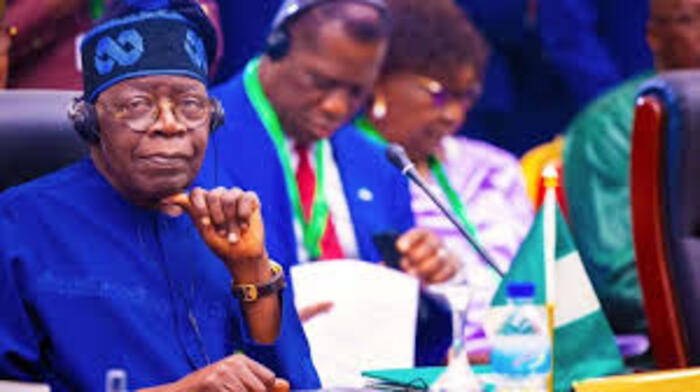
On a brisk Thursday morning, Room 2172 of the Rayburn House Office Building buzzed with anticipation. The United States House Foreign Affairs Subcommittee on Africa was about to hold an open hearing that would send ripples far beyond Capitol Hill. The subject: President Donald Trump’s controversial redesignation of Nigeria as a “Country of Particular Concern” following allegations of a Christian genocide. The stakes were high, and emotions ran even higher. Lawmakers, religious leaders, U.S. Department officials, and witnesses gathered under the glaring lights, their faces set with resolve or worry, depending on their side of the aisle. What began as a policy discussion would soon unfold as a gripping drama of clashing beliefs, desperate pleas, and calls for both restraint and action. The hearing came on the heels of President Trump’s thunderous threat: that America would send its military “guns-a-blazing to completely wipe out the Islamic terrorists who are committing these horrible atrocities.” The world was watching. The fate of millions hung in the balance. Chairman Chris Smith, seasoned and stern, opened the proceedings. He wasted no time outlining the grim statistics that haunted the room. “Eighty-nine percent of all Christians martyred worldwide are in Nigeria,” he declared, voice carrying the weight of 52,000 lost lives since 2009. He accused militant Fulani herdsmen of committing atrocities—rape, kidnapping, murder—with what he called “total impunity” from Nigerian officials. Smith’s words set the tone. “These attacks are unequivocally religiously motivated,” he insisted, blaming a previous administration for allowing Nigeria off the “Country of Particular Concern” list, despite warnings from the U.S. Commission on International Religious Freedom. “We will not be silent while people are persecuted. We will not stop fighting until the perpetrators are brought to justice.” The first panel featured two senior U.S. State Department officials: Jonathan Pratt, Senior Bureau Official of the Bureau of African Affairs, and Jacob McGee, Deputy Assistant Secretary of the Bureau of Democracy, Human Rights, and Labour. They faced a barrage of questions about U.S. policy and the deepening crisis in Nigeria. The second panel brought personal stories and grave warnings. Nina Shea, Director of the Centre for Religious Freedom, joined Bishop Wilfred Anagbe of Makurdi Catholic Diocese in Nigeria and Oge Onubogu of the Centre for Strategic and International Studies. Their testimonies would soon paint a vivid, often harrowing, picture of life, and death, in Nigeria’s Middle Belt. Jonathan Pratt took a measured tone as he explained America’s concerns. “Extremist groups like Boko Haram, ISIS West Africa, ISIS Sahel, Al-Qaeda affiliate Ansaru, and Lakurawa are spreading violence beyond the North-East, especially into Nigeria’s Middle Belt,” he explained. “Terrorists, separatists, bandits, and criminal militias are all over the country. Their attacks often deliberately target Christian communities.” Pratt acknowledged Nigerian security forces were taking significant losses in counter-terrorism operations, but insisted, “More must be done to protect vulnerable communities and hold perpetrators accountable.” The Trump administration, he said, was developing a concrete plan to compel Nigeria to strengthen security for Christian communities and improve religious freedom. This would involve not only the State Department, but also the Treasury and the Department of War—an unprecedented show of force. “Nigeria is Africa’s largest democracy and a key regional partner,” Pratt noted. “But the violence and atrocities threaten the universal right to religious freedom. We expect the Nigerian government to deliver results on the ground as proof of their commitment.” Representative John James, a Michigan Republican and member of the Energy and Commerce Committee, spoke with the authority of firsthand experience. “Nigeria is facing one of the gravest religious freedom crises in the world. I have visited and seen the direness myself. It is now the deadliest place on earth to be a Christian.” James reeled off harrowing numbers: “Since 2019, nearly 17,000 Christians have been killed. In the first seven months of this year alone, hundreds more were murdered.” He accused extremist groups—Boko Haram, Fulani militants, ISIS West Africa—of attacking with impunity, their crimes “often ignored or enabled by the Nigerian government.” He drew a direct line between religious persecution and political repression, referencing the detention of Nnamdi Kanu. “Religious persecution is tied to weakening institutions in Nigeria. The detention of Mazi Nnamdi Kanu is a clear example,” he said, recounting how courts had ordered Kanu’s release, yet he remained in solitary confinement, in deteriorating health. Congressman Bill Huizenga, his voice trembling with emotion, described personal ties to Nigeria. “We’ve got neighbours who’ve been missionaries there, who have family there, who know this is going on,” he said. He accused U.S. lawmakers and the media of downplaying the violence, insisting, “Christians, moderate Muslims, and anyone being terrorised by these radicalised Islamists in Nigeria require stronger protection. The Nigerian government is not doing enough.” He pointed to Benue state’s 1.4 million internally displaced people as proof of the crisis’s scale, and referenced a written submission from Chairman French Hill calling for enforceable sanctions. But not all lawmakers saw religious persecution as the sole or even primary issue. Representative Johnny Olszewski offered a different perspective. “The Nigerian government lacks the means to protect communities against groups that kill indiscriminately,” he said. “This does not abdicate the Nigerian government from responsibility. Muslims and Christians alike have lived under the constant threat of extreme groups like Boko Haram and ISIS West Africa for far too long.” Olszewski, who openly identified as a Christian, urged colleagues not to frame the crisis as simple government persecution. “The debate here should be about capacity—a critical problem in Nigerian institutions that has left millions exposed to extremist groups,” he said. “Jesus Christ is my Lord and Saviour. I have no problem sharing that. But this suffering is not just confined to one religious group.” He stressed that corruption, neglect, and governance failures must be confronted. “A government’s duty is to protect its people. When there’s a failure, leaders must be held accountable. But capacity within Nigerian institutions to maintain peace is a real question.” Olszewski also questioned the U.S. approach: “Are we offering real partnerships or just