



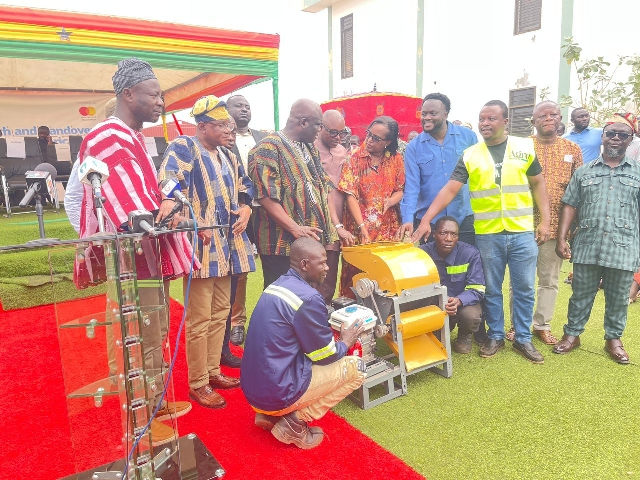
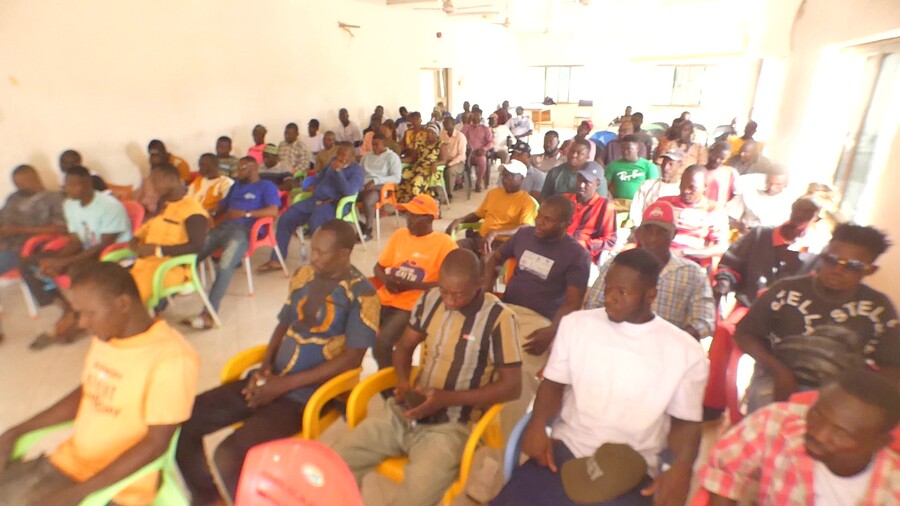
The Nabdam constituency was alive with excitement as Dr. Mark Kurt Nawaane, the Member of Parliament, inaugurated 19 newly formed cooperative farmers groups. The event marked a fresh chapter for local agriculture, promising unity, resources, and a renewed sense of purpose for farmers across the district.
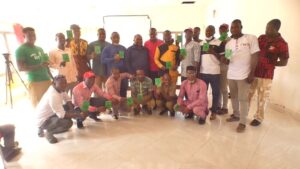
Before gathering the farmers for the main engagement, Dr. Nawaane took a significant step by facilitating the opening of a group bank account for the cooperatives. Demonstrating his commitment, he deposited GHC 50,000 as seed money into the account and further promised to support the groups with 190 bags of fertilizer, ensuring each cooperative had a solid foundation to launch their activities.
During the inauguration, Dr. Nawaane addressed the farmers with a heartfelt speech that underscored the importance of collaboration. He explained that, while he had previously assisted individual farmers, the new approach under the leadership of President John Dramani Mahama’s government emphasized group organization for greater impact.
“In the past, many small and scattered farmers’ groups made it difficult to distribute support fairly and efficiently,” Dr. Nawaane recounted. “This time, we decided to form area-based groups, neighbors working with neighbors, making it easier to share information and coordinate activities.”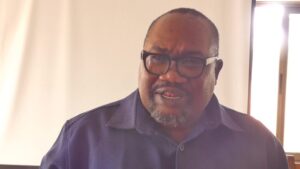
He encouraged the cooperatives to embrace this new structure, assuring them that a coordinator and temporary leaders would help guide their efforts. With the groups now formally registered, Dr. Nawaane stressed that the extent of assistance they would receive depended on their own initiative and collaboration.
“You have your seed money in the Rural Bank in Nabdam. The kind of support you get will depend on your discussions, your ideas, and your willingness to work together,” he said.
Dr. Nawaane advised the groups to hold regular meetings, register new members, and keep their operations open and inclusive. He suggested modest contributions from members to supplement the seed funding and reminded everyone that lasting progress is built on collective effort rather than waiting for large, infrequent handouts.
“Always remember that God helps those who help themselves,” he reminded the crowd.
The MP also touched on the economic realities of the district, citing a study by the Ghana Statistical Service that placed Nabdam at the highest poverty level in the region with a 68.6% multidimensional poverty index. “Should we continue to sit down and say that because we are poor, we do nothing? No. That is why I’ve identified farming as the area where, if we work hard and support each other, we can change our destiny.”
Dr. Nawaane concluded by encouraging the groups to bring forward their concerns and ideas, assuring them of his ongoing support and the potential for greater assistance from banks and government programs. He praised the achievements of local farmers, noting that some were already among the best in the district, and expressed confidence that with unity and determination, Nabdam’s farmers could transform their fortunes.
With the official inauguration complete and resources in place, the 19 cooperative groups are set to begin a new journey, one fueled by teamwork, practical support, and the shared vision of a more prosperous farming community.
During the inauguration of the new farmers’ cooperative groups in the Nabdam District, the District Director of Agriculture, Mr. Rasheed Imoro, delivered an insightful address that highlighted both the challenges and the opportunities facing local agriculture. Drawing from recent surveys and development strategies, Mr. Imoro emphasized that poverty and hunger in the district were not just matters of food scarcity, but also linked to how communities approached development.
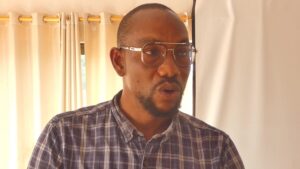
He urged everyone to adopt a “SWORD analysis,” to examine their strengths and weaknesses and build upon them. “Our strength in Nabdam is agriculture,” Mr. Imoro noted, “yet, despite the majority of our people being involved in farming, we remain poor. The reason is simple: we have been working as individuals, each in our own corner.”
Mr. Imoro praised Dr. Mark Kurt Nawaane, the Member of Parliament, for his hands-on efforts to support farmers. He shared that Dr. Nawaane’s willingness to make his tractor available for plowing, often at great personal effort, was a rare and commendable gesture in the region. “Our soil here is hard, and without tractors, it’s nearly impossible to prepare the land after the rains. The MP’s support means a lot to our community,” he said.
Turning to the future, Mr. Imoro explained that government policies, such as the Feed Ghana program introduced by President John Dramani Mahama, were designed to transform agriculture with subsidies, mechanization, and new markets. However, he stressed that these benefits were most accessible to those organized in groups. “If you are in a group, you can access loans, set market prices for your produce, and have your voice heard, not just in Nabdam, but across the whole country,” he explained.
He outlined how small farmer-based organizations (FBOs) could combine to form even stronger cooperatives, echoing Dr. Nawaane’s vision for area-based groups. “A group should have a minimum of 15 and a maximum of 40 members,” he advised, “with clear leadership and an active, workable bank account.”
Mr. Imoro applauded Dr. Nawaane for providing seed money to register the cooperatives and open their accounts. He explained the importance of these accounts, not just for receiving funds, but also to show potential supporters, such as those who might drill boreholes for dry-season farming, that the group is financially responsible and sustainable.
He encouraged members to make regular contributions, even as little as five cedis a week, to grow their collective resources. “I’ve seen groups elsewhere with as much as GHC 200,000 in their accounts. This is the way forward,” he said.
Concluding his remarks, Mr. Imoro expressed gratitude for the focused efforts of both the MP and the district executive on uplifting agriculture in Nabdam. “I am 100% in support of these initiatives,” he declared. “My doors are always open. If you need anything related to agriculture, come to our office. We are here to help.”
With his practical advice and endorsement, Mr. Imoro’s speech reinforced the message that cooperation and collective action are the keys to transforming the fortunes of Nabdam’s farmers.
Source: Apexnewsgh.com
