

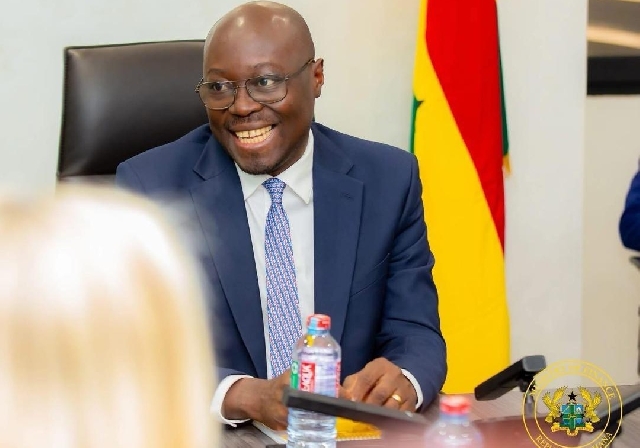
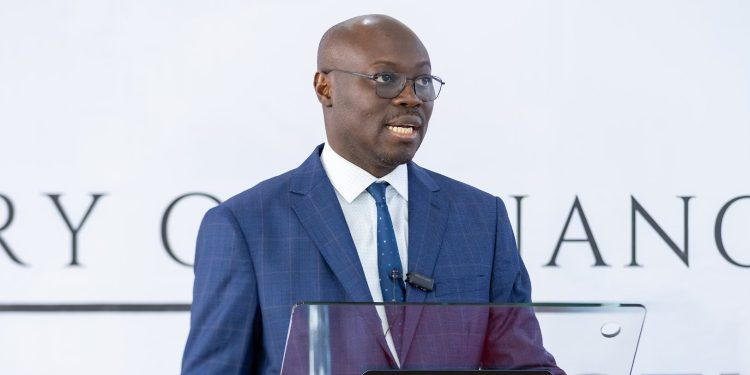
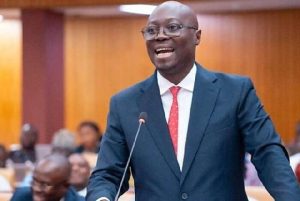
Finance Minister Dr. Cassiel Ato Forson has credited Ghana’s remarkable economic resilience in 2026 to proactive government measures implemented just a year prior. Speaking to te media, November 13, Dr. Forson recounted how the fiscal and external buffers built in 2025 became the nation’s shield against a series of daunting shocks.
The story of Ghana’s economic stability this year reads almost like a tale of survival against the odds. Dr. Forson described four major events that could have easily derailed the economy: a sharp drop in global cocoa prices, devastating flooding in June, a crippling fire at the Akosombo switchyard, and global disruptions sparked by tensions around the Strait of Hormuz.
The minister revealed that the steep decline in international cocoa prices was especially alarming. “Under normal circumstances, this alone could have triggered an economic crisis,” he said. But thanks to the government’s forward-planning, the blow was cushioned.
Then came the June floods, sweeping across parts of the country and forcing the government to swiftly mobilize emergency relief and reconstruction funds. “The demands for unplanned spending could have caused fiscal instability,” Dr. Forson noted, “but the buffers we put in place helped us manage without derailing our budget.”
No sooner had the floodwaters receded than disaster struck the Akosombo switchyard. The resulting loss of over 1,020 megawatts of electricity generation capacity was a major test of Ghana’s energy resilience, and its financial agility. Yet again, the buffers did their work, helping the government respond without panic.
Finally, Dr. Forson pointed to the ripple effects of turmoil around the Strait of Hormuz, which disrupted global economic activity and pressured economies worldwide. “Many economies in Europe, America, Asia, and Africa have felt the strain,” he said. “But because of the steps we took in 2025, Ghana has navigated these storms far better than most.”
Reflecting on the year, Dr. Forson concluded, “Obviously, because of the measures we put in place in 2025, we built both external and fiscal buffers. These buffers are necessary, and we built them in 2025. And that is why we’ve been able to go through these difficulties.”
The Finance Minister’s story is one of foresight and preparation, a reminder that the seeds of stability are often sown in times of calm, long before the storms arrive.
Source: Apexnewsgh.com