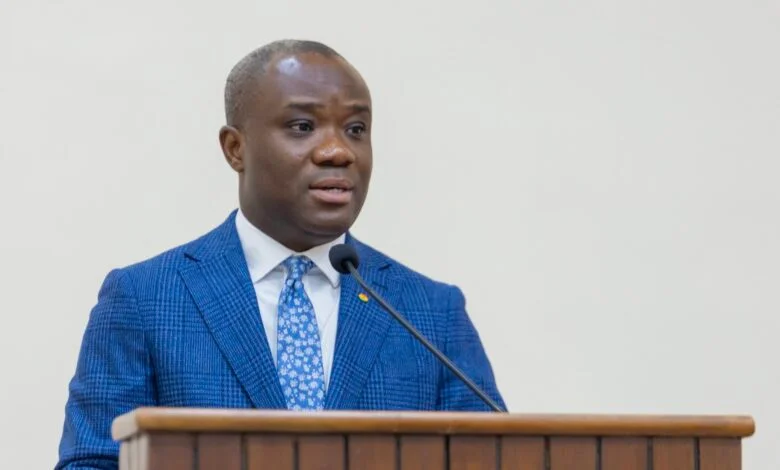
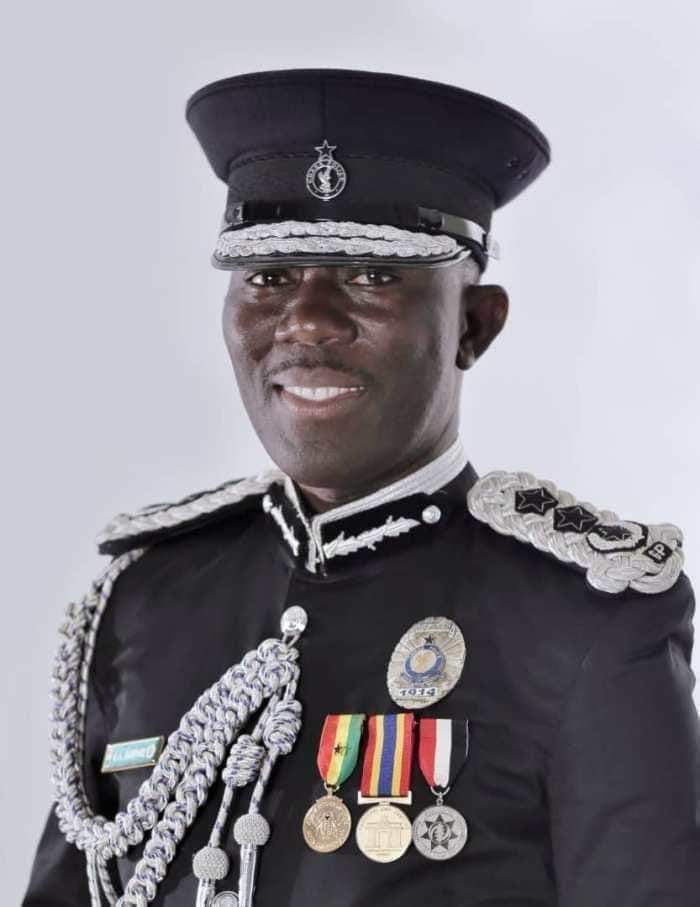
Nana Addo Dankwa Akufo-Addo the President of the Republic of Ghana has appointed Commissioner of Police (COP) Dr George Akuffo Dampare as acting Inspector-General of Police (IGP). Dr Dampare is the current Director-General in charge of Administration at the Ghana Police Service. He replaces the current IGP James Oppong-Boanuh. Profile of Dr George Akuffo Dampare: Dr George Akuffo Dampare is the youngest Acting Inspector–General of Police (IGP) to be appointed in the fourth Republic and the eighth youngest since Ghana gained independence. Prior to this appointment, he was the most senior police officer after the just retired IGP. Dr Dampare joined the Ghana Police Service (GPS) as a Constable in December 1990 at age 20 and rose through the ranks to become Commissioner of Police (COP) 24 years later at age 44 in 2014, the rank he held until his appointment. In 1991, on completion of his recruit training, Dr Dampare was adjudged the overall Best Recruit at the National Police Training School and won all awards except the award for the ‘Best Marksman’. Again in 1996, he emerged the overall Best Cadet for the 32nd Cadet Officers’ Course at the Ghana Police Academy (formerly, Police College) and won all awards, including Excellence in Professional Police Subjects and Excellence in Academic Subjects. During his over thirty-year career as a police officer, Dr Dampare has made significant contributions to policing in Ghana and beyond as enumerated below: At the leadership and management level, Dampare has had the rare privilege of serving as the Head (Director-General) of almost every major department, giving him greater insight into the administration of policing in Ghana. Specifically, Dr Dampare has been Director-General for Administration and Director-General for Welfare twice. He has also served as Director-General for MTTD, Director-General for Research & Planning, Director-General for Operations, Director-General for ICT, Director-General for Finance and Director-General for National Patrol Department (Police Visibility Department). Other leadership positions Dr Dampare previously held include Commandant of the Police Command and Staff College, Accra Regional Police Commander, Regional Commander for Railways, Ports and Harbour (now Police Marine Department), Municipal Commander for Cape-Coast and Chief Internal Auditor of the GPS. Between 2010 and 2015, under the leadership of two IGPs, Messrs. Paul Tawiah Quaye and Mohammed Ahmed Alhassan, Dampare led and coordinated the ‘National Anti-armed Robbery Reward to Informant Initiative’, which saw the arrest and prosecution of many notorious armed robbers across the country. As the Director-General for National Operations, Dr Dampare created an efficient system where fragmented units were consolidated to create effective and complete departments such as the establishment of an Anti-armed Robbery Unit (the COMBAT Unit) to aggressively fight robbery and other violent crimes. He also created the Intelligence Unit within the National Operations Department, which later informed the creation of a Police Intelligence Department at the national level. As Accra Regional Police Commander, Dampare introduced an innovative and proactive policing strategy called the “Continuous Stakeholder Engagement Programme” where all stakeholders were included and involved in policing the Region. For the first time, through this initiative, the Ghana Police Service under his leadership, visited Political Parties in their offices to engage them. As Director-General in charge of Welfare, Dr Dampare introduced an innovative social welfare scheme where he led officers from the Department to visit the homes of scores of sick and bedridden police officers across the country, and also introduced strategic medical interventions to facilitate their wellness. Still at Welfare, Dampare initiated a process at Dodowa and Kasoa to reclaim lands owned and paid for by police officers. The matter had become a national security threat as many officers were angry at the failure of the leadership of the police administration to intervene in the situation which had lasted for close to a decade. In 2013, under the leadership of the then Inspector-General of Police (IGP), Mr Mohammed Ahmed Alhassan, Dr Dampare led a team of officers, working day and night, to restructure the Armoured Car Squadron (ACS) Unit into the Formed Police Unit (FPU) within a record time of ten (10) weeks. This task had remained impossible for over fifteen years. The FPU has now become one of the police units undertaking internal police operations and international peacekeeping missions under the United Nations and African Union. As the Director-General of the National Patrol Department (Police Visibility Department) and under the leadership of the then IGP, Mohammed Ahmed Alhassan, Dampare supervised the implementation of the novel “Police Visibility” programme which saw the presence of police personnel at most intersections and communities in Ghana. Again, during the implementation of the vision of the then IGP, Mohammed Ahmed Alhassan, for the creation of the Police Service Command and Staff College at Winneba and the Police Service Public Safety Training School at Pwalugu, Dr Dampare was the leader of the technical teams that ensured the full operationalization of these two specialist training institutions. Dampare is credited with the idea that led to the establishment of the office of the Armourer-General which serves as the central point for accounting for arms and ammunitions within the Ghana Police Service as well as the establishment of the Service Enquiry Monitoring Unit (SEMU) with the responsibility of managing the GPS disciplinary system. As Coordinator of the National Inter-Ministerial Task Force for the 2007 Ghana Floods which was under the overall leadership of Dr Mrs Mary Chinnery-Hesse (then Chief Advisor to H.E. President J.A. Kufuor), Dr Dampare led a team, within a seven-month period, to develop and implement a National Disaster Management Model, which brought all United Nations Agencies, Red Cross and Civil Society organisations, among others, together, to successfully manage the disaster. As Director-General for Finance, Dampare led a Police Technical Implementation Team to work with the Fair Wages and Salaries Commission, to migrate the Police Service onto the Single Spine Salary Structure as the first institution in the country to successfully complete the migration. Still as Director-General for Finance, Dampare also introduced the payment of recruits’ allowances through the bank by getting them bank accounts as