


Over-Aged GNPC Boss Dragged To Court.. Months After Domelevo’s Removal From Office For Attaining Compulsory Retirement Age

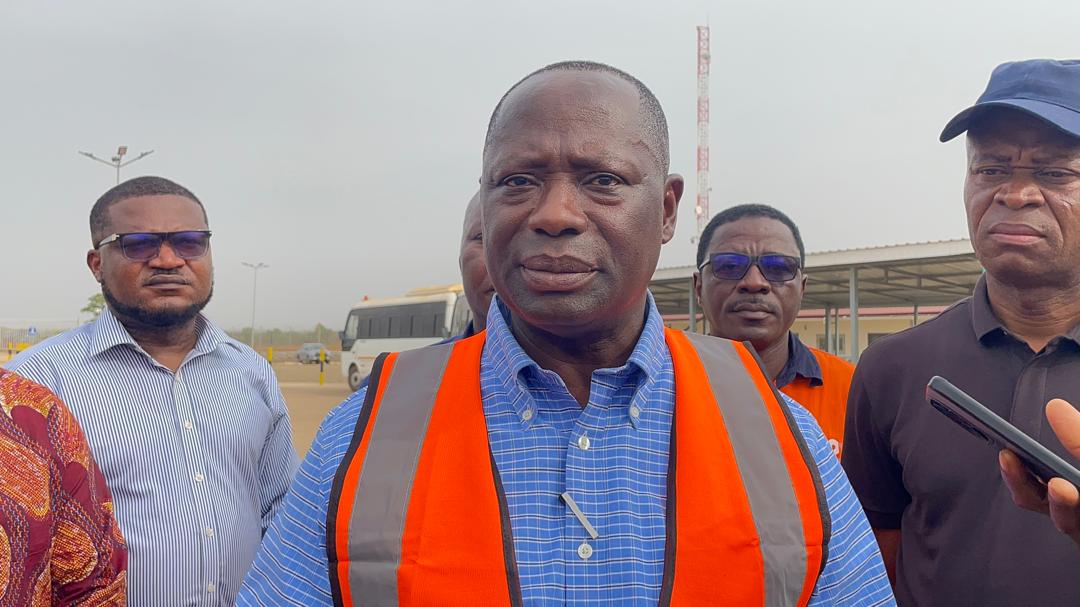
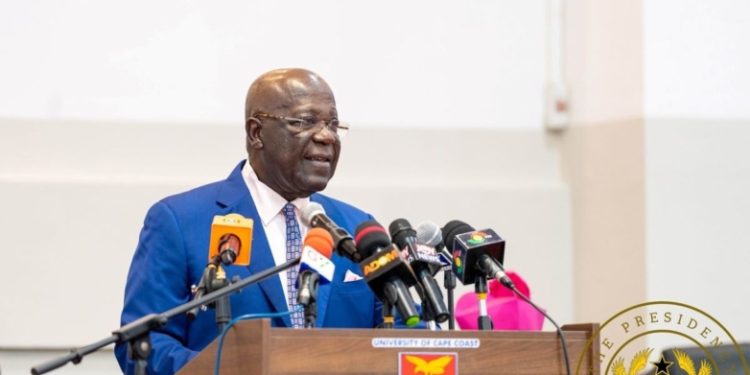
The Herald, has dragged Dr. Kofi Koduah Sarpong of the Ghana National Petroleum Corporation (GNPC) to High Court, over his continuous stay in office as the Chief Executive Officer (CEO) of the state-owned institution. Dr. Sarpong had attained the compulsory retirement age of 60 at the time of his appointment, and was aged 63 years. He is currently 67 years, but still remains at post. The lawsuit comes months after the President, Nana Akufo-Addo, on the same age grounds, sent the Auditor General, Daniel Yao Domelevo, packing out of office as the Auditor General because he had attained the compulsory retirement age for public service workers; 60 years. The President’s Executive Secretary, Nana Bediatuo Asante at the time, had in a statement on Mr Domelevo said “the attention of the President of the Republic has been drawn to records and documents made available to the Office by the Audit Service, that indicate that your date of birth is 1 June 1960 and that in accordance with article 199(1) of the Constitution, your date of retirement as Auditor General was 1 June 2020.” “Based on this information, the President is of the view that you have formally left office. Mr Johnson Akuamoa-Asiedu will continue to act as Auditor-General until the President appoints a substantive Auditor General,” part of the statement read, however, the Presidency is not applying the same principle in relations to Dr. Sarpong’s age. Interestingly, the GNPC boss, Dr. Sarpong, is not the only appointee of President Akufo-Addo who is over aged. Maxwell Kofi Jumah, a former NPP Mayor of Kumasi, former Member of Parliament for the Asokwa Constituency in the Ashanti Region, who is the Managing Director of GIHOC Distilleries Company Limited, is currently 71 years, yet still at post just like the GNPC boss. The writ filed in the name of the Editor of the Herald Newspaper, Larry-Alans Dogbey, names the GNPC, the Attorney General and Dr Sarpong as respective first, second and third defendants. Mr Dogbey, in the suit filed on his behalf by Lawyer Eric Asuman–Adu argues that the laws of the country were breached in the latter’s appointment as GNPC CEO as had attained the compulsory retirement age of 60 at the time of his appointment and was aged 63 years. He further argues that Dr Sarpong’s appointment as caretaker CEO of GNPC by President Akufo-Addo on January 19, 2017, was in contravention of Article 80 of the Constitution of Ghana and Section 10 (6) of the GNPC Act 1983 (PNDCL 64) because it was done by the President through the then Minister Designate for Energy, Boakye Agyarko who had not yet taken office as minister. According to the plaintiff, the appointment of Dr Sarpong was from the outset, a nullity, adding that the attorney general, who is the second defendant, shirked his duty, hence the appointment of Dr Sarpong as CEO of GNPC at a time that he was 63 and now 67 years. The plaintiff is of the opinion that Dr Sarpong’s appointment at 63 and his continuous stay in office at 67, offends PNDCL 64, especially section 27 and Article 199 (1) of the 1992 Constitution and the Labour Law (Act 651). The suit said Dr Sarpong will continue to stay in office if the court does not compel the appointing authorities to terminate his appointment “Plaintiff will aver that by all intends and purposes the appointment of 3rd Defendant as C.E.O. of 1st Defendant Corporation at age 63 and his continuous stay in office at age 67 offends against (P.N.D.C.L 64) especially section 27 of the aforementioned Act, Article 199(1) of 1992 constitution and the Labour Law (Act 651),” the writ of summons states. It is Mr Dogbey’s case that Dr Sarpong will continue to stay in office if the court does not compel the appointing authorities to terminate his appointment. He is therefore seeking an order declaring the appointment of Dr Sarpong as the Chief Executive Officer on January 24, 2017, and his continuous stay in office as illegal and of no effect. He also wants an order nullifying the appointment of Dr Sarpong as the Chief Executive Officer of GNPC. Additionally, he wants perpetual injunctions restraining the GNPC and the Attorney General from renewing Dr Sarpong’s contract of employment for another five-year term and an injunction restraining Dr Sarpong from holding himself as the CEO of GNPC. —theherald Please contact Apexnewsgh.com on email apexnewsgh@gmail.com for your credible news publications. Contact: 05555568093
I cannot foresee unutilised gas in Ghana, says Dr Sarpong
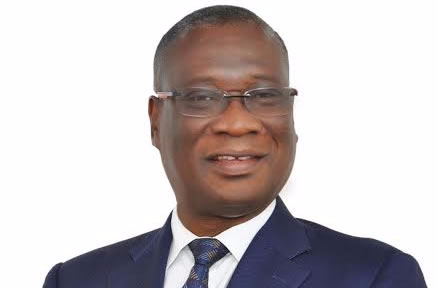
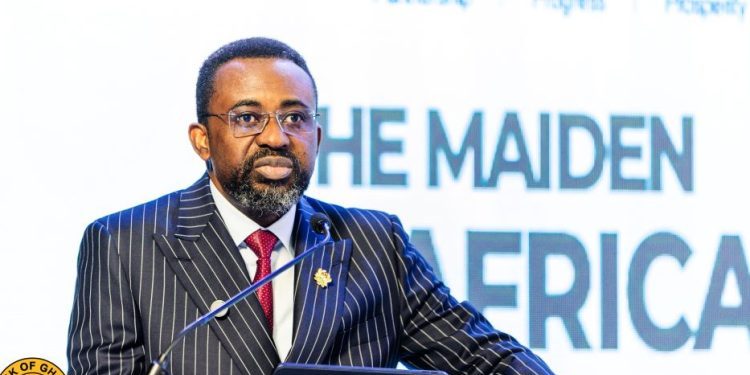
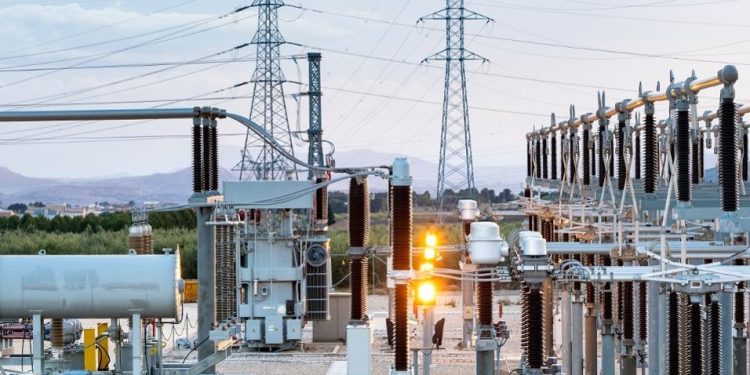
Dr Kofi Koduah Sarpong, chief executive officer of the Ghana National Petroleum Corporation (GNPC) says if all stakeholders in the energy sector coordinated well on the use of gas, he does not foresee unutilized gas in the country. Speaking on Energy 101 on Asaase Radio with Emmanuel Aboagye-Wiafe, Dr Sarpong said, “I cannot foresee unutilized gas. You see I have defended this, if we coordinate very well; our sector Ministry will coordinate with VRA, the Energy Commission, GNPC and other users for this product, I cannot foresee any unutilized gas.” He was speaking on the need for the country to have the LNG project which he said was going to be very beneficial in the coming years. Dr Sarpong added, “I foresee a gas deficit in the next two, three years and the only way to fill it, is this LNG project which we have scaled it up that we can process 600 million standard cubic feet.” Some industry players have criticised the decision by the Ghana National Petroleum Corporation (GNPC) to partner with Shell to build a liquefied natural gas (LNG) regasification facility in the country. Misplaced and Wasteful The Institute for Energy Security (IES) in a recent statement said the LNG facility is a misplaced priority. “With ample proof that there is sufficient supply from domestic sources to meet the country’s gas needs, the contracting of a regasification facility at this moment is a misplaced priority and wasteful. “It is wasteful in the sense that it is going to worsen the excess supply situation, resulting in more cost to the country, in the face of the take-or-pay clause embedded in the liquefied natural gas (LNG) import contract,” the IES said. IES added that “the decision to build an LNG regasification facility in the country for purposes of importation is hasty and needless. There is absolutely no linkage to the short-term and long-term needs of the country. The decision to procure the facility at this moment will only contribute to the excesses and come at a cost to the country. The country is better off prioritizing investment into gas liquefaction than regasification. “Presently, the issue of supply of gas has well been addressed by domestic production. What is left to be solved in the demand-supply equation is the demand factor,” it said. But Dr Sarpong said, “people say there will be too much gas on the market. I can tell you that over the last three years, gas off-take from our fold increased significantly. In 2019, it was about 211 million standard cubic feet per day usage. Last year, it was about 296 million standard cubic feet per day on average…if we have enough gas, then we won’t bring gas from Nigeria. “We’ve been bringing gas from Nigeria via the West African Gas Pipeline into the country to be used by VRA for power generation and that should tell you that we don’t have enough gas locally. Maybe people are saying that, but if you have the Nigerian source why are you bringing in this one?” Fuel security Dr Sarpong said, “Having the LNG in the fuel mix is an advantage, for example sometimes the line from Nigeria is blocked or mutilated and there cannot be any flow from Nigeria to Ghana so supply is cut. Even our own fields; greater part of last year TEN fields was virtually down, Jubilee will produce but sometimes up to a certain level their plant trips… so if you have LNG coming in then when these things happen there will be another source of fuel supply.” He said the LNG product is cheaper and gives the country enough fuel security. “As I speak today, it’s [the LNG] cheaper than Sankofa and it’s cheaper than the gas coming from Nigeria. The only one which is cheaper is Jubilee and TEN which cannot give you the volumes that you need because of the constraints of production as well as constraints on the Ghana Gas plant.” Dr Sarpong added, “But even that is cheaper because the volumes we are pumping now together with what we call substitution agreement if we can’t get from Jubilee we can take from TEN at no price then it makes it cheaper for everybody. When that is finished there will be a price for those ones. “So in a way, we think that this LNG issue is an important thing. It’s going to give us fuel security and it’s going to be cheaper. People who are honest will do the analysis and say it as it is. We are producing from Sankofa we all know it’s expensive. You can’t do otherwise. It’s very expensive,” he added. The LNG facility The Tema LNG terminal is made up of a dedicated floating regasification unit (FRU), built by Jiangnan Shipbuilding, and a separate floating LNG storage (FSU). It can receive, re-gasify, store, and deliver around 1.7 million tonnes of LNG a year, about 30% of Ghana’s general capacity. The long-term supply deal between Royal Dutch Shell and the Ghana National Petroleum Corporation will see Spanish LNG terminal operator Reganosa, run and maintain the terminal and the associated 6-km gas pipeline for 12 years and then transfer operatorship to the Ghana National Petroleum Corporation. The Tema LNG, backed by Helios Investment Partners and Africa Infrastructure Investment Managers (AIIM), is the first offshore LNG receiving terminal in sub-Saharan Africa. The terminal will employ the innovative combination of the FRU twinned with an existing LNG carrier to receive, store and regasify LNG. This system provides Ghana with all the functionality of a large-scale FRU-terminal, but with added flexibility, allowing it to respond to rapidly increasing domestic gas demand with a cleaner and more affordable energy solution. The Tema LNG terminal aims to meet Ghana’s growing energy demand through an innovative yet cost-efficient, reliable supply. Asaase Please contact Apexnewsgh.com on email apexnewsgh@gmail.com for your credible news publications. Contact: 0555568093