









Tobacco’s Silent Threat: FDA Discusses Public Health, Policy, and Cultural Change
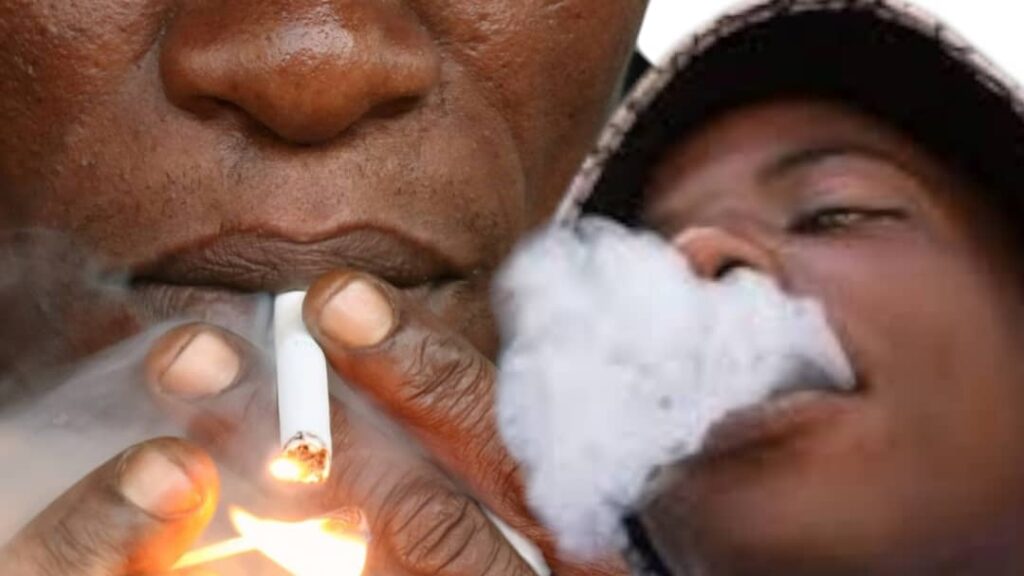
In an era where lifestyle choices are increasingly scrutinized for their long-term health implications, the conversation surrounding tobacco use remains one of the most critical public health dialogues globally. In an exclusive and illuminating engagement, Mr. Abel Ndego, the Upper East Regional Director of Ghana’s Food and Drugs Authority (FDA), provided a stark, evidence-based dissection of the tobacco epidemic. This dialogue, far more than a simple interview, serves as a documentary-grade testament for those still ignorant of the profound dangers of tobacco and the robust legal framework designed to combat its scourge. The session, spearheaded by Editor-in-Chief Mr. Ngamegbulam Chidozie Stephen, transcended basic awareness, delving into the science of addiction, the specifics of Ghana’s legislation, and the nuanced battle against deeply entrenched cultural practices. Mr. Ndego framed the discussion with sobering global statistics that underscore the urgency of the FDA’s mission. “Over 8 million people die from tobacco use and second-hand smoke globally each year,” he stated, affirming its position as the world’s leading preventable cause of death. This grim tally includes approximately 7 million deaths from direct use and 1.3 million non-smokers succumbing to second-hand smoke exposure, with a disproportionate impact on low- and middle-income nations. Translated into a daily horror, tobacco claims nearly 22,000 lives every day. These figures are not abstract; they represent a relentless public health emergency that national authorities like the FDA are mandated to address through education, regulation, and enforcement. A central thrust of the engagement was dispelling myths and revealing the hidden equivalencies in tobacco consumption. With emphatic clarity, Mr. Ndego highlighted one of the most alarming facts: “Going through one hour session of shisha is equivalent to smoking between 100 and 200 sticks of cigarettes.” This revelation often stuns casual users who perceive shisha as a social, filtered, and less harmful alternative. The reality is that a single shisha session delivers a massive dose of toxicants, debunking its benign reputation. The chemical cocktail within tobacco smoke, Mr. Ndego explained, is a brew of over 3,000 harmful substances. “Formaldehyde, what they used to make formalin for the embalming of dead bodies, is found in there. We have tar… a lot of carcinogens… heavy metals like lead and cadmium.” These components are directly linked to cancers, cardiovascular diseases, respiratory illnesses, and a host of other dire health consequences. The addictive engine driving this consumption is nicotine, a substance that creates a physiological “hunger,” compelling repeated use and deepening dependency. “There is proof also,” Mr. Ndego added, “that people who have smoked continuously for more than five years are most liable to lose 10 years of their life.” Beyond education, the FDA’s work is firmly rooted in legislative action. A cornerstone of Ghana’s strategy is the ban on public smoking, a law whose rationale extends beyond the individual smoker. “It’s a crime to smoke in public,” Mr. Ndego asserted. The science of second-hand smoke is unequivocal: “All the health risks of the smoker, the secondhand smoker is liable to them as well. And so why would I suffer for somebody’s enjoyment?” The definition of a public space is intentionally broad. “Even your private vehicle, as long as you pick a passenger, ceases to be private… You cannot smoke there.” Enforcement, he clarified, is a shared responsibility. “The beauty of this is that… you can even effect citizen arrests. If somebody is smoking in your environment, you can report the person to the police.” The FDA has complemented this law with extensive stakeholder engagements, distributing “No Smoking” stickers and educating groups like the Ghana Private Road Transport Union (GPRTU) to ensure terminals and vehicles are compliant. Perhaps less known is the illegality of a common market practice. “It is a crime to sell single sticks of cigarettes to people,” Mr. Ndego declared. This prohibition, under Section 6 of the Public Health Act, is fundamentally about informed consent. A cigarette pack carries mandated pictorial health warnings and graphic images of diseased organs, which communicate the product’s risks. A single stick offers no such warning. “The space on a single stick is so small… it must be sold in the pack so that the health warning can really send a message.” Selling illicit, unregistered cigarettes that lack these warnings altogether is an even more severe contravention. One of the most sensitive aspects of the FDA’s work involves engaging with cultural institutions. In many regions, including the Upper East, tobacco is woven into traditional rites. “If you want to marry, they will tell you that you have to present tobacco… greeting your in-laws,” Mr. Ndego noted. The FDA, in a respectful and collaborative manner, has initiated dialogues with the Regional House of Chiefs. “We have been engaging… to see how together they can substitute the tobacco for something else,” such as a symbolic monetary representation. While acknowledging that altering longstanding traditions “takes time,” Mr. Ndego reported a receptive audience attuned to the health and developmental arguments. Simultaneously, the authority is battling the tobacco industry’s adaptation through technology. The market is now flooded with sleek, discreet nicotine delivery devices. “We have e-cigars… some come in the form of pens… I even saw one that was like a smartwatch,” Mr. Ndego described. These products, often appealing to youth, vaporize nicotine-laced liquids, leveraging technology to perpetuate addiction. The FDA remains vigilant, recognizing that regulation must evolve as quickly as the products it seeks to control. Ghana’s comprehensive approach extends to stifling the tobacco industry’s influence. “Tobacco companies are not permitted by law to sponsor any event in Ghana. They cannot even donate money to save a life… They cannot brand any products,” Mr. Ndego outlined. This near-total ban on advertising, promotion, and sponsorship is a critical World Health Organization-backed measure to denormalize tobacco use and prevent targeting the youth. Furthermore, the state employs fiscal policy as a deterrent. Significant fees for product registration, “you would not pay less than, I think, ten to fifteen thousand dollars” per brand, combined with heavy taxes, aim to limit accessibility and generate revenue for public
I want to reiterate my determination that we should manufacture vaccines here in Ghana–Prez Akufo-Addo

President Nana Addo Dankwa Akufo-Addo has reiterated his determination for a vaccine to be manufacture in Ghana In his 24th COVID-19 address on Sunday, 28 February 2021, the President said: “I want to reiterate my determination that we should manufacture vaccines here in Ghana”. “To this end, a Committee has been established under the Chairmanship of the former Minister for Environment, Science, Technology and Innovation, the world-renowned scientist, Professor Kwabena Frimpong-Boateng, which is formulating a concrete plan of action towards vaccine development and manufacturing”. President further pointed, that the Food and Drugs Authority (FDA) is also in the process of certifying more vaccines for use. Read the President’s full statement below: Address To The Nation By The President Of The Republic, Nana Addo Dankwa Akufo-Addo, On Updates To Ghana’s Enhanced Response To The Coronavirus Pandemic, On Sunday, 28th February 2021. Fellow Ghanaians, Good evening, and thank you for welcoming me into your homes once again. You are doing so on one of the sacred days of our nation, 28th February, when the 1948 Christiansborg Crossroads shooting occurred seventy-three (73) years ago, which led to the martyrdoms of Sergeant Adjetey, Corporal Attipoe, and Private Odartey Lamptey, martyrdoms that ignited the nationalist movement, and led us to the freedom we enjoy today. Let us observe a moment’s silence in honour of their memory, and the memory of all the faithful departed patriots who helped create our nation. May their souls rest in perfect peace. Fellow Ghanaians, since I last spoke to you, a month ago, a significant development in our fight against COVID-19 has taken place in our country. In the course of this week, Wednesday, 24th February, to be precise, we took another concrete step in our quest to rid our nation of COVID-19, with the arrival in the country of six hundred thousand (600,000) doses of the AstraZeneca vaccine, the first consignment of many more to come. I indicated in Update No. 23 that the earliest vaccine would be in the country by March. However, by dint of hard work and sheer determination, the government was able to secure the first batch of vaccine doses in February, a month ahead of schedule. We are the first country in the world to be recipients of vaccines from the COVAX Facility, and I want to express my appreciation to members of the COVID-19 Taskforce, which I chair, and to officials of the Ministry of Health and the Ghana Health Service for this commendable feat. The vaccine deployment plan we submitted to WHO, which unlocked this consignment, was well-received. They have done a yeoman’s job, and our nation is indebted to them. We are grateful, also, naturally, to the contributors and managers of the COVAX Facility. The AstraZeneca vaccine is one of two (2) vaccines that have, so far, been approved and declared as safe-for-use by the Food and Drugs Authority (FDA). With the process of certification currently ongoing for the other vaccines, the range of vaccines available to us will increase. This will facilitate our ability to reach our target of vaccinating twenty million Ghanaians by the end of this year. Through the National Vaccine Deployment Plan, our population has been segmented into four groups, and this will determine which section of the population gets vaccinated at a particular time. Group 1 is categorised as “persons most at risk and frontline State officials”. It includes healthcare workers, frontline security personnel, persons with underlying medical conditions, persons sixty (60) years and above, and frontline members of the Executive, Legislature and Judiciary. Group 2 is made up of other essential service providers and the rest of the security agencies. It includes water and electricity supply services, teachers and students, supply and distribution of fuels, farmers and food value chain, telecommunications services, air traffic and civil aviation control services, meteorological services, air transport services, waste management services, media, public and private commercial transport services, the Police Service, Armed Forces, Prisons Service, Immigration Service, National Fire Service, CEPS Division of the Ghana Revenue Authority, and other members of the Executive, Judiciary, and Legislature. Group 3 consists of the rest of the general public that is all persons over eighteen (18) years, except for pregnant women. The final group, that is Group 4, will include pregnant mothers and persons under the age of eighteen (18), and they will be vaccinated when an appropriate vaccine, hopefully, is found, or when enough safety data on the present vaccines is available. Special arrangements will be made for persons with disabilities who fall within these groups. So, from Tuesday, 2nd March, to Monday, 15th March 2021, the Ghana Health Service will begin deployment of the six hundred thousand (600,000) AstraZeneca vaccines, with persons in Groups 1 and 2 being the target of this first vaccination campaign. It will be conducted in forty-three (43) districts, which are the epicentres of the pandemic in the country. They are twenty-five (25) in Greater Accra, sixteen (16) in Ashanti, and two (2) in the Central Region. The Ghana Health Service, as from tomorrow, will give precise details. Whilst we are, initially, concentrating on the forty-three (43) epicentre-districts, preparations are being made for the vaccination of twenty million Ghanaians through the deployment of some twelve thousand and seventy-one (12,471) vaccinators, thirty-seven thousand, four hundred and thirteen (37,413) volunteers, and two thousand, and seventy-nine (2,079) supervisors for the entire vaccination campaign. Fellow Ghanaians, I know there are still some who continue to express doubts about the vaccine, others have expressed reservations about its efficacy, with some taking sides with conspiracy theorists who believe the vaccine has been created to wipe out the African race. This is far from the truth. Our domestic regulatory agency, FDA, one of the most reputable in Africa and in the world, has certified the safe use of the vaccine. It will not do so if it had any reservations about the safety of the vaccine, and I have gone on record as saying that no vaccine will be deployed in the
Taking the vaccine will not alter your DNA—Prez Akufo Addo

President Nana Addo Dankwa Akufo-Addo has told Ghanaians that taking the vaccine will not alter your DNA. In his 24th COVID-19 address on Sunday, 28 February 2021, he said “Taking the vaccine will not alter your DNA, it will not embed a tracking device in your body, neither will it cause infertility in women or in men”. Read the President’s full statement below: Address To The Nation By The President Of The Republic, Nana Addo Dankwa Akufo-Addo, On Updates To Ghana’s Enhanced Response To The Coronavirus Pandemic, On Sunday, 28th February 2021. Fellow Ghanaians, Good evening, and thank you for welcoming me into your homes once again. You are doing so on one of the sacred days of our nation, 28th February, when the 1948 Christiansborg Crossroads shooting occurred seventy-three (73) years ago, which led to the martyrdoms of Sergeant Adjetey, Corporal Attipoe, and Private Odartey Lamptey, martyrdoms that ignited the nationalist movement, and led us to the freedom we enjoy today. Let us observe a moment’s silence in honour of their memory, and the memory of all the faithful departed patriots who helped create our nation. May their souls rest in perfect peace. Fellow Ghanaians, since I last spoke to you, a month ago, a significant development in our fight against COVID-19 has taken place in our country. In the course of this week, Wednesday, 24th February, to be precise, we took another concrete step in our quest to rid our nation of COVID-19, with the arrival in the country of six hundred thousand (600,000) doses of the AstraZeneca vaccine, the first consignment of many more to come. I indicated in Update No. 23 that the earliest vaccine would be in the country by March. However, by dint of hard work and sheer determination, the government was able to secure the first batch of vaccine doses in February, a month ahead of schedule. We are the first country in the world to be recipients of vaccines from the COVAX Facility, and I want to express my appreciation to members of the COVID-19 Taskforce, which I chair, and to officials of the Ministry of Health and the Ghana Health Service for this commendable feat. The vaccine deployment plan we submitted to WHO, which unlocked this consignment, was well-received. They have done a yeoman’s job, and our nation is indebted to them. We are grateful, also, naturally, to the contributors and managers of the COVAX Facility. The AstraZeneca vaccine is one of two (2) vaccines that have, so far, been approved and declared as safe-for-use by the Food and Drugs Authority (FDA). With the process of certification currently ongoing for the other vaccines, the range of vaccines available to us will increase. This will facilitate our ability to reach our target of vaccinating twenty million Ghanaians by the end of this year. Through the National Vaccine Deployment Plan, our population has been segmented into four groups, and this will determine which section of the population gets vaccinated at a particular time. Group 1 is categorised as “persons most at risk and frontline State officials”. It includes healthcare workers, frontline security personnel, persons with underlying medical conditions, persons sixty (60) years and above, and frontline members of the Executive, Legislature and Judiciary. Group 2 is made up of other essential service providers and the rest of the security agencies. It includes water and electricity supply services, teachers and students, supply and distribution of fuels, farmers and food value chain, telecommunications services, air traffic and civil aviation control services, meteorological services, air transport services, waste management services, media, public and private commercial transport services, the Police Service, Armed Forces, Prisons Service, Immigration Service, National Fire Service, CEPS Division of the Ghana Revenue Authority, and other members of the Executive, Judiciary, and Legislature. Group 3 consists of the rest of the general public that is all persons over eighteen (18) years, except for pregnant women. The final group, that is Group 4, will include pregnant mothers and persons under the age of eighteen (18), and they will be vaccinated when an appropriate vaccine, hopefully, is found, or when enough safety data on the present vaccines is available. Special arrangements will be made for persons with disabilities who fall within these groups. So, from Tuesday, 2nd March, to Monday, 15th March 2021, the Ghana Health Service will begin deployment of the six hundred thousand (600,000) AstraZeneca vaccines, with persons in Groups 1 and 2 being the target of this first vaccination campaign. It will be conducted in forty-three (43) districts, which are the epicentres of the pandemic in the country. They are twenty-five (25) in Greater Accra, sixteen (16) in Ashanti, and two (2) in the Central Region. The Ghana Health Service, as from tomorrow, will give precise details. Whilst we are, initially, concentrating on the forty-three (43) epicentre-districts, preparations are being made for the vaccination of twenty million Ghanaians through the deployment of some twelve thousand and seventy-one (12,471) vaccinators, thirty-seven thousand, four hundred and thirteen (37,413) volunteers, and two thousand, and seventy-nine (2,079) supervisors for the entire vaccination campaign. Fellow Ghanaians, I know there are still some who continue to express doubts about the vaccine, others have expressed reservations about its efficacy, with some taking sides with conspiracy theorists who believe the vaccine has been created to wipe out the African race. This is far from the truth. Our domestic regulatory agency, FDA, one of the most reputable in Africa and in the world, has certified the safe use of the vaccine. It will not do so if it had any reservations about the safety of the vaccine, and I have gone on record as saying that no vaccine will be deployed in the country for use without the express certification of the FDA. Taking the vaccine will not alter your DNA, it will not embed a tracking device in your body, neither will it cause infertility in women or in men. As your President, I want to assure you that the
GHS will begin deployment of the six hundred thousand (600,000) AstraZeneca vaccines—Prez Akufo Addo

President Nana Addo Dankwa Akufo-Addo has said, from Tuesday, 2nd March, to Monday, 15th March 2021, the Ghana Health Service will begin deployment of the six hundred thousand (600,000) AstraZeneca vaccines, with persons in Groups 1 and 2 being the target of this first vaccination campaign. In his 24th COVID-19 address on Sunday, 28 February 2021, the President said: “Ghana Health Service will begin deployment of the six hundred thousand (600,000) AstraZeneca vaccines, with persons in Groups 1 and 2 being the target of this first vaccination campaign”. Read the President’s full statement below: Address To The Nation By The President Of The Republic, Nana Addo Dankwa Akufo-Addo, On Updates To Ghana’s Enhanced Response To The Coronavirus Pandemic, On Sunday, 28th February 2021. Fellow Ghanaians, Good evening, and thank you for welcoming me into your homes once again. You are doing so on one of the sacred days of our nation, 28th February, when the 1948 Christiansborg Crossroads shooting occurred seventy-three (73) years ago, which led to the martyrdoms of Sergeant Adjetey, Corporal Attipoe, and Private Odartey Lamptey, martyrdoms that ignited the nationalist movement, and led us to the freedom we enjoy today. Let us observe a moment’s silence in honour of their memory, and the memory of all the faithful departed patriots who helped create our nation. May their souls rest in perfect peace. Fellow Ghanaians, since I last spoke to you, a month ago, a significant development in our fight against COVID-19 has taken place in our country. In the course of this week, Wednesday, 24th February, to be precise, we took another concrete step in our quest to rid our nation of COVID-19, with the arrival in the country of six hundred thousand (600,000) doses of the AstraZeneca vaccine, the first consignment of many more to come. I indicated in Update No. 23 that the earliest vaccine would be in the country by March. However, by dint of hard work and sheer determination, the government was able to secure the first batch of vaccine doses in February, a month ahead of schedule. We are the first country in the world to be recipients of vaccines from the COVAX Facility, and I want to express my appreciation to members of the COVID-19 Taskforce, which I chair, and to officials of the Ministry of Health and the Ghana Health Service for this commendable feat. The vaccine deployment plan we submitted to WHO, which unlocked this consignment, was well-received. They have done a yeoman’s job, and our nation is indebted to them. We are grateful, also, naturally, to the contributors and managers of the COVAX Facility. The AstraZeneca vaccine is one of two (2) vaccines that have, so far, been approved and declared as safe-for-use by the Food and Drugs Authority (FDA). With the process of certification currently ongoing for the other vaccines, the range of vaccines available to us will increase. This will facilitate our ability to reach our target of vaccinating twenty million Ghanaians by the end of this year. Through the National Vaccine Deployment Plan, our population has been segmented into four groups, and this will determine which section of the population gets vaccinated at a particular time. Group 1 is categorised as “persons most at risk and frontline State officials”. It includes healthcare workers, frontline security personnel, persons with underlying medical conditions, persons sixty (60) years and above, and frontline members of the Executive, Legislature and Judiciary. Group 2 is made up of other essential service providers and the rest of the security agencies. It includes water and electricity supply services, teachers and students, supply and distribution of fuels, farmers and food value chain, telecommunications services, air traffic and civil aviation control services, meteorological services, air transport services, waste management services, media, public and private commercial transport services, the Police Service, Armed Forces, Prisons Service, Immigration Service, National Fire Service, CEPS Division of the Ghana Revenue Authority, and other members of the Executive, Judiciary, and Legislature. Group 3 consists of the rest of the general public that is all persons over eighteen (18) years, except for pregnant women. The final group, that is Group 4, will include pregnant mothers and persons under the age of eighteen (18), and they will be vaccinated when an appropriate vaccine, hopefully, is found, or when enough safety data on the present vaccines is available. Special arrangements will be made for persons with disabilities who fall within these groups. So, from Tuesday, 2nd March, to Monday, 15th March 2021, the Ghana Health Service will begin deployment of the six hundred thousand (600,000) AstraZeneca vaccines, with persons in Groups 1 and 2 being the target of this first vaccination campaign. It will be conducted in forty-three (43) districts, which are the epicentres of the pandemic in the country. They are twenty-five (25) in Greater Accra, sixteen (16) in Ashanti, and two (2) in the Central Region. The Ghana Health Service, as from tomorrow, will give precise details. Whilst we are, initially, concentrating on the forty-three (43) epicentre-districts, preparations are being made for the vaccination of twenty million Ghanaians through the deployment of some twelve thousand and seventy-one (12,471) vaccinators, thirty-seven thousand, four hundred and thirteen (37,413) volunteers, and two thousand, and seventy-nine (2,079) supervisors for the entire vaccination campaign. Fellow Ghanaians, I know there are still some who continue to express doubts about the vaccine, others have expressed reservations about its efficacy, with some taking sides with conspiracy theorists who believe the vaccine has been created to wipe out the African race. This is far from the truth. Our domestic regulatory agency, FDA, one of the most reputable in Africa and in the world, has certified the safe use of the vaccine. It will not do so if it had any reservations about the safety of the vaccine, and I have gone on record as saying that no vaccine will be deployed in the country for use without the express certification of the FDA. Taking the vaccine will not alter your
Sue wholesalers who refuse to accept returned contaminated pet foods – FDA to Retailers

The Food And Drugs Authority has urged retailers to sue Wholesalers who refuse to accept the various contaminated pet foods returned to them. Speaking Friday on Agoo FM Morning Show, Head of Food Division at the FDA Roderick Daddey Adjei said all retailers can return their goods to the Wholesalers for their monies to be refunded. “I think individuals wouldn’t be bothered much but for those who buy and sell should return the products to their wholesalers or wherever they bought the goods from…and the person must refund your money because this is a matter of force or get a lawyer to address the matter amicably. If you buy something and it is not of quality, the person must even apologize to you so it is their responsibility to refund the monies to whoever bought the product in large quantities, ” he stated. The Food and Drugs Authority (FDA) has warned the public against contaminated pet foods on the market. There has been a recall of various brands of pet foods manufactured by Midwestern Pet Foods, Indiana in the United States of America (USA) already on the Ghanaian market following the development. The recall is due to the presence of high aflatoxin contamination which has caused the death of 70 dogs and other illnesses in another 80, FDA in a statement on Thursday said. The FDA named several pet foods contaminated by the aflatoxin including Pro Pac Originals, Sportmix, Splash Pet food, Sportstrail Pet food and Nunn Better Dry Dog and Cat Foods. The pet foods being recalled have the following information on the packaging which is “Expiry dates on or before 9th July, 2022 with facility number 05 found at the end of the Date Code i.e, EXP: 03/03/05 or 03/Mar/22/05, Registration OK-PFO-0005 and Batch Numbers: 17/10/21/05/L3 and 12/11/21/05/l2”. “In view of the above, those who are in possession of these Pet foods are being directed to return the products to the importer, place of purchase or any of the FDA offices across the country” the FDA said its press statement dated February 18, 2021, signed and issued by the Chief Executive Officer of FDA, Mrs Delese A.A. Darko. The authority said: “The FDA is on a high alert market surveillance to ensure that the rest of these contaminated products are removed from the market. Meanwhile, the importer, Doggie Dog World Enterprise has been directed to recall the products from the Ghanaian market. kasapafm Please contact Apexnewsgh.com on email apexnewsgh@gmail.com for your credible news publications. Contact: +233555568093
FDA approves herbal medicine for COVID vaccine
The Ghana Food and Drugs Authority (FDA) has successfully approved a herbal medicine with name Cryptolepis sanguinolenta which is known locally as Nibima for clinical trials towards treatment of COVID-19. Below is the statement from FDA Apexnewsgh.com/Ghana/Ngamegbulam Chidozie Stephen Please contact Apexnewsgh.com on email apexnewsgh@gmail.com for your credible news publications. Contact: 0555568093.