



No deadline has been set by the IMF for the second tranche disbursement–Mins of Finance
The Ministry of Finance has disregarded claims that Ghana missed the 1 November 2023, deadline for the disbursement of the second tranche of the US$3 billion bailout package from the International Monetary Fund. A statement released by the Ministry on Friday, November 10, 2023, says that there is no timeline, for the release of the second tranche of the IMF funds. According to the statement, “No deadline has been set by the IMF for the second tranche disbursement, which is due to take place after the IMF executive board approves the first review.” The explanation came after a misleading publication on myjoyonline, which claimed that Ghana had missed a purported deadline for the disbursement of the IMF funds due to delays in external debt restructuring. The Ministry of Finance sought to set the record straight and dispel any misinformation about the disbursement timeline. Please contact Apexnewsgh.com on email apexnewsgh@gmail.com for your credible news publications. Contact: 0256336062
Gov’t ‘confident parliament’ll pass e-levy this month’ – MoF
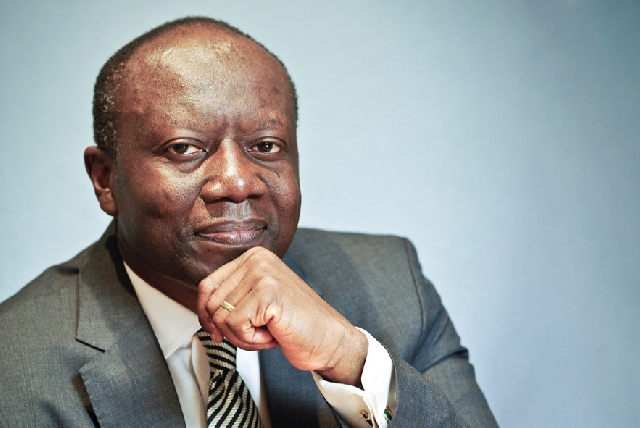
Ghana’s Ministry of Finance has said it is confident parliament will pass the controversial e-levy this month once parliament reconvenes. In a statement, the ministry said “it is most unfortunate to note that foreign investors and market participants are on edge following the impasse in parliament, in relation to the passage of the E-levy Bill”. Parliament degenerated into mayhem in the dying embers of 2021 during a debate on the controversial 1.75% levy meant to affect most electronic transactions. The free-for-all brawl, as a result of a hung parliament, has left the levy, proposed in the 2022 budget, hanging. A recent article by Bloomberg said among other things that the era of cheap money draws to an end as bondholders are no longer prepared to cut Ghana any slack. It said the West African nation’s dollar bonds have slumped 10% in 10 days, moving deeper into distressed territory as investors judge that re-financing debt in the Eurobond market won’t be an option when the Federal Reserve hikes rates and budget targets remain elusive. The extra premium demanded on Ghana’s sovereign dollar debt, according to Bloomberg, jumped on Tuesday to an average 1,145 basis points, from 683 basis points in September while its $27 billion of foreign debt had the worst start to the year among emerging markets, extending last year’s 14% loss. Reacting to the article, the Ministry of Finance said: “The market seems to now be pricing into our bonds the perceived risks of having a slim majority in parliament and the consequences thereof”. Also, it noted: “The markets also seem to be concerned that this might impact the government’s ability to successfully pass and implement some of its major revenue policy measures as presented in the 2022 Budget”. The ministry said it would like to state that “a healthy debate in a vibrant parliament is a critical part of Ghana’s growing democratic credentials and by no means should it be deemed to be a fiscal risk”. It said the “government is confident that when parliament resumes sitting this month, the E-Levy Bill, which has already been discussed and approved by the Finance Committee of Parliament, will be passed”. Furthermore, the ministry said it wishes to state that the “government is on track to meet its non-oil tax revenue target for 2021 of GHS 57.05bn (13.16% of GDP)”, adding: “The 2022 non-oil tax revenue target of GHS 80.3bn moves us to tax revenue-to -GDP of approximately 16%, which is still below our medium revenue target of 18-20% of GDP”. “We are, however, confident that we can meet the 2022 revenue target and that the E-Levy will help us accomplish this”. Meanwhile, the ministry said the Bloomberg titled: ‘Ghana Debt Moves Deeper into Distress as Investors lose Patience’ was riddled with “serious factual errors” and reliant on “wrong historical debt-to-GDP figures”, which, if not corrected, could cause investors to have the jitters. “The Bloomberg article gave wrong historical debt-to-GDP figures”, adding: “It is essential we make the correction that Ghana’s debt-to-GDP figures, a decade ago, were 39.67% and 47.80% for 2011 and 2012, respectively, and not 31.4% as stated in the Bloomberg publication”. The Ministry of Finance said: “It is most unfortunate to note that foreign investors and market participants are on edge following the impasse in parliament, in relation to the passage of the E-levy Bill”. “The market seems to now be pricing into our bonds the perceived risks of having a slim majority in parliament and the consequences thereof. The markets also seem to be concerned that this might impact the government’s ability to successfully pass and implement some of its major revenue policy measures as presented in the 2022 Budget”. Read the full statement below: On Thursday, 13th January 2022, the attention of the Ministry was drawn to a widely circulated Bloomberg article captioned – “Ghana Debt Moves Deeper into Distress as Investors lose Patience”. There are some serious factual errors in the article, which may give investors some cause for concern, if not corrected. For example, Bloomberg stated 81.5% as the end-of-year debt-to-GDP ratio. This is incorrect. Our provisional nominal debt-to-GDP, as of the end of November 2021, was 78.4%, which is the latest data available. December’s revenue collections are seasonally the largest for any year, it is unlikely that our financing requirements in December will result in us exceeding 80% debt-to-GDP by December 2021. The Bloomberg article gave wrong historical debt-to-GDP figures. It is essential we make the correction that Ghana’s debt-to-GDP figures, a decade ago, were 39.67% and 47.80% for 2011 and 2012, respectively, and not 31.4% as stated in the Bloomberg publication. Again, it is important to note that for the period prior to the COVID-19 global pandemic, Ghana experienced an average debt-to-GDP ratio of 56.4% from 2015 to 2019. In 2020, Ghana’s GDP grew by 0.4% because of the impact of the COVID-19 Pandemic on the economy. Financing of the additional COVID-19-related expenditures, in addition to revised revenue targets, due to the impact of the pandemic, led to an increase in debt-to-GDP from 62.4% in 2019 to 76.1% in 2020. The current 78.4% debt-to-GDP ratio as of the end of November 2021 indicates rather a reduction in the rate of debt accumulation (i.e. declined by half to 18% as of November 2021 from 34% in 2020). This attests to an improvement in our debt and liability management, contrary to what the article seeks to suggest. Furthermore, with the positive primary balance target for 2022 – one of the key fiscal anchors in 2022 – Ghana should see improved stability and reduction in the debt-to-GDP ratio in 2022 and through the medium term. It is most unfortunate to note that foreign investors and market participants are on edge following the impasse in parliament, in relation to the passage of the E-levy Bill. The market seems to now be pricing into our bonds the perceived risks of having a slim majority in parliament and the consequences thereof. The markets also seem to be