
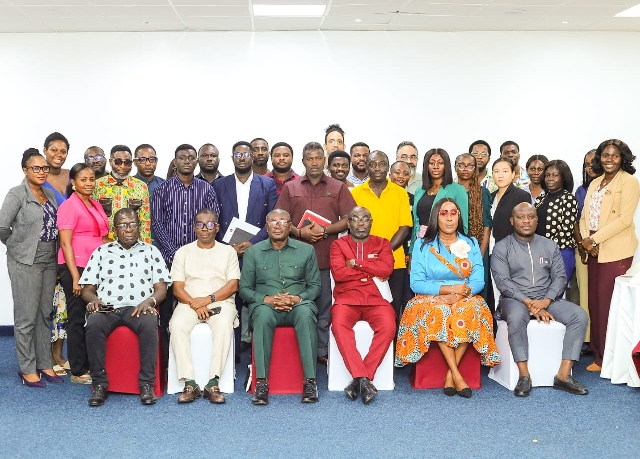


In a bid to combat corruption and promote gender justice, Transparency International Ghana (TI-Ghana) recently organized a training session for Civil Society Organizations (CSOs) and media practitioners.
The training, facilitated by Mr. Vitus Azeem and Madam Mary Awelana Addah, Executive Director of Transparency International Ghana, aimed to equip participants with the knowledge and tools necessary to identify, report, and advocate against gender-related corruption, with a particular focus on sextortion.
Corruption remains a significant impediment to Ghana’s sustainable development, democratic consolidation, and equitable social progress. Despite the establishment of anti-corruption institutions such as the Office of the Special Prosecutor (OSP) and the Commission on Human Rights and Administrative Justice (CHRAJ), the fight against corruption continues to face serious challenges. According to the 2024 Corruption Perception Index (CPI), Ghana scored 42 out of 100, indicating no real progress in the fight against corruption.
Sextortion, a unique intersection of corruption and gender-based violence, disproportionately affects women and young people. It is increasingly prevalent at the sub-national level, where service delivery and resource allocation occur, but is rarely reported due to fear of stigma, power imbalances, and lack of knowledge among citizens, CSOs, and media practitioners. The persistence of corruption, combined with increasing reports of sexual exploitation in educational institutions, workplaces, and public offices, highlights the urgent need for gender-sensitive anti-corruption interventions.
The training session, part of the ‘Participation, Accountability, and Integrity for a Resilient Democracy (PAIReD)’ project, brought together 720 participants from 60 districts across Ghana’s Northern, Middle Belt, and Coastal regions. The participants, comprising CSOs and media practitioners, were equipped with the knowledge and tools necessary to expose and challenge sextortion, promoting both social accountability and gender justice.
The training covered several key areas, including the concept, forms, and impacts of gender-related corruption, relevant legal and policy frameworks for addressing sextortion in Ghana, and strategies for documenting, reporting, and advocating against sextortion using gender-sensitive and rights-based approaches. Participants also learned about promoting collaboration between CSOs, media, and state institutions for a coordinated response and referrals.
The training session marked a significant step towards empowering CSOs and media practitioners to tackle sextortion and promote gender justice in Ghana. By equipping participants with the necessary knowledge and tools, TI-Ghana and its partners aim to create a ripple effect, enabling CSOs and media to mobilize communities, especially women and youth, to demand accountability and protection. As Ghana continues to grapple with the challenges of corruption, initiatives like this serve as a beacon of hope for a more transparent and equitable society.
The collaboration between TI-Ghana, GIZ, BMZ, and the EU under the PAIReD project demonstrates the power of partnerships in promoting good governance and accountability. By working together, these organizations can leverage their strengths and expertise to create a more significant impact and promote positive change in Ghana.
As Ghana moves forward in its fight against corruption, it is essential that all stakeholders, including CSOs, media, and state institutions, work together to address the scourge of sextortion. By promoting awareness, building capacity, and advocating for policy reforms, we can create a society that is more just, equitable, and free from corruption.
However, the training session organized by TI-Ghana marks a significant milestone in the fight against corruption and sextortion in Ghana. It is a call to action for all stakeholders to work together to promote good governance, accountability, and gender justice. By empowering CSOs and media practitioners, we can create a more informed and engaged citizenry, which is essential for promoting transparency and accountability in Ghana.
Source: Apexnewsgh.com
