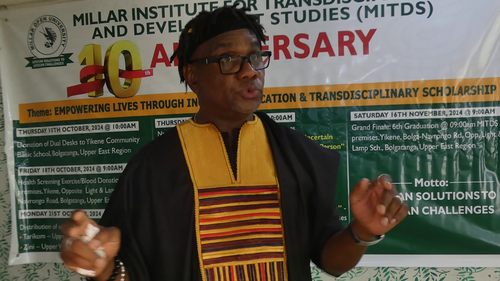

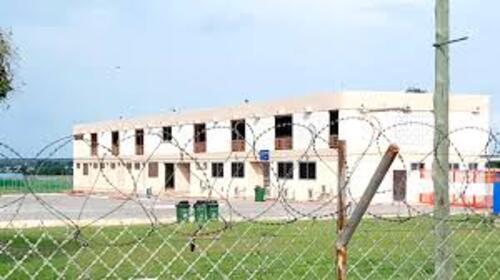
In a significant development for higher education, the Millar Institute for Transdisciplinary and Development Studies (MITDS) has formed a strategic partnership with the Broos Institute for Afrocentric Studies and Research in the Netherlands. Apexnewsgh reports This collaboration marks a pivotal moment for MITDS, positioning it on the international academic map. Professor Millar, the enthusiastic president of MITDS, expressed his excitement about the new alliance. “This partnership is an incredible opportunity to bridge the gap between Africa and the Western world,” he declared. “It will foster cultural exchange and understanding, which is vital in today’s interconnected world.” Through this collaboration, students from MITDS will gain the chance to travel to the Broos Institute for Afrocentric Studies and Research, immersing themselves in diverse cultures and learning experiences. Conversely, students from these institutions will have the opportunity to explore Africa’s rich heritage, gaining insights into its traditions and history. Marvin Hokstam, the Executive Director of the Broos Institute, shared Professor Millar’s enthusiasm. “African culture is invaluable and should be celebrated,” he stated passionately. Hokstam emphasized the importance of uncovering Africa’s origins and traditions, many of which have been overshadowed by the legacy of slavery. “This collaboration will allow us to delve deeper into Africa’s history and cultural identity,” he added. “Together, we will uncover the continent’s hidden treasures and promote cross-cultural understanding.” Taking a tangible step towards deepening the partnership, Professor Millar generously handed over a portion of MITDS’s facilities to the Broos Institute. The handover ceremony was filled with optimism, with Hokstam beaming with excitement. “We are thrilled to embark on this journey with the Millar Institute,” he said. “This partnership will foster meaningful exchange, research, and growth. We’re grateful for Professor Millar’s generosity and vision.” As MITDS embarks on this international venture, it cements its role as a leading beacon of transdisciplinary learning and cultural exchange. This historic partnership not only promises to elevate educational opportunities but also opens new pathways for students, scholars, and communities, paving the way for a brighter, more interconnected future. Source: Apexnewsgh.com Contact: +233256336062/ +233248250270
Professor David Millar Recounts MITDS’ Humble Beginnings
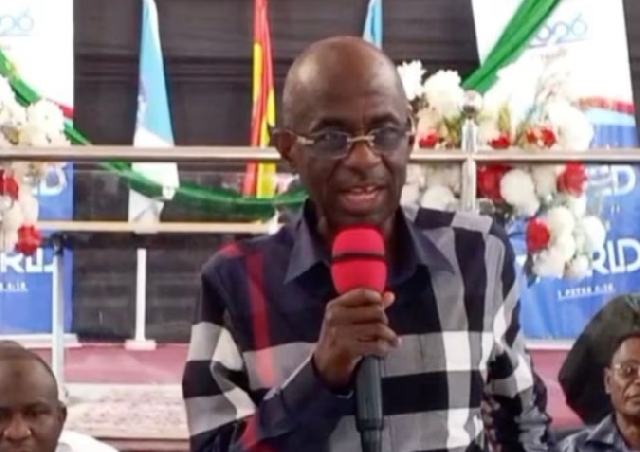
Millar Institute for Transdisciplinary and Development Studies (MITDS) has celebrated its 10th anniversary and its 6th congregation of student’s ceremony. Apexnewsgh reports The ceremony attracted people from all works of life including friends and family members of grandaunts, Chiefs, and Queen mothers from across various communities within the Upper East Region. Addressing the congregation, Professor David Millar recounted the humble beginnings of the Millar Institute for Transdisciplinary and Development Studies (MITDS), which he founded in 1990. With a mix of gratitude and emotion, he shared the pivotal role his wife Madam Lydia Mamata Bawah Millar played in securing the land for the institution even in his absence. “My wife’s unwavering support and determination were instrumental in making MITDS a reality,” Professor Millar said, his voice filled with appreciation. “Her bold step in helping to acquire the land will forever be etched in my memory, and I am forever grateful.” As he reflected on the journey, Professor Millar highlighted the significance of his wife’s contribution, acknowledging that no reward would be enough to repay her selflessness. “I leave it to God to continue rewarding her for her kindness and dedication,” he said with tears of joy. MITDS has since grown into a renowned institution, known for its innovative approach to education and research. As a fully Ghanaian institution, it has responded to the government’s call for quality education, leveraging technology to provide open admission, tuition, assessment, and certification. Today, MITDS stands as a testament to Professor Millar’s vision and his wife’s unwavering support. Professor Millar began, his voice steady and full of conviction, “today we gather to celebrate a decade of excellence in education and research.” He paused, letting the weight of his words sink in. “However, we cannot overlook the economic challenges facing Ghana, which have deeply affected our students’ ability to pay fees and meet their financial obligations.” In response to these challenges, MITDS had adapted its academic strategy, temporarily suspended undergraduate programs while intensified its focus on master’s and PhD programs. The institute committed itself to enhancing research and development and increasing its outreach to rural communities across the nation. “We remain optimistic that Ghana’s economic situation will improve soon,” he assured the gathering. According to Professor Millar, despite the successes of the Free SHS policy, a troubling issue had emerged. Thousands of Senior High School graduates, many with excellent grades, find themselves without access to tertiary education, particularly those lacking Mathematics and English qualifications. In light of this, Professor Millar hinted that MITD was actively seeking innovative solutions in collaboration with various stakeholders to address this pressing problem. Professor Millar further spoke about MITDS’s research accomplishments, particularly its flagship program, the Grass Economy for Northern Ghana. The initiative aimed to tackle persistent rural social issues, and it had excelled in several areas. Notably, the introduction of grass charcoal briquettes was revolutionizing energy use in northern communities, marking a sustainable shift away from traditional charcoal. Speaking about MITDS cooperate social responsibility, Professor Millar also highlighted MITDS’s commitment to corporate social responsibility. They part-funded scholarships for students pursuing PhDs and MPhils and collaborated with GO NORTH MEDICAL OUTREACH to provide essential healthcare services to underserved communities. As part of MITDS’s 10th-anniversary celebrations, the institute donated 27 dual desks to Yikene Junior Secondary School and advocated for the reactivation of the Pwalugu Multi-purpose Dam, further demonstrating their commitment to community development. As Professor Millar concluded his stirring address, the audience felt a renewed sense of hope and determination. They could sense that MITDS was steadfast in its commitment to providing quality education and creating opportunities for Ghana’s future leaders, embodying the very spirit of resilience and innovation that the nation so desperately needed. Professor Millar’s excitement was palpable as he expressed his heartfelt gratitude to the Chief and people of Yikene, Ghana Tertiary Education Commission (GTEC), University for Development Studies (UDS). However, as he congratulated grandaunts for their individual milestones, he further admonished them to be good ambassadors of MITDS anywhere they find themselves. Dignitaries from various universities, the Upper East Regional Minister, chiefs from across the region, friends and families of graduates, and Broos Institute officials from the Netherlands were all present to grace the ceremony. Source: Apexnewsgh.com Contact: +233256336062/ +233248250270
African Unity and Empowerment: Breaking Free from the Shackles of Inferiority
At a public lecture held at the Millar Institute for Transdisciplinary and Development Studies (MITDS) ahead of its 10th anniversary, Marvin Hokstam, Executive Director of Broos Institute, passionately addressed the audience on the biggest challenge facing Africans globally. Apexnewsgh reports “Our greatest obstacle is overcoming the mindset of inferiority imposed upon us,” he emphasized. For centuries, Africans have been conditioned to believe in their own inadequacy, a legacy of colonialism and oppression. This mindset hinders economic growth, mediocrity, and self-actualization within African communities worldwide, including the Caribbean, Suriname, and the US. Hokstam stressed that education is the key to liberation. “We must educate ourselves about ourselves, our history, and our culture from an Afrocentric perspective.” By doing so, Africans can reclaim their identity, determine their future, and build a brighter tomorrow. However, Hokstam acknowledged that adopting this solution won’t be easy. “We’ve been brainwashed by Eurocentric narratives, making it difficult to reteach ourselves.” Yet, he remains optimistic, emphasizing the importance of educating future generations. “As ancestors-in-the-making, we must create a legacy of empowerment for our descendants. Let us teach them the right way, so they don’t have to unlearn misconceptions later.” Hokstam’s words resonated deeply, inspiring a new wave of African unity and self-determination. However, Marvin Hokstam passionately spoke about the lingering impact of colonialism and slavery on people of African descent. “For centuries, we’ve been confined by the limitations of white supremacy, forced to adopt European names, identities, and religions. Our true heritage was erased, replaced by the colonizer’s narrative.” Hokstam used the analogy of a goldfish in a tiny bowl to illustrate the stifling effects of Eurocentrism. “Just as the fish will never grow in a confined space, our potential is stifled by the dominant culture. But when freed from these constraints, we can thrive.” He shared his country, Suriname’s, complex history as a melting pot of ethnicities, colonized by the Dutch from the 15th century until 1975. Africans were brought as slaves, forced to work for 300 years, and stripped of their names, identities, cultures, and religions. “By the time slavery ended in 1863, we had lost our sense of self,” Hokstam said. “We were given European names, like mine, Hokstam, which means nothing. Our African past and future were stolen.” Hokstam emphasized the importance of rediscovering their true identity, free from Eurocentric constraints. “Our music, art, and scientific contributions are extraordinary, but often dragged back into the suffocating confines of dominance. It’s time to break free and reclaim our heritage.” He stressed Speaking about Broos and MITDS, Hokstam says, the collaboration between Broos Institute and MITDS marks a significant step towards this vision. He further shared, “I was drawn to MITDS’s African-centered approach, aligning with our activism in the Netherlands.” Together, they aim to rewrite the narrative, fostering a proud and empowered African identity. Broos Institute Executive Director concluded the audience was left with a profound message: education, self-awareness, and unity hold the power to shatter the chains of inferiority, unlocking a brighter future for Africans worldwide. The public lecture, delivered by Marvin Hokstam, drew a diverse audience, including PhD students from the Millar Institute for Transdisciplinary and Development Studies (MITDS), as well as professionals from various fields. The event provided a platform for intellectual discourse and exchange of ideas among academics, practitioners, and community leaders. Following the captivating lecture, Marvin Hokstam presented a beautifully crafted art piece to Prof. David Millar, Founder of the Millar Institute for Transdisciplinary and Development Studies (MITDS), as a token of appreciation. Prof. Millar graciously accepted the gift. In a surprising gesture of reciprocity, Prof. Millar offered Marvin Hokstam, Executive Director of Broos Institute, an office apartment within the MITDS premises. This generous offer aimed to strengthen the partnership between Broos Institute and MITDS. “This gesture will facilitate our collaborative efforts,” Prof. Millar stated, “enabling us to work closely together to advance our shared vision of promoting African heritage and identity.” Marvin Hokstam expressed gratitude, saying, “This office space will serve as a hub for our joint initiatives, fostering innovation and progress. We look forward to a fruitful partnership.” The exchange symbolized the beginning of meaningful collaboration, poised to yield impactful outcomes in education, research, and community development. The anniversary theme was centered on: Empowering lives through inclusive education and Transdisciplinary scholarship. Source: Apexnewsgh.com Contact: +233256336062/ +233248250270