


Farmers Day: Diary With Former Minister for Lands and Natural Resources Inusah Fuseini–A Must Read

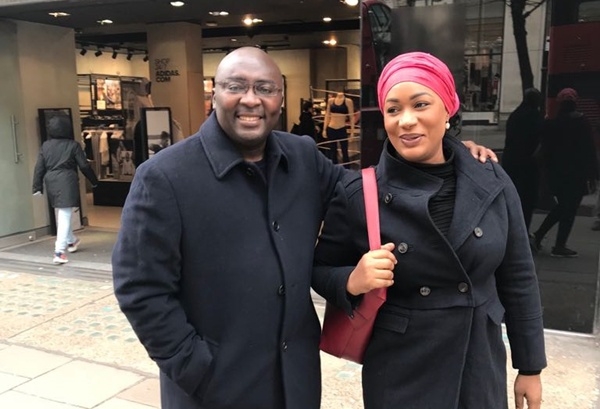
As Ghana celebrates its 37th edition of Farmers Day, Apexnews-Ghana has been focusing its attention on Ghana’s former Members of Parliament who after moving out of Parliament, have decided to venture into farming as their lifetime business. Mr. Inusah Fuseini is a Ghanaian Lawyer and Politician. He is a former Member of Parliament for Tamale Central constituency and the former Minister for Lands and Natural Resources. One amongst these MPs turned full-time farmer, is Mr. Inusah Fuseini. He was also the former Member of Parliament for Tamale Central constituency and the former Minister for Lands and Natural Resources. As I write today, Mr. Inusah Fuseini is a full-time farmer. This year 2021, he was able to farm 300 acres of rice, as at today Saturday, December 4, 2021, he has already harvested 4,000 bags of rice for the season and hoping to harvest more. Mr. Fuseini said, he is happy and enjoying peace of mind with his current chapter in life. Below is his engagement with Apexnews Ghana Ngamegbulam Chidozie Stephen on Farmer’s Day: Question: What is the impact of government policy ‘PFJ’ to you as a farmer? For me, the impact of the policy Planting for Food and Jobs (PFJ) on my activity is the fact that I am into seed production and my seeds will help the policy because peasant farmers will be able to have access to quality seeds for their farms at subsidized prices. But, If you are a commercial farmer and you are into grains, you are not part of the PFJ. You have to buy your input from the open market. You don’t enjoy any subside, you buy your fertilizer from the open market, you buy your seeds from the open market, you buy your chemical from the open market a commercial farmer is not part of the policy initiative. The policy is a poverty alleviation programme, peasant farmers who cannot afford quality seeds, we provide them with quality seeds at subsidized prices. So, when they plant and the yield grows, gradually they will be moving out of poverty because they will be getting better yield. They can’t buy fertilizer in the open market. For the commercial farmer, they presume we have the capacity to buy our farm input. Question: What is your best interest as commercial farmer? To be honest with you, most commercial farmers are not interested in subsidies, we are interested in the market. If I produced, how am I selling? Is there a market? You produced your rice, there is no recognized rice miller. There are small disjointed rice mills around and they buy at different standards, some come with a scale and others don’t come with scale, some of them in every 10 bags, they will collect a bag, some buy a kilo at Ghc1.00 and if you don’t sell, the price of your product will fall and if you have no warehouse to store the product, you will be compelled to sell at a lower price. And as a commercial farmer, if you don’t have a warehouse you will run at a loss because you don’t have a place to store your rice”. That is the reason why when it’s time for harvesting you would see those buyers around trying to buy from commercial farmers immediately after the harvest because they don’t have a place to store their produce and that will force them to sell at a lower price. “And as a commercial farmer, building a warehouse is expensive. So, the one-way government can help commercial farmers, is to build warehouses, so that commercial farmers can rent those warehouses for a period of 6 months. So, with that, if I harvest my rice and there is no market, I can go and put my rice in the warehouse for a certain period of time and before I take the rice I will pay rent, but the rent will be lower. So with that, the commercial farmer will be able to recoup his or her investment”. “Apart from that, the problem for commercial farmers is how to get a market. Because, if the market is good we don’t need any government intervention because we will produce and sell. As a commercial farmers, we are producing to sell not to consume. This year, I farmed 300 acres and I have already harvested about 4,000 bags of rice”. Question: Would you say farming is better than being a Parliamentarian? No, life is in chapters, what am doing now has its challenges and its experiences. It gives me peace of mind and happiness, it makes me conjure of myself, whatever I do, I do for myself, if I do good I do for myself and if I do bad I do for myself, if I put on hard work, am putting it for myself”. So, I don’t need any motivation for anyone to tell me to work hard. I have to work hard because am working for myself. Unlike when one is in parliament, your party is on you, your constituents are on you. “So, this time when I get up and say am going to the farm, am going to the farm, when am at the farm working and feeling tired and I say am going home, am going home, when I say I will get to the farm at 6 o’clock in the morning, I will go to the farm at 6 o’clock in the morning. So, in this chapter of my life, i am in control of myself”. MORE TO COME Apexnewsgh.com/Ghana/Ngamegbulam Chidozie Stephen Please contact Apexnewsgh.com on email apexnewsgh@gmail.com for your credible news publications. Contact: 0555568093.
Farmer’s Day: Diary With Former Defense Minister Mark Woyongo–A Must Read
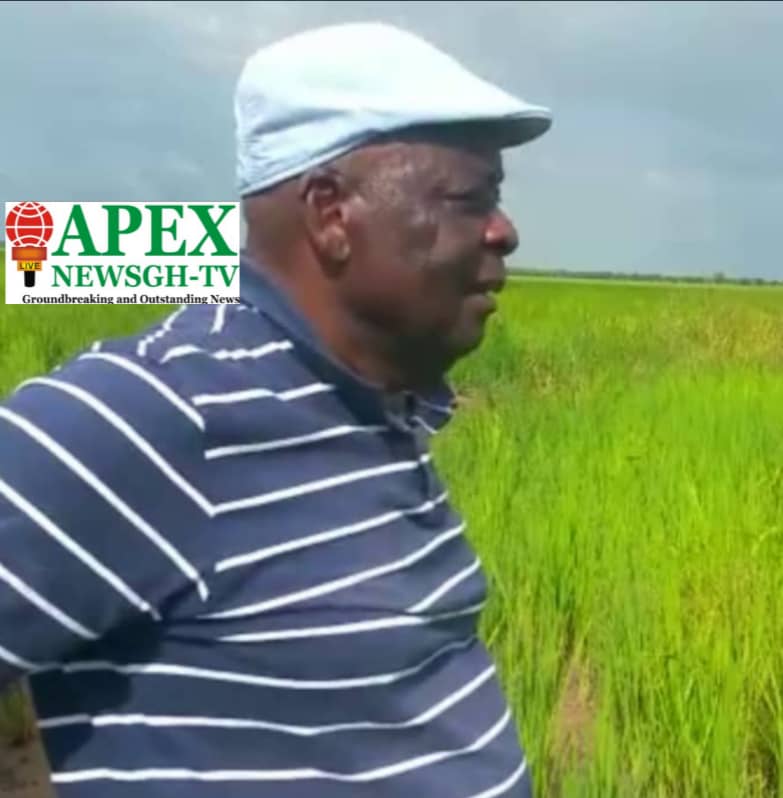
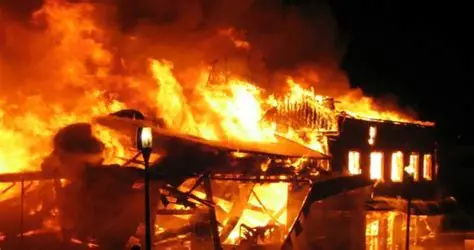
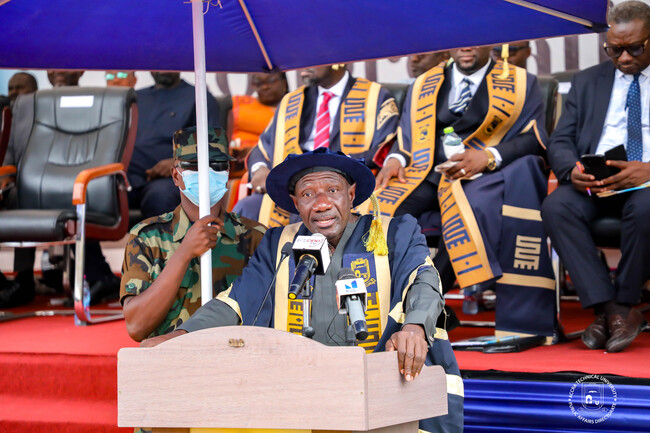
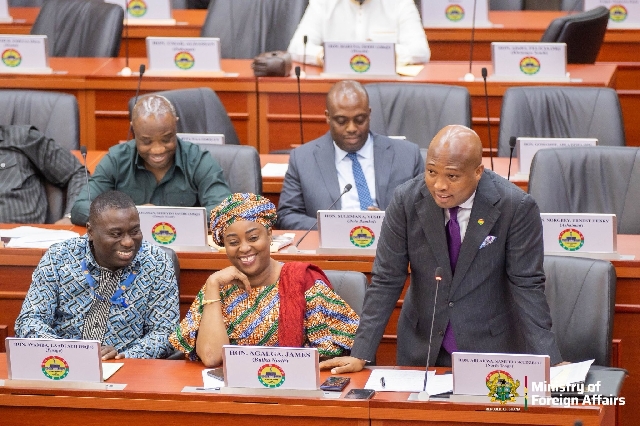
As Ghana celebrates its 37th edition of Farmers Day, Apexnews Ghana has been focusing its attention on Ghana’s former Members of Parliament who after moving out of Parliament, have decided to venture into farming as their lifetime business. One amongst these MPs turned full-time farmer, is Mr. Mark Owen Woyongo. He was also the former Member of Parliament for the Navrongo Central constituency. Today, Mr. Mark Owen Woyongo is a full-time farmer. This year 2021, he was able to farm 500 acres of rice. But, the question begging for answers is, how is he doing the magic? What is the challenge facing Ghanaian commercial farmers? Is the Planting for Food and Jobs (PFJ) beneficial to commercial farmers? What is Mr. Mark Owen Woyongo general view about the farmer’s Day celebration? Below are his engagement and responses to Apexnews Ghana Ngamegbulam Chidozie Stephen on Farmer’s Day Every country should celebrate farmers because agriculture is very important in the economic development of every country and it is good that government continues to celebrate farmer’s day. But I think that a lot needs to be done in order to make farmers happy. “For example, this year we struggled to get a few bags of fertilizer, we wanted so much fertilizer because this year am doing about 500 acres of rice and wanted about 500 bags of fertilizer for our farm. But we only got about 250 bags and that’s half of what we wanted and that’s even discouraging farmers, especially we the commercial farmers”. “The unfortunate thing is that the Planting for Food and Jobs (PFJ) focuses on the small-scale farmers, not much attention is paid to the commercial farmers, which I think is very unfortunate because we produced the bulk of the food. When they are giving the fertilizers, they only considered those who will need 5 or 10 bags of fertilizers, they don’t make provision for those of us who need about 500 bags of fertilizer and even then, not all the small-scale farmers will be able to get the fertilizers”. “It is good we are focusing on agriculture but, I think is important we pay more attention to the provision of the inputs to farmers. They should not also ignore the commercial farmers, because you can imagine the quantity of rice I can produce, you will need about 100 small-scale farmers before they will be able to produce the same”. “So, if we have to be safe sufficient in food production, attention has to be given to the commercial farmers to encourage them to produce more. Once you are encouraging the small-scale farmer, also encourage the commercial farmer, because together we produce so much food to make the country safe sufficient in food production. I think that should the approach”. “Unfortunately, the PFJ doesn’t pay much attention to value addition. You produced the rice, you should be able to mill the rice, ready for the market but here is the case, there are no mills. The mills are very limited and they determine how much they pay you for your rice but, if we have several mills there will be competition and they will offer better prices for our rice because it will be competitive. But here is the case, both of the farmers in our enclave where we farm, all send their rice to Avnash Rice mills which is the biggest mill and they determine how they should pay you for a bag of rice and it will even depend on the moisture content of your rice. So, a lot needs to be done to bring about competition into agriculture, is not a matter of just producing food, we must add value to it. Something needs to be done. “13 farms got burnt because there are not enough combine harvesters in the system, 13 farms can you imagine the quantity of rice that got burnt? A lot of rice, a lot of money have gone to waste. So, I think we need to look at it holistically this Planting for Food and Jobs should be look at production, value addition, supply of input and the rest of them”. “But, if we do it half hazardly, we will produce the food but it will go waste. Because along the line some of it will burn because there are no combined harvesters to harvest, we will produce the food but those who will add value will continue to exploit the producer. So, there is a lot to be done”. “Government should bring stakeholders together and find a way out of this problem. It looks like the Ministry of Agriculture is just taking the decision without any reference to the producers”. Mr. Mark Woyongo concluded More to come soon Apexnewsgh.com/Ghana/Ngamegbulam Chidozie Stephen Please contact Apexnewsgh.com on email apexnewsgh@gmail.com for your credible news publications. Contact: 0555568093.